Dinner · Part 2 of 3: Instructions
Slow Cooker Rutabaga and Potato Stew Step-by-step instructions
- Prep
- Cook
- Total
- Serves
- 4
Before you start
Before starting, ensure your workspace is clean and organized. Wash, peel, and dice all vegetables thoroughly to ensure they are ready for the cooker. Have your measuring cups and the slow cooker insert prepared on the counter.
Ensure the broth is heated beforehand, as adding hot liquid to the slow cooker significantly reduces the initial warm-up time, helping the vegetables cook more efficiently and evenly throughout the duration of the cycle.
Ingredients at a glance (5)
- 2 cups rutabagas, peeled and diced
- 2 cups potatoes, peeled and diced
- 1 medium yellow onion, sliced
- 2 bay leaves
- 4 cups hot vegetable broth
Instructions
Vegetable Preparation
- Prepare the vegetablesPeel the rutabagas and potatoes thoroughly to remove any waxy skin. Dice the vegetables into uniform one-inch cubes to ensure they cook at the same rate. Peel the onion and slice it into thin strips, separating the rings for even distribution throughout the stew.Look for Vegetables should be uniform in size.Tip Cut the vegetables into even pieces for consistent cooking.
At the end of this phase, the rutabagas and potatoes must be diced into uniform one-inch cubes. The onions should be sliced into thin, consistent strips.
Having these ingredients prepared correctly is the most important step for ensuring the entire stew cooks evenly. Check that all peels are removed and that the vegetables are clean before proceeding to the assembly phase.
Assembly and Layering
- Assemble the stewPlace the diced rutabagas and potatoes into the bottom of the slow cooker insert. Scatter the sliced yellow onions over the vegetable layer. Add the two bay leaves on top of the mixture. Carefully pour the hot vegetable broth over all the ingredients until they are submerged.Look for Vegetables should be fully covered by the broth.Tip Using hot broth helps the slow cooker reach temperature faster.
Once assembled, the slow cooker should have the vegetables at the base with the broth poured over the top. The bay leaves should be visible near the surface. Check that the liquid level is sufficient to cover most of the vegetables. If the liquid seems too low, add a splash more broth or water to ensure even cooking as the steam circulates during the simmering process.
Slow Cooking
- Slow cook and serveCover the slow cooker with its lid. Cook on the low setting for approximately 4 hours or until the vegetables are tender when pierced with a fork. Once cooked, ladle the stew into bowls, ensuring each serving includes a mix of vegetables and broth.Look for Vegetables are tender when pierced with a fork.Tip Remove the bay leaves before serving to avoid a bitter taste.
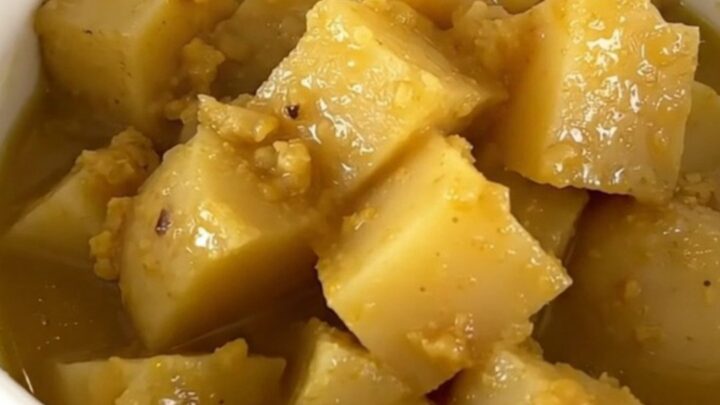
As the stew cooks, the kitchen will begin to smell savory and earthy. After four hours, the vegetables should be completely tender. The broth will have darkened slightly as it absorbs the flavors of the rutabaga and onions. Check the tenderness of a large vegetable piece before turning off the slow cooker to ensure the final result meets the desired level of comfort.
Common mistakes
Avoid cutting the vegetables into uneven sizes, as this leads to some pieces being overcooked while others remain firm. Do not overload the slow cooker, as this prevents proper heat circulation and may result in uneven cooking.
Refrain from lifting the lid frequently during the cooking process; every time the lid is opened, heat escapes, significantly increasing the total time required for the vegetables to reach the desired level of tenderness.
How to tell it’s done
The stew is finished when the rutabagas and potatoes are tender throughout. Test by inserting a paring knife or fork into the largest piece of vegetable; it should slide through with zero resistance.
The broth should have a glossy, slightly thickened appearance, and the onions should be translucent and soft. There is no protein to monitor for safety, so focus entirely on achieving the desired texture of the root vegetables, which should be soft but not mushy.
Up next · Part 3 of 3
2 variations · storage & make-ahead · 3 answers · printable card
Tips, FAQ & printable recipe (Part 3)← Back to the ingredients (Part 1)