Dinner · Part 2 of 3: Instructions
Slow Cooker Rosemary Pork Loin and White Beans Step-by-step instructions
- Prep
- Cook
- Total
- Serves
- 6
Before you start
Before starting, pat the pork loin dry with paper towels and season lightly with salt and pepper if desired. Drain and rinse the white beans in a colander. Measure the garlic rosemary seasoning and chicken broth. Have the slow cooker insert clean and ready.
The prep takes about 10 minutes. There is no need to brown the pork first; the slow cooker will develop flavor over the long cooking time. For the best texture, cook on low if time allows. Check that the pork fits comfortably in the slow cooker with the beans around it.
Ingredients at a glance (4)
- 3 lb boneless pork loin roast
- 2 cans (15 oz each) white beans, drained and rinsed
- 2 tbsp garlic rosemary seasoning
- 1 cup chicken broth
Instructions
Layer and season
- Layer the ingredientsPlace the pork loin roast in the slow cooker insert, pressing it gently into the bottom. Spoon the white beans around and over the pork. Sprinkle the garlic rosemary seasoning evenly over the pork and beans. Pour the chicken broth over everything.Look for The pork sits nestled among the beans with seasoning scattered across the top.Tip If the roast is too long for the slow cooker, trim it to fit or cut it in half.
The slow cooker holds the pork nestled among the white beans, with the garlic rosemary seasoning scattered across the top and the chicken broth poured around. The beans are coated in the seasoned liquid, and the pork is visible above them.
Everything looks tidy and ready to cook. The aroma is clean and herby, with garlic and rosemary coming through. Before covering, make sure the seasoning is evenly distributed and the broth reaches about halfway up the pork. The beans should be moist but not swimming in liquid.
Slow simmer
- Cook low and slowCover the slow cooker and cook on low for 8 to 10 hours, or on high for 4 to 5 hours, until the pork is fork-tender and reaches an internal temperature of 145°F (63°C) when checked with an instant-read thermometer inserted into the thickest part of the roast. Let the pork rest in the slow cooker for 10 minutes before slicing.Look for The pork is tender and easily pulls apart with a fork, and the beans are creamy.Safe temperature 145°F (63°C) internal temperature (steaks, chops and roasts)Tip Cooking on low gives the best texture; high can dry out the lean pork loin.
After hours of cooking, the slow cooker releases a rich, savory aroma of garlic and rosemary. The pork is visibly tender, with the top slightly browned and the edges beginning to pull apart. The beans have darkened slightly, having absorbed the broth and seasoned fat. The cooking liquid has reduced and thickened into a light sauce. The pork should easily yield when pressed with a fork. The internal temperature has reached at least 145°F (63°C). The beans are creamy and soft, not mushy or broken.
Rest and serve
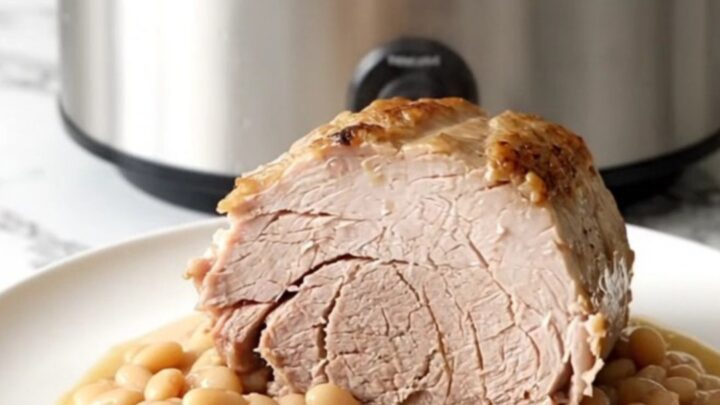
- Slice and serveTransfer the pork to a cutting board and let rest at least 3 minutes. Slice the roast against the grain into 1/2-inch thick slices. Serve the sliced pork over the white beans, spooning some of the cooking liquid over the top.Look for Clean slices with a tender, moist interior and beans coated in savory broth.Tip Slicing against the grain makes the pork more tender.
The pork rests on a cutting board, the surface moist and glistening. Slicing against the grain yields clean, even pieces that hold their shape. The beans are spooned onto a serving platter, and the pork slices are arranged on top. The cooking liquid is spooned over the top, adding a glossy sheen. The dish looks rustic and hearty, with tender meat and creamy beans. The aroma is comforting and savory. The pork is juicy and tender, and the beans are soft with a subtle garlicky flavor.
Common mistakes
One common mistake is overcooking the pork loin on high, which can dry it out. Low heat is gentler and yields a more tender result. Another issue is using too much liquid; the beans and pork release moisture as they cook, so a single cup of broth is sufficient.
Adding too much seasoning can make the dish overly salty, especially if the broth is salted. Also, do not skip draining and rinsing the canned beans, as the canning liquid can be starchy and salty. Finally, slicing the pork too soon after cooking can cause the juices to run out; always let it rest.
How to tell it’s done
The pork is done when it is fork-tender and an instant-read thermometer inserted into the thickest part registers at least 145°F (63°C). The roast should be easy to slice, with a moist, tender interior. The beans should be soft and creamy, having absorbed the seasoned broth.
If the pork is not yet tender, continue cooking for another 30 to 60 minutes. Let the pork rest at least 3 minutes before slicing to allow the juices to redistribute. The internal temperature will rise slightly during resting.
- Steaks, chops and roasts: 145°F (63°C) in the thickest part, then a 3-minute rest
Up next · Part 3 of 3
4 variations · storage & make-ahead · 5 answers · printable card
Tips, FAQ & printable recipe (Part 3)← Back to the ingredients (Part 1)