Dinner · Part 2 of 3: Instructions
Slow Cooker Ranch and Onion Chuck Roast Step-by-step instructions
- Prep
- Cook
- Total
- Serves
- 6
Before you start
Before beginning, ensure your slow cooker insert is clean and properly seated in the base. Prepare your ingredients by slicing the yellow onions into consistent half-moons; this ensures they soften and meld into the sauce at the same rate.
Have your measuring cup ready for the broth and clear enough counter space to handle the raw beef safely, remembering to wash your hands and surfaces thoroughly after contact.
Ingredients at a glance (4)
- 3 lb beef chuck roast
- 2 large yellow onions, sliced
- 1 packet dry ranch seasoning mix
- 1 cup beef broth
Instructions
Assembling the Slow Cooker
- Prepare the Slow CookerPlace the beef chuck roast into the insert of the slow cooker. Scatter the sliced yellow onions evenly over the top of the roast to ensure they cook down into the juices.Look for The roast is centered and onions are distributed.Tip Ensure the roast fits snugly in the cooker for even heat distribution.
The roast should be placed securely in the bottom of the slow cooker, with the onions spread evenly over the surface. The setup should look orderly, with the ingredients ready to be seasoned. Ensure the power cord is clear of any heat sources or water before turning the unit on to the low setting.
Seasoning and Braising
- Season and Add LiquidSprinkle the dry ranch seasoning mix over the beef and onions. Pour the beef broth carefully into the slow cooker around the edges to avoid washing away the seasoning.Look for The seasoning coats the top of the beef.Tip Using low-sodium broth allows for better control over the final saltiness.
After adding the ranch seasoning and beef broth, the slow cooker should be covered securely. The liquid should be visible around the base of the roast but not completely submerging it. The aroma of the herbs from the ranch mix will begin to permeate the kitchen as the slow cooking process begins.
Shredding and Finishing
- Cook and ShredCover the slow cooker and cook on low heat for 8 hours. Once finished, check the internal temperature to ensure it reaches at least 145°F (63°C). Let the roast rest for 10 minutes before shredding with two forks.Look for The beef pulls apart easily with a fork.Safe temperature 145°F (63°C) internal temperature (steaks, chops and roasts)Tip Resting the meat is essential to retain moisture in the shredded beef.
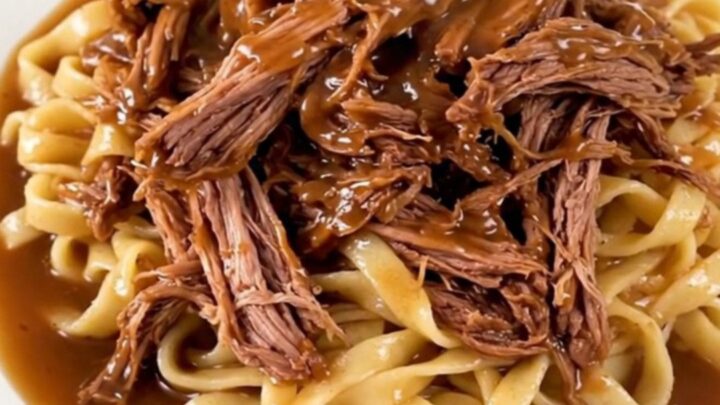
After 8 hours, the beef should appear dark and incredibly soft. The liquid in the bottom will have transformed into a savory, onion-rich gravy.
When you pull the meat apart with forks, it should shred effortlessly, and the juices should be clear and fragrant. The final dish should be steaming and ready to serve.
Common mistakes
A common mistake is lifting the lid too frequently during the cooking process. Each time the lid is removed, heat escapes, and the internal temperature drops, which significantly increases the total cooking time.
Another error is failing to trim excessive fat from the roast; while some fat is desirable for flavor, large, thick chunks may result in a greasy final dish. Finally, ensure the beef is fully thawed before starting the slow cooker to maintain food safety.
How to tell it’s done
The beef is fully cooked when it reaches an internal temperature of at least 145°F (63°C). Beyond the temperature, the most reliable indicator of doneness is the texture.
The roast should be fork-tender, meaning the meat fibers easily separate with minimal pressure from two forks. If the meat still feels resistant or tough when you attempt to shred it, continue cooking for an additional 30 to 60 minutes.
- Steaks, chops and roasts: 145°F (63°C) in the thickest part, then a 3-minute rest
Up next · Part 3 of 3
2 variations · storage & make-ahead · 3 answers · printable card
Tips, FAQ & printable recipe (Part 3)← Back to the ingredients (Part 1)