Dinner · Part 2 of 3: Instructions
Slow Cooker Rabbit with Prunes and Bacon Step-by-step instructions
- Prep
- Cook
- Total
- Serves
- 4
Before you start
Before starting, ensure all ingredients are ready and at hand. If the rabbit pieces are large, you may want to trim off any excess silver skin or unwanted fat. Ensure the slow cooker is placed on a level, heat-resistant surface and that the power cord is clear of any water or sink areas.
Have your measuring cups ready and ensure the chicken broth is at room temperature to avoid a drastic temperature drop in the slow cooker when you begin the assembly process.
Ingredients at a glance (5)
- 2 lb rabbit pieces, bone-in
- 1 cup pitted prunes
- 4 oz lardons or thick-cut bacon, diced
- 1 tsp dried thyme
- 1 cup chicken broth
Instructions
Assembly of ingredients
- Prepare the slow cookerPlace the raw rabbit pieces into the base of the slow cooker, ensuring they are arranged in an even layer. Scatter the pitted prunes and lardons over the top of the rabbit pieces.Look for The rabbit should be evenly distributed at the bottom.Tip Ensure the rabbit is fully thawed if frozen before placing in the slow cooker.
At this stage, the slow cooker should be neatly arranged with the raw rabbit pieces, prunes, and bacon lardons. Everything should be contained within the cooker, ready for the seasoning and broth. Check that the rabbit is evenly distributed at the bottom of the vessel to ensure uniform heat exposure once the slow cooker is turned on. The ingredients should look clean and ready for the final additions of thyme and liquid.
Seasoning and liquid addition
- Season and add liquidSprinkle the dried thyme evenly over the meat and fruit mixture. Pour the chicken broth over the ingredients, ensuring the liquid reaches the bottom of the slow cooker to help with even cooking.Look for The liquid should partially submerge the ingredients.Tip Use low-sodium chicken broth to better control the final saltiness of the dish.
The dish should now be seasoned with dried thyme and covered with the chicken broth. The liquid should be visible around the edges of the meat and fruit, providing the necessary moisture for the long braising process.
Ensure the herbs are distributed evenly across the surface. At this point, the slow cooker is ready to be covered and switched on to the low setting, initiating the gentle cooking process required for tender meat.
Slow cooking to perfection
- Slow cook and serveCover and cook on low for 6 hours until the meat is tender and reaches an internal temperature of 145°F (63°C). Let the meat rest for 5 minutes before serving on a plate.Look for The meat should be falling off the bone and very tender.Safe temperature 145°F (63°C) internal temperature (steaks, chops and roasts)Tip Check the temperature at the thickest part of the meat to ensure it is cooked through.
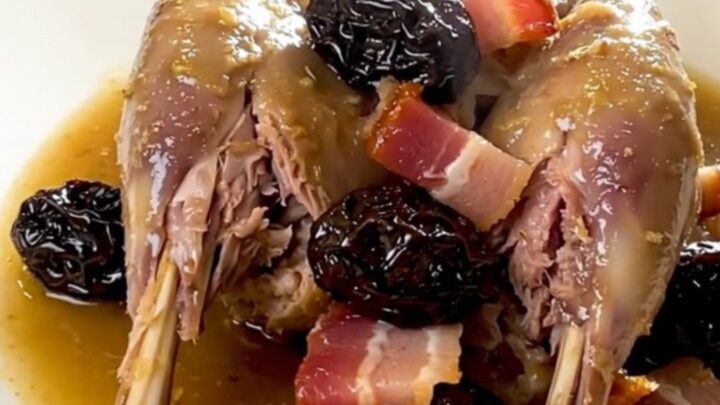
After several hours of cooking, the kitchen should smell savory and slightly sweet. The rabbit pieces should look significantly more tender, and the prunes should appear plump and dark.
Before serving, verify the internal temperature of the rabbit with a thermometer. The meat should be ready to eat once it has rested for five minutes, allowing the juices to redistribute for a moist, tender result that is ready to be plated and served immediately.
Common mistakes
A common mistake is overcrowding the slow cooker, which can prevent the meat from cooking evenly. Always arrange the pieces in a single layer if possible.
Another error is failing to check the internal temperature; while slow cookers are generally reliable, cooking times can vary based on the model and the size of the pieces. Always ensure the meat reaches the safe internal temperature of 145°F (63°C) before serving to ensure the best texture and safety.
How to tell it’s done
The rabbit is done when it is exceptionally tender and the meat pulls away from the bone with very little resistance. Using a digital meat thermometer, check the thickest part of the largest rabbit piece to ensure it has reached an internal temperature of 145°F (63°C). The sauce should be slightly thickened and glossy from the rendered bacon fat and the softened prunes, creating a rich coating for the meat.
- Steaks, chops and roasts: 145°F (63°C) in the thickest part, then a 3-minute rest
Up next · Part 3 of 3
2 variations · storage & make-ahead · 3 answers · printable card
Tips, FAQ & printable recipe (Part 3)← Back to the ingredients (Part 1)