Dinner · Part 2 of 3: Instructions
Slow Cooker Rabbit with Fennel and White Wine Step-by-step instructions
- Prep
- Cook
- Total
- Serves
- 4
Before you start
Before starting, ensure all ingredients are properly cleaned and prepped. Slice the fennel bulbs thinly to ensure they cook evenly and integrate well with the other components.
Peel and crush the garlic cloves to release their essential oils, which will infuse the wine as it cooks. Have all components measured and ready, including the wine, to ensure a smooth assembly process once the slow cooker is prepared.
Ingredients at a glance (5)
- 2 lb rabbit pieces
- 2 bulbs fennel, thinly sliced
- 4 cloves garlic, crushed
- 1 tsp fennel seeds
- 1/2 cup white wine
Instructions
Layering the ingredients
- Prepare the slow cooker basePlace the rabbit pieces in the bottom of the slow cooker, ensuring they are arranged in a single layer if possible to promote even cooking throughout the process.Look for The rabbit should be evenly distributed across the bottom of the vessel.Tip Pat the rabbit pieces dry with paper towels before adding them to the slow cooker.
At this phase, the rabbit should be arranged neatly at the bottom of the slow cooker.
The white quartz countertop provides a clean workspace, and the ingredients should be prepared so they are ready for immediate assembly, ensuring the slow cooker is ready to begin the long, low-temperature cooking process.
Aromatic and wine infusion
- Add aromatics and liquidScatter the sliced fennel over the rabbit pieces. Sprinkle the crushed garlic and fennel seeds evenly over the top, then pour the white wine over the entire mixture.Look for The wine should pool slightly at the bottom, creating a base for the aromatics to steam.Tip Ensure the garlic is evenly distributed to avoid concentrated pockets of flavor.
The aromatics are now layered over the meat. The scent of the crushed garlic and fennel seeds should be noticeable as they are sprinkled. The wine should be poured carefully to ensure it covers the base of the rabbit, creating the necessary liquid environment for the slow-cooking phase to begin effectively.
Cooking and final assembly
- Slow cook and serveCover the slow cooker and cook on low for 4 hours. Once finished, check that the meat reaches an internal temperature of 165°F (74°C). Remove the rabbit pieces and let them rest for at least 5 minutes before serving with the caramelized fennel.Look for The meat should be fork-tender and falling away from the bone.Safe temperature 165°F (74°C) internal temperature (steaks, chops and roasts)Tip If the sauce is too thin, transfer it to a small saucepan and simmer over medium-high heat until reduced to a desired consistency.
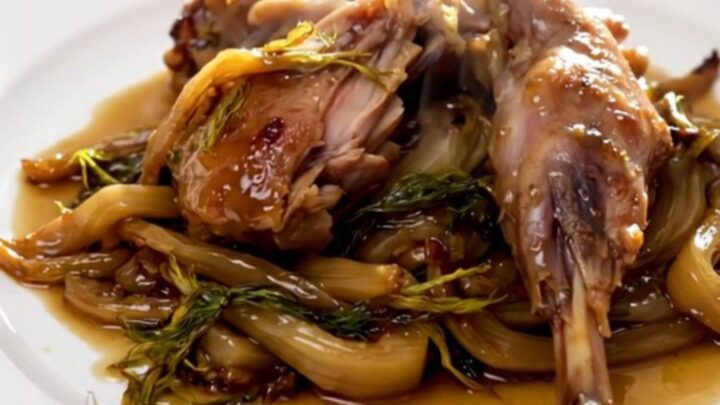
After four hours, the rabbit should be steaming and aromatic. The fennel will have caramelized, and the wine reduction should coat the meat. Before serving, verify the internal temperature of 165°F (74°C) and ensure the meat is tender enough to be easily removed from the bone with a fork.
Common mistakes
A common mistake is overcrowding the slow cooker, which can prevent the ingredients from cooking uniformly. Ensure the rabbit pieces are arranged in a single layer.
Another error is failing to allow the meat to rest after cooking; resting is essential for the moisture to settle, ensuring each bite remains juicy rather than dry or tough.
How to tell it’s done
The rabbit is done when it is fork-tender, meaning the meat pulls away from the bone with minimal resistance. Use a meat thermometer to ensure the thickest part of the meat reaches an internal temperature of 165°F (74°C).
This temperature confirms that the meat is fully cooked and safe to consume, while the resting period ensures the juices redistribute for maximum succulence.
- Steaks, chops and roasts: 145°F (63°C) in the thickest part, then a 3-minute rest
Up next · Part 3 of 3
2 variations · storage & make-ahead · 3 answers · printable card
Tips, FAQ & printable recipe (Part 3)← Back to the ingredients (Part 1)