Dinner · Part 2 of 3: Instructions
Slow Cooker Rabbit with Black Olives and Rosemary Step-by-step instructions
- Prep
- Cook
- Total
- Serves
- 4
Before you start
Before beginning, ensure your slow cooker is clean and placed on a stable, heat-resistant surface away from any water sources. Have all ingredients measured and ready to go. If the rabbit pieces are large, consider cutting them into smaller, uniform portions to ensure even cooking throughout the braising process.
Ensure you have a meat thermometer calibrated and ready to check the internal temperature once the cooking time concludes, as this is the only way to verify that the meat is safely and perfectly cooked through.
Ingredients at a glance (4)
- 2 lb rabbit pieces, cut into serving sizes
- 1 cup black olives, pitted
- 2 tbsp minced garlic
- 2 cups tomato sauce
Instructions
Layering the ingredients
- Prepare the Slow CookerPlace the raw rabbit pieces at the bottom of the slow cooker to ensure even heat distribution and contact with the heating base.Look for The pieces should be arranged in a single layer if possible.Tip Pat the meat dry with paper towels before placing it in the cooker to improve browning potential.
The slow cooker should look organized, with the rabbit pieces sitting at the bottom and the aromatics and sauce layered on top. Ensure the garlic is evenly spread to provide consistent flavor throughout the braise. Check that the tomato sauce is not overflowing and that the lid is securely in place to trap the steam, which is essential for the gentle cooking process that follows.
Braising the rabbit
- Add Aromatics and SauceScatter the black olives over the rabbit, distribute the minced garlic evenly on top, and pour the tomato sauce over all the ingredients.Look for Ensure the tomato sauce covers most of the rabbit pieces.Tip Do not stir the ingredients; the tomato sauce will naturally settle as it cooks.
During the braising phase, the kitchen will begin to fill with the savory, aromatic scent of garlic and tomatoes. The slow cooker should be maintaining a steady, low simmer. Avoid opening the lid frequently, as each time the lid is lifted, heat escapes and the total cooking time must be extended. The visual cue for this phase is the gradual softening of the meat as it absorbs the sauce.
Finishing and serving
- Braise and ServeCover the slow cooker and cook on low for 4 to 6 hours until the rabbit reaches an internal temperature of 165°F (74°C). Allow the meat to rest for at least 5 minutes before serving to ensure the juices redistribute properly.Look for The sauce should be thick and aromatic, and the rabbit should be fork-tender.Safe temperature 165°F (74°C) internal temperature (steaks, chops and roasts)Tip Check the temperature at the thickest part of the meat to confirm it is fully cooked.
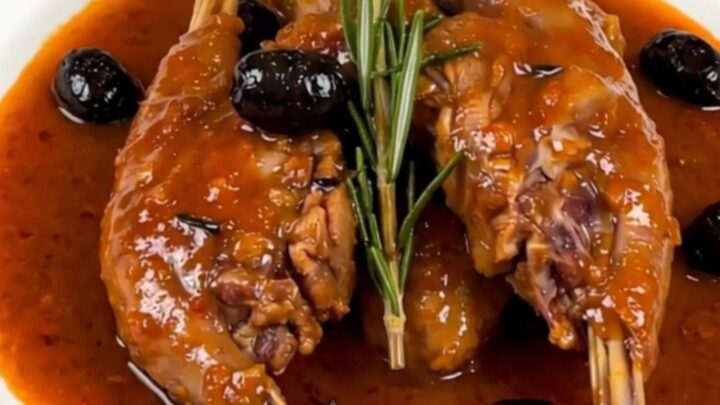
At the end of the cooking time, the rabbit should appear dark, tender, and coated in a thickened, flavorful sauce. The olives should be soft and integrated into the dish.
Before serving, confirm the temperature of the meat one last time. The final result should be a cohesive, rustic meal where the components have melded into a singular, delicious flavor profile that is ready to be plated.
Common mistakes
A common mistake is overcrowding the slow cooker, which can prevent the sauce from circulating properly and lead to uneven cooking. Always ensure there is enough space for the sauce to cover the meat.
Another oversight is failing to verify the internal temperature with a thermometer, relying solely on time instead. Since slow cookers vary in heat intensity, checking the temperature is the only way to guarantee the rabbit is cooked safely and retains its best possible texture.
How to tell it’s done
The rabbit is done when the meat is extremely tender and pulls away easily from the bone with a fork. It is critical to use a reliable meat thermometer to verify that the internal temperature reaches at least 165°F (74°C).
The sauce should be thick and glossy, having reduced slightly during the cooking process. If the meat offers resistance when pierced, continue cooking in 30-minute intervals until the desired level of tenderness is achieved and the temperature is confirmed.
- Steaks, chops and roasts: 145°F (63°C) in the thickest part, then a 3-minute rest
Up next · Part 3 of 3
2 variations · storage & make-ahead · 3 answers · printable card
Tips, FAQ & printable recipe (Part 3)← Back to the ingredients (Part 1)