Desserts · Part 2 of 3: Instructions
Slow Cooker Quince and Apple Compote Step-by-step instructions
- Prep
- Cook
- Total
- Serves
- 6
Before you start
Before beginning, ensure the slow cooker basin is clean and dry. Peel and core all fruits thoroughly, removing any woody bits from the quince cores. Have all measuring tools ready to ensure the ratios of sugar and water are precise, as these affect the final consistency of the syrup.
Ingredients at a glance (5)
- 3 large quinces, peeled, cored and diced
- 3 large apples, peeled, cored and diced
- 1/2 cup brown sugar
- 2 tbsp vanilla sugar
- 1/2 cup water
Instructions
Preparation and Layering
- Prepare the Fruit BasePeel, core, and dice the quinces and apples into uniform pieces. Place the diced quinces at the bottom of the slow cooker, then scatter the diced apples evenly over the top layer.Look for The quinces should be at the bottom to ensure they cook thoroughly in the liquid.Tip Keep the fruit pieces uniform to ensure even cooking throughout the process.
At the end of this phase, the slow cooker should be filled with uniform cubes of fruit. The quinces should be resting at the bottom, topped by the apples. Ensure the fruit is distributed evenly across the base of the cooker to promote uniform heat distribution during the cooking cycle.
Seasoning and Initial Heating
- Season and CookSprinkle the brown sugar and vanilla sugar over the fruit mixture. Pour the water over the ingredients to provide the necessary moisture for the slow cooking process.Look for The sugar will begin to dissolve into the fruit juices as the cooker heats up.Tip Ensure the water is poured evenly to help distribute the sugar.
The fruit should be evenly coated with the brown sugar and vanilla sugar. As the water is added, it should settle around the fruit, creating a base for the syrup.
The slow cooker is now ready to begin the gentle, consistent heating process that will transform the raw fruit into a tender compote.
Slow Cooking to Perfection
- Slow Cook and ServeCover the slow cooker and cook on low for 4 hours until the fruit is very tender and the liquid has reduced into a thick, glossy syrup. Serve warm or at room temperature.Look for The fruit should look translucent, velvety, and hold its shape while being soft to the touch.Tip Avoid stirring too vigorously to keep the fruit pieces intact.
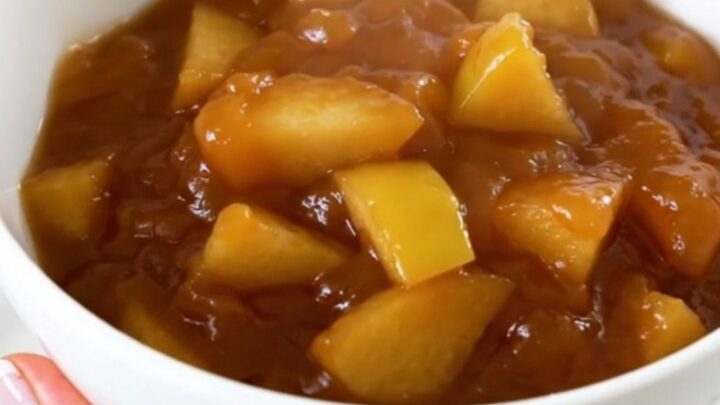
The final compote should have a rich, glossy appearance with a thick, syrupy consistency. The kitchen will be filled with a warm, sweet aroma.
The fruit should be soft but still retain its shape, indicating that the long, slow cook has successfully balanced the textures of both the quince and the apple.
Common mistakes
A common mistake is cutting the fruit pieces too small, which can lead to the compote becoming an applesauce-like puree rather than a chunky, elegant compote.
Another error is failing to place the quinces at the bottom; because they are denser than apples, they need the extra time near the heat source to soften properly. Avoid lifting the lid frequently, as this releases the steam and heat necessary for the gentle cooking process.
How to tell it’s done
The compote is done when the fruit is completely tender and can be easily pierced with a fork. The liquid should be thick, glossy, and reduced enough to coat the back of a spoon.
The quinces should have turned a deep, warm hue, indicating they have softened and absorbed the sugar syrup.
Up next · Part 3 of 3
2 variations · storage & make-ahead · 3 answers · printable card
Tips, FAQ & printable recipe (Part 3)← Back to the ingredients (Part 1)