Dinner · Part 2 of 3: Instructions
Slow Cooker Pumpkin and Goat Cheese Soup Step-by-step instructions
- Prep
- Cook
- Total
- Serves
- 4
Before you start
Before starting, ensure all vegetables are thoroughly washed, peeled, and chopped to the specified sizes. Having the goat cheese crumbled and ready in a small bowl will make the final step much smoother.
Clear your countertop of any unnecessary equipment, ensuring the slow cooker is plugged into a stable outlet and sits on a heat-resistant surface, away from any water sources or sink areas. Organizing your workspace in this manner allows for a seamless transition from preparation to the cooking process, ensuring that you have everything you need within reach.
Ingredients at a glance (5)
- 2 lbs pumpkin, peeled and diced
- 2 medium carrots, sliced
- 1 cube vegetable bouillon
- 4 cups water
- 4 oz chevre cheese, crumbled
Instructions
Preparation
- Prepare the BasePlace the diced pumpkin and sliced carrots into the slow cooker insert. Ensure the vegetables are distributed evenly across the bottom to allow for uniform cooking throughout the process.Look for Vegetables should be placed in an even layer.Tip Dice the pumpkin into uniform one-inch cubes to ensure they soften at the same rate.
At the start, the slow cooker should be clean and dry. The pumpkin and carrots should be neatly diced into uniform pieces. When placed in the cooker, they should form a relatively level layer, providing a solid foundation for the liquid and seasoning that will follow. Check that your slow cooker is set to the low setting to ensure a gentle, even cook. The vegetables should look fresh and vibrant, and the bouillon cube should be placed centrally to ensure it dissolves evenly into the water as the temperature rises.
Slow Cooking
- Season and SimmerCrumble the bouillon cube over the vegetables and pour in the water. Cover the slow cooker and cook on low for 4 hours, or until the pumpkin and carrots are completely tender when pierced with a fork.Look for Vegetables are tender when pierced with a fork.Tip Using warm water can help reduce the initial time needed to bring the ingredients to a simmer.
During the cooking phase, the kitchen will begin to fill with the aroma of roasting pumpkin and savory bouillon. The vegetables will gradually soften and release their natural juices, darkening slightly as they absorb the bouillon.
The liquid level should remain consistent throughout, and the vegetables should appear submerged or partially covered, ensuring they cook through evenly without drying out. You will notice the pumpkin pieces beginning to lose their sharp edges, indicating that they are becoming tender and ready to be turned into a smooth, uniform soup base.
Blending and Finishing
- Blend and ServeUse an immersion blender to process the soup directly in the slow cooker until smooth and creamy. Ladle the hot soup into bowls and garnish with the crumbled chevre cheese immediately before serving.Look for Soup should reach a uniform, velvety consistency.Tip If the soup is too thick, stir in a small amount of additional water or broth until the desired consistency is achieved.
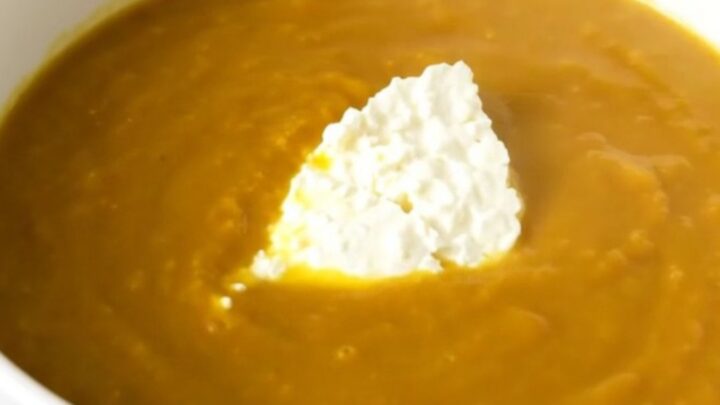
After blending, the soup will transform into a vibrant, uniform orange color with a smooth, luxurious texture. It should be steaming hot. The final addition of goat cheese should be done carefully, allowing it to sit as a decorative garnish on top of the soup. The contrast between the bright orange soup and the white cheese should be clear and visually appealing. The soup should be thick enough to hold the weight of the cheese crumbles, and the overall aroma should be inviting, savory, and slightly sweet from the cooked vegetables.
Common mistakes
Avoid overcrowding the slow cooker with too much liquid, as this can result in a thin, watery soup that lacks body. Always ensure the lid is properly seated to trap the heat and moisture.
Another common error is failing to blend the soup sufficiently; take the time to move the immersion blender around the entire vessel to ensure there are no hidden solid pieces left behind. Additionally, resist the urge to open the lid frequently, as this releases heat and extends the cooking time significantly, potentially leading to unevenly cooked vegetables.
How to tell it’s done
The soup is finished when the pumpkin and carrots are completely tender. Use a fork to test the largest piece of pumpkin; it should offer no resistance and fall apart easily with minimal pressure. Once blended, the soup should have a uniform, thick, and velvety consistency without any visible chunks of vegetable remaining.
The temperature should be piping hot throughout before serving. Because this recipe does not contain raw animal proteins, you simply need to ensure the vegetables are fully cooked and the soup is hot enough to melt the goat cheese.
Up next · Part 3 of 3
2 variations · storage & make-ahead · 3 answers · printable card
Tips, FAQ & printable recipe (Part 3)← Back to the ingredients (Part 1)