Dinner · Part 1 of 3: Ingredients
Slow-Cooker Portobello Herb Garlic Butter Pork Sirloin Roast
- Prep
- Cook
- Total
- Serves
- 6
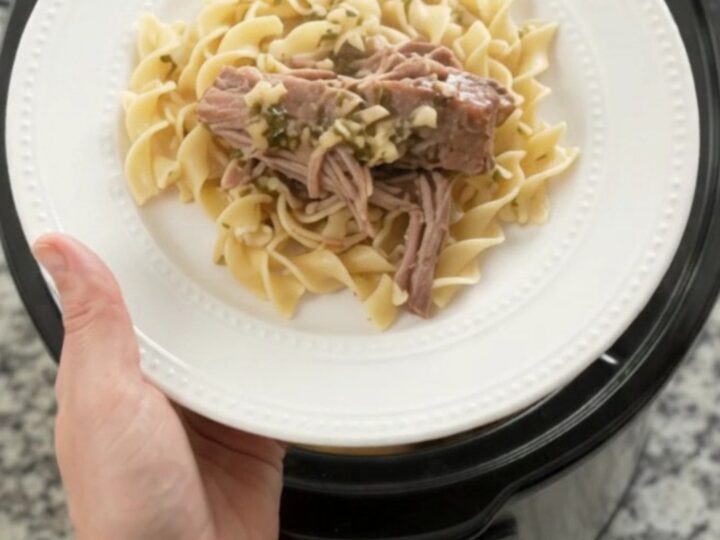
This slow-cooker portobello herb garlic butter pork sirloin roast is the definition of set-it-and-forget-it comfort food. A well-marbled pork roast is nestled under thick slices of portobello mushrooms, plenty of minced garlic, and pats of rich cowboy butter.
After hours on LOW, the meat becomes impossibly tender, shredding at the slightest touch, while the mushrooms soak up all the buttery, savory juices. Serve it over warm buttered egg noodles for a dinner that feels like a special occasion—yet takes just minutes of hands-on time.
Some recipes demand your full attention—this is not one of them. This slow-cooker pork sirloin roast requires only a few minutes of prep: place the meat in the cooker, scatter mushrooms and garlic over the top, and dot with cowboy butter. Then cover, set the timer, and walk away.
The slow cooker does the rest, transforming a modest cut of pork into a fork-tender, deeply savory roast bathed in a garlic-herb butter gravy. The mushrooms break down slightly, adding an earthy richness that complements the pork beautifully. Serve it over buttered egg noodles or mashed potatoes to soak up every last drop of the luscious sauce. It's a hands-off dinner that delivers big flavor with minimal effort.
Ingredients
- 3 1/2 lb boneless pork sirloin roast
- 8 oz portobello mushroom caps, thickly sliced
- 2 tbsp minced garlic
- 4 tbsp garlic-herb compound cowboy butter, sliced into medallions
For serving
- 12 oz buttered egg noodles
Why this recipe works
Slow cooking is the secret to transforming an economical cut like pork sirloin into a melt-in-your-mouth roast. The low, steady heat breaks down the connective tissue, rendering the meat tender and juicy. Unlike quick-cooking methods that can leave lean cuts dry, the moist environment of the slow cooker keeps the pork succulent while the surrounding flavors infuse into every bite. The result is a dish that tastes like it simmered all day—because it did, but without any tending.
The cowboy butter is the flavor powerhouse here. As it melts, it combines with the pork's natural juices and the earthy portobellos to create a rich, glossy gravy. The herbs and garlic infuse the sauce, while the butter adds a silky mouthfeel that coats the shredded meat and noodles beautifully.
This method layers flavors from the very start: the raw roast is seasoned by the mushrooms and garlic, then the butter melts over everything, creating a cohesive, deeply savory dish.
Notes and substitutions
Pork sirloin roast is a lean, boneless cut that works beautifully in the slow cooker. It's often more affordable than pork shoulder and becomes incredibly tender with long, slow cooking. If you prefer a richer, more marbled result, you can substitute pork shoulder (butt) or picnic roast; just know the cook time may need to increase by an hour or two. For the best texture, look for a roast with some fat cap or marbling—it adds flavor and moisture.
Portobello mushroom caps are ideal here because they hold their shape during the long cook time, releasing their savory juices without turning to mush. If portobellos are unavailable, cremini or white button mushrooms work well—just halve or quarter them so they cook evenly.
The garlic-herb compound cowboy butter is the star: if you don't have it on hand, make a quick version by mixing softened butter with minced garlic, chopped parsley, thyme, and a pinch of salt and pepper.
- pork sirloin roast: boneless pork shoulder or butt (cook time may need to increase by 1–2 hours)
- portobello mushroom caps: cremini or white button mushrooms (halved or quartered)
- garlic-herb compound cowboy butter: 4 tbsp unsalted butter mixed with 1 tsp dried herbs (thyme, rosemary, oregano) and 1/2 tsp garlic powder
- buttered egg noodles: mashed potatoes, rice, or crusty bread for serving
Equipment
- 7-quart slow cooker
- Cutting board
- Chef's knife
- Measuring spoons
- Serving spoon
- Large serving platter
Up next · Part 2 of 3
6 steps · 8 h of cooking · what to look for at each stage
Step-by-step instructions (Part 2)