Dinner · Part 2 of 3: Instructions
Slow Cooker Pork with Chestnuts and Cream for a Cozy Dinner Step-by-step instructions
- Prep
- Cook
- Total
- Serves
- 4
Before you start
Before beginning, ensure all ingredients are properly measured and the pork is cut into uniform, bite-sized pieces. Remove the pork from the refrigerator about 20 minutes before cooking to take the chill off.
Have your measuring cups and spoons ready to streamline the assembly process, and verify that your slow cooker is clean and positioned on a stable, heat-resistant surface. Keep the cream and chestnuts nearby for the final stage, as they will be added once the pork is fully tender.
Ingredients at a glance (6)
- 2 lb pork shoulder, cut into 2-inch pieces
- 3 shallots, thinly sliced
- 1 tbsp veal stock powder
- 1/2 cup dry white wine
- 1 cup cooked chestnuts
- 1/2 cup heavy cream
Instructions
Initial Assembly
- Assemble the basePlace the cubed pork shoulder into the base of the slow cooker. Scatter the thinly sliced shallots evenly over the pork. Sprinkle the veal stock powder over the mixture, then pour the white wine over the top to ensure the ingredients are lightly moistened.Look for The pork should be evenly distributed in the bottom of the cooker with the aromatics and seasoning layered on top.Tip Ensure the pork pieces are roughly the same size to promote even cooking throughout the long, slow process.
The pork should be evenly arranged in the slow cooker with the shallots and seasonings layered on top. Ensure the wine is poured over the ingredients to begin the braising process.
The slow cooker should be set to the low setting, and the lid must be securely in place to begin trapping the heat and moisture necessary for the long cooking duration.
Slow Braising
- Slow cook the porkCover the slow cooker with its lid and set to low heat. Cook for 6 hours until the meat is fork-tender. Verify the internal temperature of the pork reaches at least 145°F (63°C). Let the meat rest for at least 3 minutes before serving.Look for The meat should be very tender and easily pull apart with a fork when touched.Safe temperature 145°F (63°C) internal temperature (steaks, chops and roasts)Tip Avoid lifting the lid during the first few hours of cooking to maintain a consistent temperature inside the vessel.
After 6 hours, the pork should be extremely tender and the liquids should have reduced into a flavorful base. The meat should pull apart easily when tested with a fork, indicating that the connective tissues have successfully broken down. The kitchen should be filled with a savory, aromatic scent as the pork and shallots have fully softened.
Final Enrichment
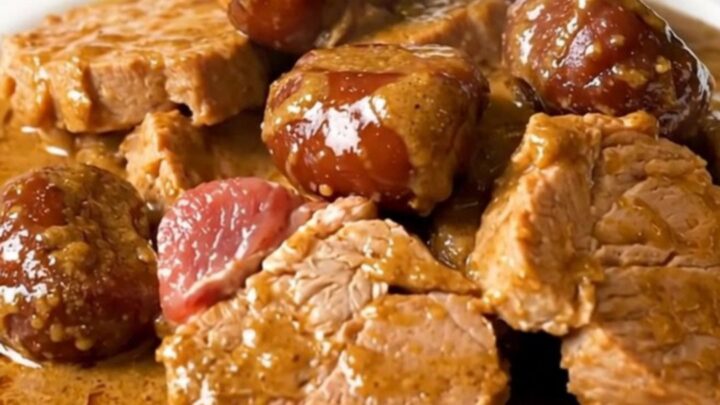
- Finish with cream and chestnutsStir in the cooked chestnuts and heavy cream. Continue to cook on low for an additional 15 minutes to allow the sauce to thicken and the flavors to meld. Remove from heat and let the pork rest for 5 minutes before serving.Look for The sauce should appear rich, glossy, and slightly thickened around the tender pork pieces.Tip If the sauce is too thin, leave the lid off for the final few minutes of cooking to help it reduce slightly.
Once the cream and chestnuts are incorporated, the sauce should transform into a rich, velvety consistency. The chestnuts should be warm throughout and coated in the glossy cream sauce. The dish is ready when the sauce coats the back of a spoon and the pork has reached its final, perfect temperature after the brief resting period.
Common mistakes
A common mistake is cutting the pork pieces into sizes that are too small, which can cause them to disintegrate during the long cooking time; aim for 2-inch cubes.
Another error is over-reducing the sauce at high temperatures; always keep the slow cooker on the low setting to prevent the cream from separating or scorching. Ensure the pork is fully submerged in the liquids initially to prevent the surface from drying out during the slow braise.
How to tell it’s done
The pork is done when it is fork-tender and reaches an internal temperature of 145°F (63°C). Use a meat thermometer to check the thickest piece of pork.
Once the target temperature is reached, allow the meat to rest for at least 5 minutes before serving to ensure the juices redistribute throughout the fibers, resulting in the most tender and flavorful bite possible.
- Steaks, chops and roasts: 145°F (63°C) in the thickest part, then a 3-minute rest
Up next · Part 3 of 3
2 variations · storage & make-ahead · 3 answers · printable card
Tips, FAQ & printable recipe (Part 3)← Back to the ingredients (Part 1)