Dinner · Part 2 of 3: Instructions
Slow Cooker Pork Tenderloin with Shallots and White Wine Step-by-step instructions
- Prep
- Cook
- Total
- Serves
- 4
Before you start
Before beginning, ensure that you have cleared enough space on your kitchen counter to accommodate your slow cooker. Remove the pork tenderloin from the refrigerator about 20 minutes before you intend to start cooking to allow the chill to dissipate, which helps promote more uniform cooking.
Have your measuring tools ready and ensure the white wine is at room temperature if possible. Verify that your slow cooker is clean and that the lid fits securely, as a tight seal is crucial for capturing the moisture and aromas during the long cooking cycle.
Ingredients at a glance (5)
- 1 lb pork tenderloin, trimmed
- 4 medium shallots, halved
- 1 tsp dried tarragon
- 1 tbsp stock powder
- 1/3 cup dry white wine
Instructions
Assembly Phase
- Prepare the Slow CookerPlace the pork tenderloin into the bowl of a slow cooker. Arrange the halved shallots evenly around the pork to ensure they cook thoroughly in the juices.Look for The pork lies flat and shallots are distributed.Tip Ensure the pork is at room temperature for roughly 20 minutes before placing it in the slow cooker for even cooking.
The pork tenderloin should be positioned centrally in the slow cooker with the halved shallots tucked neatly around the sides. Ensure that the tenderloin is laying flat against the bottom of the pot to maximize contact with the heat source. Everything should be arranged cleanly before you begin adding the dry seasonings, creating a base that will allow the flavors to meld effectively during the slow cooking phase.
Seasoning Phase
- Season and Add LiquidsSprinkle the dried tarragon and stock powder evenly over the top of the pork and shallots. Pour the white wine over the ingredients, ensuring the liquid reaches the base of the slow cooker.Look for The wine creates a shallow pool at the bottom of the cooker.Tip Sprinkling the seasonings directly onto the meat helps develop a better crust during the slow cooking process.
After sprinkling the dried tarragon and stock powder over the pork, ensure they are distributed as evenly as possible. When pouring the white wine, aim for the bottom of the pot rather than washing the seasonings off the meat.
You should see the liquid pooling at the base, surrounding the shallots and the bottom of the pork, which indicates that the braising environment is properly established for the long cooking duration.
Cooking and Resting Phase
- Cook and RestCover the slow cooker and cook on low for 4 hours until the pork reaches an internal temperature of 145°F (63°C). Remove the pork and let it rest for at least 5 minutes before slicing.Look for The pork is tender and the sauce has thickened slightly.Safe temperature 145°F (63°C) internal temperature (steaks, chops and roasts)Tip Letting the meat rest is essential for retaining juices and achieving the perfect texture when sliced.
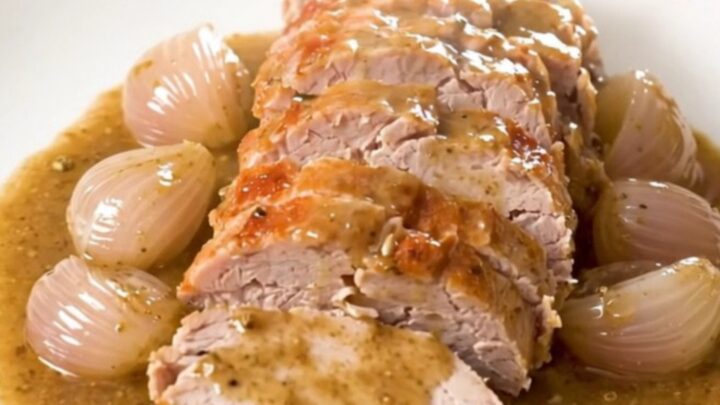
Once the cooking time is complete, the pork should be tender and easily pierced with a fork. The sauce will have a rich, glossy appearance, and the shallots should be soft enough to collapse under light pressure. After removing the pork from the heat, allow it to rest on a carving board for at least 5 minutes. This resting phase is critical to ensure the meat reabsorbs its juices, resulting in perfectly moist slices.
Common mistakes
A common mistake is overcrowding the slow cooker, which can prevent the pork from cooking evenly and result in an uneven texture. Another error involves using too much liquid; the ingredients should only be partially submerged, as the pork and vegetables will release their own juices during the process.
Avoid lifting the lid repeatedly to check on the progress, as this releases heat and moisture, significantly extending the cooking time and potentially affecting the final texture and flavor of the sauce.
How to tell it’s done
The pork tenderloin is considered done when it reaches a safe internal temperature of 145°F (63°C) when measured with a meat thermometer in the thickest part of the meat. At this stage, the pork should be opaque throughout with a slight pinkish center, ensuring it remains succulent and tender.
If the meat appears dry or tough, it may have been overcooked, so monitor the temperature closely toward the end of the four-hour window to catch it at the perfect moment of readiness.
- Steaks, chops and roasts: 145°F (63°C) in the thickest part, then a 3-minute rest
Up next · Part 3 of 3
2 variations · storage & make-ahead · 3 answers · printable card
Tips, FAQ & printable recipe (Part 3)← Back to the ingredients (Part 1)