Dinner · Part 2 of 3: Instructions
Slow Cooker Pork Tenderloin with Bacon and Brussels Sprouts Step-by-step instructions
- Prep
- Cook
- Total
- Serves
- 4
Before you start
Before beginning, ensure your pork tenderloin is properly trimmed of any tough silver skin. Wash and trim the ends of the Brussels sprouts, then cut them into halves. If you are using raw bacon, cook it in a skillet until crisp and crumble it into pieces before starting the assembly.
Have your Dijon broth measured and ready to pour. Clear your workspace and ensure your slow cooker is clean and positioned on a stable, heat-resistant surface, away from any water sources or flammable materials.
Ingredients at a glance (4)
- 2 lb pork tenderloin, trimmed
- 1 lb Brussels sprouts, halved
- 6 slices bacon, cooked and crumbled
- 1 cup Dijon broth (contains mustard)
Instructions
Assembling the Pot
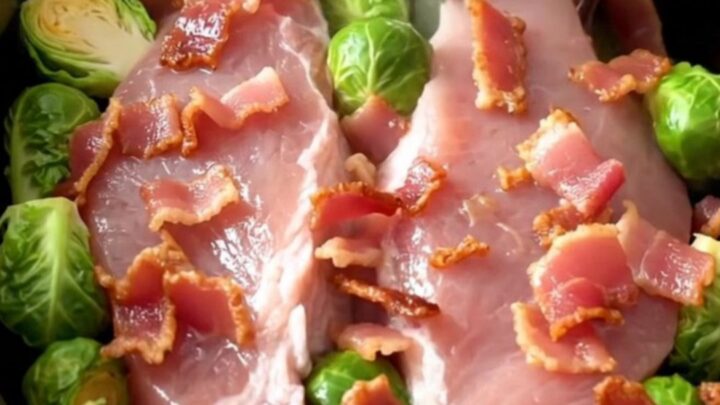
- Prepare the Slow CookerPlace the whole pork tenderloins into the base of the slow cooker, ensuring they fit comfortably along the bottom. Arrange the halved Brussels sprouts around the pork, filling in the gaps to ensure even cooking during the braising process.Look for The pork should lie flat along the bottom of the slow cooker insert.Tip If the tenderloins are too long, cut them in half crosswise to fit the slow cooker.
The pork tenderloin should be neatly arranged in the slow cooker base, surrounded by the halved Brussels sprouts. The ingredients should look organized and clean. Check that the pork is in direct contact with the base of the insert, as this is where the most consistent heat is located. Ensure there is enough room for the steam to circulate around the ingredients, which is vital for the braising process. The setup should look ready for the liquid.
Adding Flavor and Liquid
- Add Bacon and SauceScatter the crumbled cooked bacon evenly over the pork and Brussels sprouts. Pour the Dijon broth over the entire mixture, making sure to coat the meat and vegetables so they braise properly in the flavorful liquid.Look for The broth should settle at the bottom and coat the ingredients.Tip Use a silicone spatula to gently distribute the bacon crumbles if they clump together.
The bacon crumbles should be evenly distributed over the pork and sprouts, providing a nice texture and color contrast. The Dijon broth should be poured steadily over the top, coating everything. You should see the liquid begin to settle around the base of the ingredients.
At this point, ensure the broth is not overflowing the insert, as the vegetables will release their own juices during the cooking process. Everything should look properly seasoned and prepared for the heat.
Braising and Finishing
- Cook and RestCover the slow cooker and cook on low for 4 hours until the pork is tender and cooked through. Once finished, use tongs to remove the pork and let it rest for at least 5 minutes. Ensure the pork reaches an internal temperature of 145°F (63°C).Look for The pork will look soft and braised, and the sprouts will be tender.Safe temperature 145°F (63°C) internal temperature (steaks, chops and roasts)Tip Check the temperature at the thickest part of the meat to ensure it is safe to eat.
At the end of the cooking phase, the pork should be tender and have a light, braised appearance. The Brussels sprouts should be soft and have absorbed the savory Dijon liquid. The kitchen should smell savory and slightly smoky from the bacon. Before removing the pork, check that it is cooked through and reaches the target temperature of 145°F (63°C). The sauce should be thin but flavorful, ready to be drizzled over the pork when serving. Let the meat rest before slicing.
Common mistakes
A common mistake is overcooking the pork, which can result in dry meat even in a slow cooker. Always monitor the temperature rather than relying solely on the time. Another error is overcrowding the slow cooker; if the pork is stacked too high, the heat will not distribute evenly, leading to unevenly cooked meat.
Ensure the Brussels sprouts are halved so they cook through at the same rate as the pork. Finally, avoid lifting the lid frequently, as this releases heat and moisture, significantly slowing down the cooking process.
How to tell it’s done
The pork is done when it is opaque throughout and reaches an internal temperature of 145°F (63°C) at its thickest point. Use a digital meat thermometer inserted into the center of the tenderloin to verify this temperature.
The meat should be soft and yield easily to a fork, but not fall apart entirely. The Brussels sprouts should be tender and vibrant, having absorbed the savory juices from the broth. Letting the meat rest for 5 minutes after cooking is essential for retaining its juices.
- Steaks, chops and roasts: 145°F (63°C) in the thickest part, then a 3-minute rest
Up next · Part 3 of 3
2 variations · storage & make-ahead · 3 answers · printable card
Tips, FAQ & printable recipe (Part 3)← Back to the ingredients (Part 1)