Dinner · Part 2 of 3: Instructions
Slow Cooker Pork Sirloin Roast with Shallots and Carrots Step-by-step instructions
- Prep
- Cook
- Total
- Serves
- 6
Before you start
Before you start, trim any excess fat from the pork roast and pat it dry with paper towels. Peel the shallots and set them aside. Measure out the gravy and cut the butter into small pats.
Have your slow cooker ready—a 6-quart model works well for this recipe. No need to sear the roast or pre-cook anything; just layer the ingredients as directed.
Ingredients at a glance (5)
- 3 1/2 lb boneless pork sirloin roast
- 8 whole shallots, peeled
- 1 lb baby carrots
- 2 cups brown gravy
- 3 tbsp unsalted butter, cut into pats
Instructions
Layer and Set
- Layer the Roast and VegetablesPlace the pork sirloin roast in the center of the slow cooker. Scatter the whole shallots and baby carrots around the roast, tucking them in close.Look for The roast sits in the middle with shallots and carrots nestled around it.Tip Trim any excess fat from the roast before placing it in the slow cooker.
- Add Gravy and ButterPour the brown gravy over the roast and vegetables. Dot the top of the roast with the butter pats.Look for The gravy covers the bottom of the slow cooker, and the butter melts over the roast.Tip For a richer flavor, use a good-quality store-bought gravy or homemade.
At the end of this phase, the slow cooker contains a raw pork roast centered in the pot, surrounded by whole shallots and baby carrots. The gravy is poured over the top, and butter pats rest on the roast. The ingredients are arranged in a single layer, and the gravy pools at the bottom. The scene is neat and ready for the lid to go on.
Slow Cook and Shred
- Slow Cook on LowCover the slow cooker and cook on low for 8 hours, until the pork is fork-tender and easily shreds. Let it rest for 3 minutes before slicing.Look for After 8 hours, the meat should pull apart with a fork and the vegetables should be tender.Safe temperature 145°F (63°C) internal temperature (steaks, chops and roasts)Tip Resist the urge to open the lid during cooking to keep the heat steady.
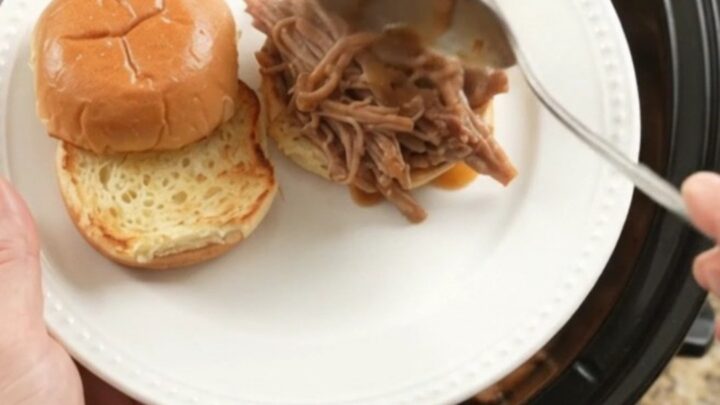
- Shred the PorkRemove the roast to a cutting board and let it rest for at least 3 minutes. Then shred the meat with two forks, discarding any large pieces of fat.Look for The pork shreds easily into moist, tender strands.Tip For even shredding, pull the meat against the grain.
After 8 hours on low, the kitchen fills with the aroma of savory pork and sweet vegetables. The meat is fork-tender and easily shreds, the shallots have turned translucent and caramelized, and the carrots are soft.
The gravy has darkened to a rich mahogany color and is bubbling gently. The pork should be pulled apart and returned to the pot.
Finish and Serve
- Return Meat to the PotReturn the shredded pork to the slow cooker and stir it into the gravy and vegetables. Let it heat through for about 10 minutes.Look for The shredded pork soaks up the gravy, and the sauce thickens slightly.Tip If the gravy seems too thin, simmer with the lid off for a few minutes.
- Serve HotSpoon the pork, shallots, and carrots onto plates or into bowls, and ladle extra gravy over the top.Look for Steam rises from the rich, glossy gravy.Tip Serve with mashed potatoes, rice, or crusty bread to soak up the sauce.
The shredded pork is mixed into the gravy, coating every strand with glossy sauce. The shallots and carrots are scattered throughout, and the mixture is hot and steaming. The texture is moist and tender, and the gravy has thickened slightly. Serve immediately, spooning extra gravy over each portion.
Common mistakes
One common mistake is opening the slow cooker lid too often, which lets heat escape and extends the cooking time. Another is using a roast that is too lean without enough fat, which can result in dry meat—if using a very lean cut, consider adding a bit of broth or extra gravy.
Also, be careful not to over-season, as the gravy already contains salt. Finally, don't skip the resting step; it helps the meat stay juicy.
How to tell it’s done
The pork is done when it reaches an internal temperature of at least 145°F (63°C) and is fork-tender, meaning it shreds easily with a fork. The vegetables should be soft and easily pierced with a knife.
Let the roast rest for at least 3 minutes before shredding to allow the juices to redistribute. If you prefer a more fall-apart texture, cook until the meat reaches 160°F (71°C) or higher.
- Steaks, chops and roasts: 145°F (63°C) in the thickest part, then a 3-minute rest
Up next · Part 3 of 3
4 variations · storage & make-ahead · 5 answers · printable card
Tips, FAQ & printable recipe (Part 3)← Back to the ingredients (Part 1)