Dinner · Part 2 of 3: Instructions
Slow Cooker Pork Shoulder with White Beans and Sage Step-by-step instructions
- Prep
- Cook
- Total
- Serves
- 4
Before you start
Before beginning, ensure your slow cooker is clean and placed on a stable, heat-resistant surface near an outlet. Gather all ingredients, including the pork shoulder, beans, carrots, and fresh sage. Chop the pork into uniform 1-inch cubes to ensure even cooking, and dice your carrots to a similar size.
Rinse your beans thoroughly and measure your chicken broth. Having everything prepped and ready on your counter will make the assembly process efficient and straightforward, allowing you to get the slow cooker started in just a few minutes.
Ingredients at a glance (5)
- 2 lb pork shoulder, cut into 1-inch cubes
- 2 cups white beans, drained and rinsed
- 2 cups carrots, diced
- 6 leaves fresh sage
- 1 1/2 cups chicken broth
Instructions
Layering the ingredients
- Prepare the slow cookerPlace the cubed pork shoulder into the bottom of the slow cooker. Add the drained white beans and the diced carrots on top of the pork. Arrange the fresh sage leaves evenly over the vegetable and meat mixture.Look for The ingredients are layered evenly in the slow cooker base.Tip Ensure the pork cubes are relatively uniform in size to promote even cooking throughout the process.
The pork, beans, carrots, and sage are layered neatly in the slow cooker. The ingredients should look vibrant and fresh before the broth is added. Ensure that the sage leaves are distributed throughout the mixture to infuse the entire dish with their aromatic essence. The slow cooker should be ready to be covered, with all components arranged in a way that promotes even heat penetration once the appliance is turned on.
Slow cooking process
- Add broth and cookPour the chicken broth over the ingredients in the slow cooker. Cover with the lid and set the slow cooker to the low setting. Cook for 8 hours until the pork is tender and fully cooked through.Look for The broth covers the base ingredients, and the slow cooker is sealed tightly.Tip Avoid lifting the lid during the cooking process to maintain a consistent temperature and moisture level.
During this phase, the slow cooker maintains a consistent, low temperature to gently braise the pork. The broth will slowly simmer, combining with the juices from the pork and the starch from the beans to create a savory, aromatic liquid.
You might notice a pleasant, savory scent filling the kitchen as the ingredients cook. The lid should remain closed to trap the steam, which is essential for maintaining moisture throughout the long cooking time.
Finishing the dish
- Finish and serveCheck that the pork has reached an internal temperature of 145°F (63°C). Turn off the slow cooker and let the dish rest for 5 minutes before serving on individual plates. Ensure the meat is tender and the liquid has reduced into a light, flavorful sauce.Look for The pork is fork-tender and the internal temperature is at least 145°F.Safe temperature 145°F (63°C) internal temperature (steaks, chops and roasts)Tip Allowing the meat to rest ensures the juices redistribute, resulting in a more succulent texture for each bite.
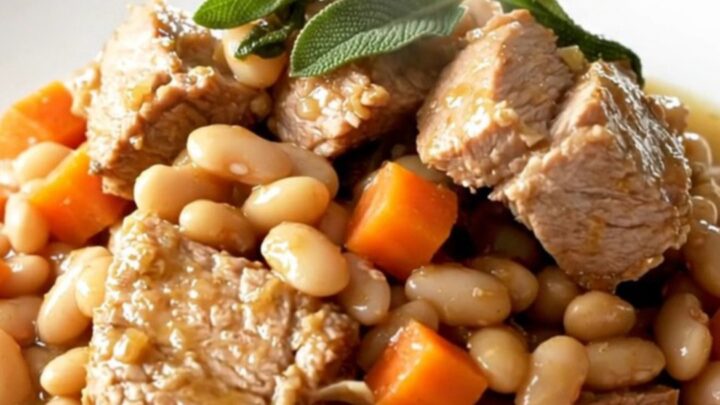
The dish is finished when the pork is exceptionally tender and the internal temperature has reached the safe threshold of 145°F (63°C). The liquid should have reduced into a silky, flavorful sauce that binds the pork, beans, and carrots together. The sage leaves should have softened and infused the broth with their distinct flavor. Check that the vegetables are tender, and let the dish rest briefly to allow the flavors to settle before serving.
Common mistakes
A common mistake is cutting the pork into pieces that are too large, which can lead to uneven cooking and longer preparation times. Another error is failing to trim excessive fat, which can result in an overly oily sauce.
Additionally, using dried herbs instead of fresh sage will significantly alter the final flavor profile, losing that signature herbal brightness. Finally, overcrowding the slow cooker can prevent proper heat distribution; ensure your slow cooker is the appropriate size for the volume of ingredients to avoid undercooked or unevenly heated sections.
How to tell it’s done
The pork shoulder is done when it is fork-tender, meaning it yields easily when pierced with a fork or knife. The internal temperature must reach at least 145°F (63°C) at the thickest part. The carrots should be soft but still hold their shape, and the white beans should be creamy.
The sauce should be glossy and have reduced slightly, coating the ingredients evenly. If the meat still feels firm, continue cooking for another 30 to 60 minutes until the desired tenderness is achieved.
- Steaks, chops and roasts: 145°F (63°C) in the thickest part, then a 3-minute rest
Up next · Part 3 of 3
2 variations · storage & make-ahead · 4 answers · printable card
Tips, FAQ & printable recipe (Part 3)← Back to the ingredients (Part 1)