Dinner · Part 2 of 3: Instructions
Slow Cooker Pork Shoulder with Savory Sausage and Cabbage Step-by-step instructions
- Prep
- Cook
- Total
- Serves
- 6
Before you start
Before starting, ensure the slow cooker is placed on a stable, heat-resistant surface near an electrical outlet. Remove the cured pork shoulder from its packaging and pat it dry with paper towels.
Peel away any damaged or wilted outer leaves from the savoy cabbage, then core and shred the remaining leaves into wide strips. Slice the Montbéliard sausages into uniform rounds, approximately half an inch thick. Have all your ingredients measured and ready to ensure the assembly process goes smoothly and efficiently.
Ingredients at a glance (5)
- 2 lb cured pork shoulder
- 4 Montbéliard sausages, sliced
- 1 head savoy cabbage, shredded
- 1 tsp whole black peppercorns
- 2 cups vegetable broth
Instructions
Assembly Phase
- Prepare the BasePlace the cured pork shoulder into the base of the slow cooker. Ensure the meat is positioned centrally to allow for even heat distribution during the cooking process.Look for The pork shoulder sits flat on the base of the slow cooker.Tip If the pork shoulder is very large, cut it into two pieces to ensure it fits comfortably without touching the sides too tightly.
- Layer the Vegetables and SausageScatter the sliced Montbéliard sausages over the pork shoulder. Follow by adding the shredded savoy cabbage on top of the sausages and pork to create a packed, flavorful layer.Look for The cabbage should be evenly distributed to cover the meat and sausages.Tip Shred the cabbage into uniform strips so that it wilts consistently and absorbs the flavors of the meat and broth.
The pork shoulder is positioned at the base, topped with the sausage rounds and a generous layer of shredded cabbage. The ingredients should be packed tightly enough to maintain moisture but not so compressed that the heat cannot circulate. Everything looks fresh and ready for the slow cooking process to begin.
Seasoning and Liquid Phase
- Season and Add LiquidSprinkle the whole black peppercorns over the cabbage layer. Carefully pour the vegetable broth over the entire contents of the slow cooker to provide moisture for the steaming process.Look for The liquid should partially submerge the ingredients without completely drowning them.Tip Pour the broth slowly around the edges of the slow cooker to avoid dislodging the peppercorns too much.
The peppercorns are evenly distributed over the cabbage, and the vegetable broth has been poured, visible around the edges of the pot. The liquid level should be sufficient to surround the ingredients without completely submerging the top layer of cabbage. The assembly is now ready to begin the long, slow braise.
Slow Cooking Phase
- Slow Cook and ServeCover and cook on low for 8 hours. Ensure the pork reaches an internal temperature of 145°F (63°C) and the sausages reach 160°F (71°C). Let the pork rest for at least 3 minutes before slicing and serving alongside the tender cabbage and sausages.Look for The pork is fork-tender and the cabbage is soft and glossy.Safe temperature 160°F (71°C) internal temperature (ground meat)Tip Use a meat thermometer to ensure the pork has reached the safe temperature of 145°F (63°C) and the sausages 160°F (71°C).
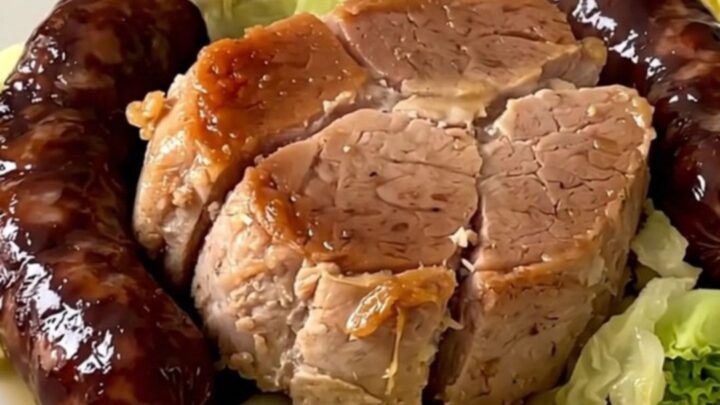
The kitchen should smell aromatic and savory. The cabbage has collapsed and softened, the pork is tender, and the broth has become infused with the juices from the meat and sausages. Everything is cooked through, tender, and ready to be served immediately after the short resting period.
Common mistakes
Avoid over-shredding the cabbage, as excessively small pieces may disintegrate into the broth during the long cooking time.
Ensure the slow cooker lid is properly sealed; lifting the lid frequently to check the progress will release heat and moisture, significantly extending the cooking time and potentially drying out the meat.
Finally, do not forget to account for the salt content of the cured pork and the sausages; avoid adding extra salt until after the dish is cooked and you have tasted the final results.
How to tell it’s done
The dish is finished when the pork shoulder is fork-tender, meaning it can be easily pulled apart with minimal pressure. Use a digital meat thermometer inserted into the thickest part of the pork to verify that it has reached a minimum internal temperature of 145°F (63°C).
The sausages should be heated through to 160°F (71°C), and the cabbage should be soft, wilted, and have taken on a glossy appearance from the rendered fats and broth. Let the meat rest for 10 minutes to allow the juices to redistribute.
- Steaks, chops and roasts: 145°F (63°C) in the thickest part, then a 3-minute rest
- Ground meat: 160°F (71°C) in the thickest part
Up next · Part 3 of 3
2 variations · storage & make-ahead · 3 answers · printable card
Tips, FAQ & printable recipe (Part 3)← Back to the ingredients (Part 1)