Dinner · Part 2 of 3: Instructions
Slow-Cooker Pork Shank Potée with Root Vegetables Step-by-step instructions
- Prep
- Cook
- Total
- Serves
- 4
Before you start
Before beginning, ensure all vegetables are washed thoroughly and peeled if necessary. Chop the turnips and carrots into uniform, one-inch chunks to ensure even cooking. Blanch the cabbage wedges in boiling salted water for three minutes, then drain and pat dry.
Ensure the slow cooker is clean and positioned on a stable, heat-resistant surface away from any splashes or direct heat sources. Have all ingredients measured and ready to assemble to make the process efficient and organized.
Ingredients at a glance (6)
- 2 lbs raw pork shank
- 4 smoked sausages
- 2 cups chopped turnips
- 2 cups chopped carrots
- 1 head green cabbage, blanched and cut into wedges
- 2 cups chicken broth
Instructions
Layering the ingredients
- Assemble the basePlace the raw pork shank and the smoked sausages into the bottom of the slow cooker. Ensure the meat is evenly distributed at the base to allow for consistent heat absorption during the long cooking process.Look for The meat should lie flat on the bottom of the slow cooker vessel.Tip Pat the meat dry before adding to the cooker to improve browning if desired, though this step is optional.
The pork shank and sausages should be positioned at the bottom of the cooker. The root vegetables and blanched cabbage are layered on top, creating a stable foundation for the slow-cooking process.
Ensure the ingredients are arranged neatly to facilitate even heat distribution throughout the duration of the cycle.
Adding the cooking liquid
- Add vegetables and liquidScatter the chopped turnips and carrots over the meat layer. Arrange the blanched green cabbage wedges on top of the vegetables. Pour the chicken broth over the entire assembly to provide moisture for the slow cooking cycle.Look for Ensure the liquid covers at least the bottom layer of meat.Tip Blanching the cabbage briefly in boiling water before adding it helps ensure it remains tender without turning mushy.
The chicken broth should be poured evenly over the contents. The liquid should be visible around the vegetables without completely submerging the top layer of cabbage. This moisture is vital for creating the aromatic braising environment that will tenderize the meat and cook the vegetables to perfection.
Final slow-cooked results
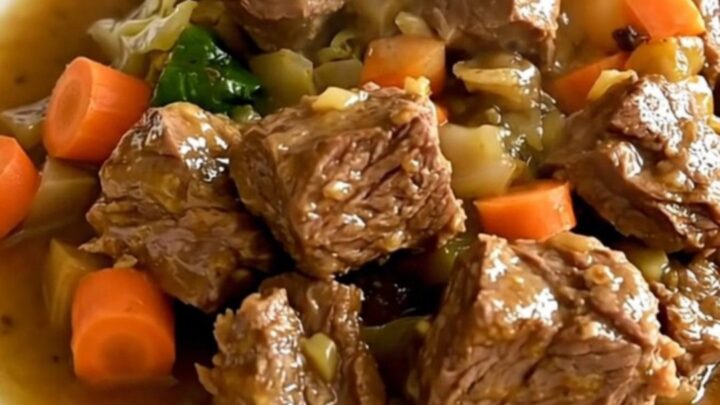
- Slow cook and serveCover the slow cooker and cook on low for 8 hours. Ensure the pork shank reaches an internal temperature of at least 145°F (63°C). Once finished, remove the pork carefully and let it rest for at least 3 minutes before slicing and serving with the vegetables.Look for The pork is done when it is fork-tender and reaches 145°F (63°C).Safe temperature 145°F (63°C) internal temperature (steaks, chops and roasts)Tip Check the temperature in the thickest part of the shank, away from the bone, to ensure an accurate reading.
The finished dish should have a rich, aromatic scent, with the pork appearing tender and the vegetables softened. The liquid at the bottom will have reduced slightly, becoming a flavorful jus. Check that the meat is fully cooked and tender before serving on a warm plate to retain its heat.
Common mistakes
A common mistake is overcrowding the slow cooker, which can prevent the ingredients from cooking evenly. While layering is key, ensure there is still room for the steam to circulate. Another error is failing to blanch the cabbage, which can result in a bitter flavor profile.
Avoid lifting the lid frequently during the cooking process, as this releases heat and steam, significantly increasing the total cooking time and potentially resulting in unevenly cooked meat. Finally, ensure the pork reaches the safe temperature.
How to tell it’s done
The dish is considered done when the pork shank is fork-tender and has reached a minimum internal temperature of 145°F (63°C). The meat should easily pull away from the bone when tested with a fork, and it must rest at least 3 minutes before carving.
The turnips and carrots should be soft enough to be pierced easily with a knife, and the cabbage should be tender but not disintegrating. Ensure the internal temperature is verified using a calibrated meat thermometer inserted into the thickest part of the meat to guarantee safety.
- Steaks, chops and roasts: 145°F (63°C) in the thickest part, then a 3-minute rest
Up next · Part 3 of 3
2 variations · storage & make-ahead · 3 answers · printable card
Tips, FAQ & printable recipe (Part 3)← Back to the ingredients (Part 1)