Dinner · Part 2 of 3: Instructions
Slow Cooker Pork Roast with Prunes and Bacon Step-by-step instructions
- Prep
- Cook
- Total
- Serves
- 4
Before you start
Before beginning, ensure the slow cooker is clean and positioned on a level, heat-resistant surface. Have all ingredients measured and ready to ensure a smooth assembly.
If the pork loin has been stored in the refrigerator, it can be removed about 15 minutes before assembly, but avoid leaving it out for longer than 30 minutes for food safety.
Ensure the prunes are pitted and the bacon is cut into uniform lardons for consistent cooking. Preparing your workspace in advance allows you to focus on layering the ingredients correctly, which is essential for the best flavor development.
Ingredients at a glance (5)
- 2 lb pork loin
- 1 cup pitted prunes
- 4 oz bacon lardons
- 1 tsp four-spice blend
- 1 cup veal stock
Instructions
Assembly and Setup
- Prepare the slow cookerPlace the raw pork loin into the center of the slow cooker insert. Ensure the slow cooker is on a stable, heat-resistant surface near a power outlet.Look for The pork loin should sit flat at the bottom of the vessel.Tip Positioning the meat centrally helps with even heat distribution during the cooking cycle.
The pork roast should be placed securely in the slow cooker. The ingredients are layered to ensure that the aromatics and liquids can circulate effectively around the meat during the long cooking duration. Ensure the lid is firmly in place.
Infusion and Cooking
- Add flavorings and liquidScatter the pitted prunes and bacon lardons evenly around the pork loin. Sprinkle the four-spice blend over the meat using a small spoon, then pour the veal stock into the slow cooker.Look for The liquid should partially submerge the base of the pork roast.Tip Distribute the prunes and bacon around the sides to allow their flavors to infuse the liquid as it heats.
During the cooking phase, the slow cooker will emit a savory, spiced aroma. The liquid will begin to darken as the veal stock reduces and combines with the rendered bacon fat and the softened prunes, creating a rich cooking environment.
Resting and Serving
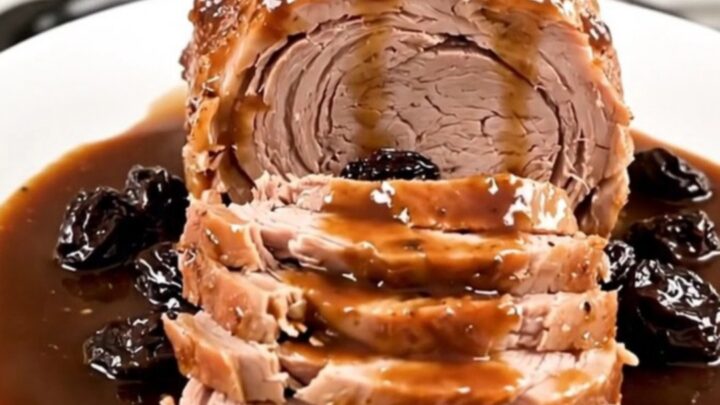
- Cook and finishCover the slow cooker and cook on low for 6 hours until the pork reaches an internal temperature of 145°F (63°C). Remove the pork, let it rest for at least 3 minutes, then slice and serve with the pan sauce.Look for The pork should be tender and slice easily without falling apart.Safe temperature 145°F (63°C) internal temperature (steaks, chops and roasts)Tip Letting the meat rest ensures the juices redistribute, making each slice moist and flavorful.
Once the cooking cycle is complete, the pork should be tender and aromatic. After the required resting period, the meat will be ready to slice. The sauce should be glossy and have a concentrated flavor profile that complements the pork.
Common mistakes
A common error is overcrowding the slow cooker or using a size that is too large, which can affect the cooking time and the consistency of the sauce. Avoid lifting the lid repeatedly during the cooking process, as this releases essential heat and steam, significantly increasing the time required for the pork to reach a safe temperature.
Also, ensure the liquid is not poured directly over the spices, which might wash them off the meat. Proper layering ensures that the spices remain in contact with the pork throughout the cooking process.
How to tell it’s done
The pork is perfectly cooked when it reaches an internal temperature of 145°F (63°C) as measured by a meat thermometer inserted into the thickest part of the loin. The meat should be firm yet tender, and the exterior should show a slight color change from the spices and stock.
Allow the roast to rest for at least 3 minutes after removing it from the heat to ensure the juices settle effectively before slicing. This resting period is critical for maintaining the moisture and tenderness of the meat, ensuring a high-quality result.
- Steaks, chops and roasts: 145°F (63°C) in the thickest part, then a 3-minute rest
Up next · Part 3 of 3
2 variations · storage & make-ahead · 3 answers · printable card
Tips, FAQ & printable recipe (Part 3)← Back to the ingredients (Part 1)