Dinner · Part 2 of 3: Instructions
Slow Cooker Pork Roast with Cabbage and Potatoes Step-by-step instructions
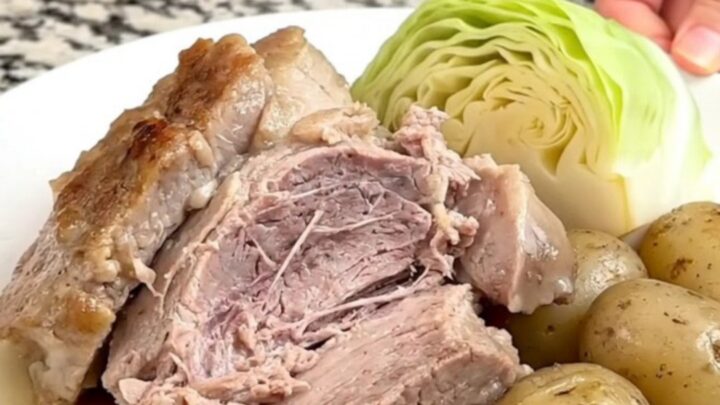
- Prep
- Cook
- Total
- Serves
- 6
Before you start
Before beginning, ensure the slow cooker insert is clean and dry. Remove the pork roast from its packaging and pat it dry with paper towels. Wash the potatoes and cabbage thoroughly under cold running water.
Cut the cabbage into even, thick wedges, making sure to keep the core intact so they do not fall apart. Halve the baby potatoes. Have all seasonings measured and ready in small ramekins to streamline the assembly process.
Ingredients at a glance (6)
- 3 lb pork shoulder roast
- 1 head cabbage, cut into wedges
- 1 lb baby potatoes, halved
- 1 tsp caraway seeds
- 1 tsp onion powder
- 1 cup chicken broth
Instructions
Assembling the roast
- Assemble the roastPlace the pork shoulder roast into the center of the slow cooker insert. Press the meat down firmly to ensure it sits flat against the base for even heat distribution during the cooking process.Look for The roast should sit securely in the center of the vessel.Tip Removing the pork from the refrigerator 20 minutes before cooking helps it cook more evenly.
The pork roast should be positioned firmly in the center of the ceramic insert. Ensure it sits level so that it cooks evenly. The vegetables should be arranged in the remaining space, ensuring they are not stacked too high above the rim of the insert. The kitchen should remain tidy, with all prep surfaces wiped down after handling the raw meat to maintain proper food safety standards.
Seasoning and liquid
- Add vegetables and seasoningTuck the cabbage wedges and halved baby potatoes around the roast. Sprinkle the caraway seeds and onion powder evenly over the meat and vegetables to ensure balanced flavor throughout the dish.Look for The vegetables should be nestled snugly around the central roast.Tip Cut the cabbage into thick wedges so they hold their shape during the long cooking time.
The caraway and onion powder should be distributed evenly over the top of the roast and vegetables. Ensure the chicken broth is poured carefully around the edges of the insert rather than directly over the seasonings, which helps keep the spices in place. The slow cooker should be set to the low setting, and the lid must be secured tightly to ensure a proper seal for the duration of the cooking process.
Final braising
- Cook and servePour the chicken broth over the ingredients. Cover the slow cooker and cook on low for 8 hours until the pork reaches 145°F (63°C). Let the meat rest for at least 3 minutes before slicing and serving with the tender vegetables.Look for The pork is fork-tender and pulls apart easily with a fork.Safe temperature 145°F (63°C) internal temperature (steaks, chops and roasts)Tip Ensure the liquid covers the base of the insert to prevent the vegetables from scorching.
After the full cooking time, the pork should look opaque and feel very soft to the touch. The cabbage wedges should be tender and translucent, and the potatoes should be easily pierced with a fork.
There should be a generous amount of flavorful liquid at the bottom of the cooker. Check the internal temperature with a thermometer to confirm it has safely reached 145°F (63°C) before turning off the appliance.
Common mistakes
A common mistake is overcrowding the slow cooker, which prevents even cooking and results in soggy vegetables. Ensure there is enough space for the heat to circulate.
Another error is checking the lid too frequently; every time the lid is lifted, heat escapes, significantly increasing the cooking time. Avoid using high heat settings for this specific cut, as it can cause the exterior of the pork to become tough before the interior reaches the desired tenderness.
How to tell it’s done
The pork is done when it is fork-tender, meaning it can be easily shredded with a fork with minimal resistance. To ensure safety, use a meat thermometer to check the thickest part of the roast; it should reach an internal temperature of at least 145°F (63°C).
Once this temperature is reached, allow the roast to rest on a cutting board for at least 3 minutes to allow the juices to redistribute throughout the meat.
- Steaks, chops and roasts: 145°F (63°C) in the thickest part, then a 3-minute rest
Up next · Part 3 of 3
2 variations · storage & make-ahead · 3 answers · printable card
Tips, FAQ & printable recipe (Part 3)← Back to the ingredients (Part 1)