Dinner · Part 2 of 3: Instructions
Slow Cooker Pork Ragu with Pappardelle Step-by-step instructions
- Prep
- Cook
- Total
- Serves
- 6
Before you start
Before starting, trim the pork shoulder and cut it into large chunks. Season with salt and pepper. Mince the garlic and measure the crushed tomatoes, red wine, herbs, and heavy cream.
Have the slow cooker ready and the pasta pot filled with salted water. The ricotta can be whipped just before serving, but it also works to whip it ahead and refrigerate it.
Ingredients at a glance (11)
- 3 lb pork shoulder, trimmed and cut into large chunks
- 1 tsp kosher salt
- 1/2 tsp black pepper
- 28 oz crushed tomatoes
- 1/2 cup dry red wine
- 4 cloves garlic, minced
- 1 tsp dried oregano
- 1 tsp dried basil
- 1/2 cup heavy cream
- 12 oz pappardelle pasta
- 1 cup whole-milk ricotta
Instructions
Phase 1: Assemble and cook
- Season and assemble the slow cookerSeason the pork shoulder chunks all over with kosher salt and black pepper. Place the pork in the slow cooker insert. Pour the crushed tomatoes and red wine over the pork. Add the minced garlic, dried oregano, and dried basil. Stir briefly to combine everything.Look for The pork is coated with the tomato-wine mixture; the liquid comes about halfway up the meat.Tip For deeper flavor, sear the pork in a hot skillet with a little oil before adding it to the slow cooker.
- Cook low and slowCover the slow cooker and cook on low for 8 hours, or on high for 5 hours, until the pork is very tender and pulls apart easily with a fork. The sauce will have darkened and thickened slightly. Let it rest for 3 minutes before slicing.Look for The pork is fork-tender and the sauce is fragrant with tomato and herbs.Safe temperature 145°F (63°C) internal temperature (steaks, chops and roasts)Tip Resist lifting the lid during cooking; each peek adds 20 minutes of cook time.
At the end of this phase, the slow cooker is filled with seasoned pork, crushed tomatoes, red wine, garlic, and herbs. The liquid should be bubbling gently around the meat.
The kitchen smells of garlic, oregano, and tomato. The pork is not yet tender, but the sauce is simmering and beginning to concentrate.
Phase 2: Shred and enrich
- Shred the porkUsing two forks, shred the pork directly in the slow cooker. The meat should pull apart into coarse, tender strands. Stir the shreds into the sauce so they are fully coated.Look for The pork shreds easily and is moist, not dry.Tip Remove any large pieces of fat as you shred, but leave some for richness.
- Finish the sauce with creamPour the heavy cream into the slow cooker and stir gently to combine. Let the sauce warm through for about 5 minutes. The cream will mellow the acidity of the tomatoes and give the sauce a silky texture.Look for The sauce turns a warm orange-red and looks glossy.Tip Do not boil after adding the cream; a gentle simmer is enough to keep it from curdling.
The pork shreds easily into long, tender strands. The sauce has darkened to a deep brick red and is slightly thickened. After stirring in the cream, the sauce turns a warm, glossy orange-brown. It coats the back of a spoon and tastes rich, savory, and slightly sweet from the tomatoes.
Phase 3: Pasta and serve
- Cook the pappardelleBring a large pot of salted water to a boil. Add the pappardelle and cook according to package directions until al dente. Reserve about 1 cup of pasta water, then drain the pasta.Look for The pasta is tender but still has a slight bite in the center.Tip Use the reserved pasta water to loosen the sauce if it seems too thick when tossing.
- Toss with the raguAdd the drained pappardelle to the slow cooker with the pork ragu. Toss gently with tongs until every ribbon is coated in the sauce. If the sauce is too thick, add a splash of the reserved pasta water to reach the desired consistency.Look for The pasta is evenly coated and the sauce clings to each ribbon.Tip Toss over low heat if the slow cooker has a warm setting, so the pasta absorbs the sauce.
- Whip the ricottaWhile the pasta cooks, place the ricotta in a small bowl and whip with a hand mixer or whisk until light and airy, about 2 minutes. Season with a pinch of salt if desired.Look for The ricotta is smooth, fluffy, and holds soft peaks.Tip Whip just before serving for the best texture; it can be made ahead and refrigerated, then re-whipped.
- Serve with whipped ricottaDivide the pappardelle and ragu among warm bowls. Top each serving with a generous spoonful of the whipped ricotta. Serve immediately.Look for The ricotta melts slightly into the hot pasta, creating creamy pockets.Tip For extra richness, drizzle with a little olive oil and cracked black pepper before serving.
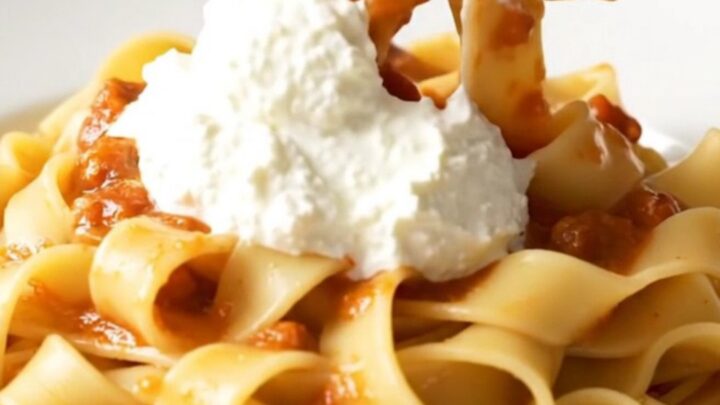
The pappardelle is cooked al dente and tossed with the ragu until every ribbon is coated. The sauce clings to the pasta, and the whipped ricotta sits on top in soft, creamy clouds. Each bite combines tender pork, silky pasta, and a bright, tangy ricotta that cuts through the richness.
Common mistakes
One common mistake is opening the slow cooker too often, which lets heat escape and extends cooking time. Another is adding the cream too early, which can cause it to curdle.
Wait until the pork is fully shredded and the sauce is hot, then stir in the cream and heat gently. Overcooking the pasta is also easy to avoid by tasting a minute before the package time.
How to tell it’s done
The pork is done when it shreds easily with a fork and the internal temperature registers at least 145°F (63°C). Since the meat is cooked low and slow, it will likely be well above this, but the temperature ensures safety.
The sauce should be thick enough to coat a spoon, and the pork should pull apart into tender strands without resistance.
- Steaks, chops and roasts: 145°F (63°C) in the thickest part, then a 3-minute rest
Up next · Part 3 of 3
4 variations · storage & make-ahead · 5 answers · printable card
Tips, FAQ & printable recipe (Part 3)← Back to the ingredients (Part 1)