Dinner · Part 2 of 3: Instructions
Slow-Cooker Pork Osso Buco with Red Wine Jus Step-by-step instructions
- Prep
- Cook
- Total
- Serves
- 4
Before you start
Before beginning, ensure that all vegetables are washed and diced into uniform pieces to promote even cooking. Sear the pork shanks in a hot skillet with a small amount of oil until they are well-browned on all sides.
This step is crucial for developing the Maillard reaction, which provides a deep, savory flavor foundation. Once seared, allow the meat to rest briefly while you prepare the slow cooker base. Keep your fresh parsley, lemon zest, and garlic ready for the final gremolata garnish to ensure a vibrant finish.
Ingredients at a glance (9)
- 2 medium carrots, diced
- 2 stalks celery, diced
- 1 medium onion, diced
- 4 pork shanks, seared
- 1 cup dry red wine
- 1 1/2 cups crushed tomatoes
- 1 cup beef bone broth
- 1 tsp rosemary
- lemon-garlic-parsley gremolata, for serving
Instructions
Aromatic Foundation
- Prepare the BasePlace the diced carrots, celery, and onions at the bottom of the slow cooker basin. These aromatics will provide a flavorful foundation for the meat as it slowly braises over the next eight hours.Look for Vegetables evenly distributed across the bottom of the pot.Tip Ensure the vegetables are cut into uniform pieces for even cooking.
The kitchen should be filled with the fresh scent of diced vegetables. Ensure the base of your slow cooker is evenly covered with the mixture of carrots, celery, and onions, providing a stable and flavorful platform for the meat. Check that the vegetables are not too large, as they need to soften completely throughout the long cooking duration.
Braising and Transformation
- Layer and SimmerArrange the seared pork shanks upright on top of the vegetable bed. Pour the red wine, crushed tomatoes, and beef bone broth over the meat, then sprinkle with the rosemary. Cover the slow cooker and set to low, cooking for eight hours until the meat reaches 145°F (63°C) and is fork-tender. Let the meat rest for at least 3 minutes before serving.Look for Meat is falling off the bone and the sauce has thickened.Safe temperature 145°F (63°C) internal temperature (steaks, chops and roasts)Tip Do not lift the lid during the first few hours to maintain consistent heat.
At the end of the eight-hour cycle, the liquid should have reduced into a rich, dark, and aromatic jus. The pork shanks will be visibly tender, with the meat pulling away from the bone. The scent should be savory and wine-forward, indicating that the flavors have successfully melded into the meat and the base vegetables.
Final Plating and Garnish
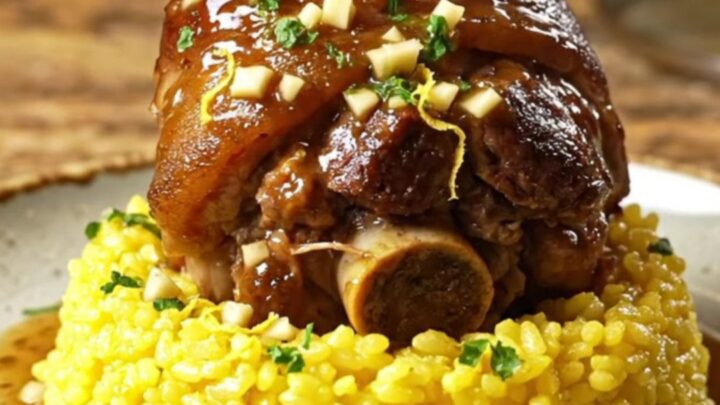
- Final PlatingCarefully remove the pork shanks from the slow cooker. Plate each shank over a bed of creamy saffron risotto, spooning the rich wine reduction sauce over the top. Garnish generously with the fresh lemon-garlic-parsley gremolata.Look for Meat is succulent and the sauce is glossy.Tip Use a wide spoon to collect the braising liquid and vegetables for the sauce.
The final dish should look vibrant, with the deep, dark pork contrasting against the bright, green gremolata and the creamy risotto. Ensure the sauce is poured evenly over the meat to keep it moist during service.
Check that the gremolata is fresh and aromatic, providing the necessary acidic punch to balance the richness of the slow-braised pork.
Common mistakes
A common mistake is failing to brown the meat properly before adding it to the slow cooker, which results in a lack of depth in the final sauce. Another error is overloading the slow cooker; ensure there is enough space for the liquid to circulate around the shanks.
Finally, avoid lifting the lid frequently during the cooking process, as each time the lid is opened, heat escapes and the cooking time is extended, potentially drying out the meat or preventing the sauce from reducing properly.
How to tell it’s done
The pork shanks are done when the meat is extremely tender and falling away from the center bone with minimal pressure. Use a meat thermometer to ensure the internal temperature has reached at least 145°F (63°C).
The sauce should be rich, glossy, and reduced enough to coat the back of a spoon. If the meat offers resistance when pierced, continue cooking in thirty-minute intervals until the desired tenderness is achieved, ensuring the internal temperature remains at the safe level.
- Steaks, chops and roasts: 145°F (63°C) in the thickest part, then a 3-minute rest
Up next · Part 3 of 3
2 variations · storage & make-ahead · 3 answers · printable card
Tips, FAQ & printable recipe (Part 3)← Back to the ingredients (Part 1)