Dinner · Part 2 of 3: Instructions
Slow Cooker Pork Neck Bones and Potatoes for a Cozy Dinner Step-by-step instructions
- Prep
- Cook
- Total
- Serves
- 4
Before you start
Before beginning, ensure the slow cooker is clean and placed on a stable, heat-resistant surface away from the edge of the counter. Prepare the vegetables by washing the potatoes and onions thoroughly. Peel the onions and quarter the potatoes into even-sized pieces.
Have the seasoned salt and garlic powder measured out in a small dish to make the seasoning process quick and efficient. Ensure the pork neck bones are fresh and ready for the pot, as no additional trimming is usually required for this cut.
Ingredients at a glance (6)
- 3 lb pork neck bones
- 4 large potatoes, quartered
- 1 large onion, chopped
- 1 tbsp seasoned salt
- 1 tbsp garlic powder
- 2 cups vegetable broth
Instructions
Layering the slow cooker
- Assemble the slow cooker ingredientsPlace the pork neck bones into the base of the slow cooker. Add the quartered potatoes and chopped onion around the meat. Sprinkle the seasoned salt and garlic powder evenly over the top of the ingredients.Look for The ingredients should be arranged in an even layer to ensure consistent cooking.Tip Ensure the neck bones are distributed so they are not all clumped in the center.
At this stage, the slow cooker should be filled with the pork, potatoes, and onions, all seasoned and ready for the liquid. Check that the ingredients are distributed evenly so that the meat is not concentrated in one spot. Everything should look raw but well-organized, with the seasoning evenly dusted over the surfaces, preparing the dish for the long, slow braise that will transform these simple components into a cohesive, flavorful meal.
Braising in the broth
- Add broth and cookPour the broth over the seasoned pork and vegetables. Cover the slow cooker with its lid. Set to cook on low for 8 hours or high for 4 hours until the meat is tender and easily pulls away from the bone.Look for The liquid should partially submerge the ingredients to facilitate the braising process.Tip Do not lift the lid during the first few hours to maintain the necessary internal temperature.
During this phase, the broth is added and the lid is sealed. The slow cooker will begin to emit a savory, comforting aroma as the temperature rises. Ensure the lid is tight and the setting is correct. The ingredients are now submerged in liquid, allowing the gentle heat to slowly break down the tough fibers in the pork neck bones while simultaneously softening the potatoes and onions in the aromatic, seasoned cooking liquid.
Serving the tender pork
- Check doneness and serveVerify the pork has reached an internal temperature of at least 145°F (63°C). Once cooked, let the meat rest for at least 3 minutes before serving. Serve the tender neck bones alongside the soft, flavorful potatoes and onions, spooning the savory cooking juices over the top.Look for The meat should be falling off the bone and the potatoes should be fork-tender.Safe temperature 145°F (63°C) internal temperature (steaks, chops and roasts)Tip Skim any excess fat from the surface of the broth before serving if desired.
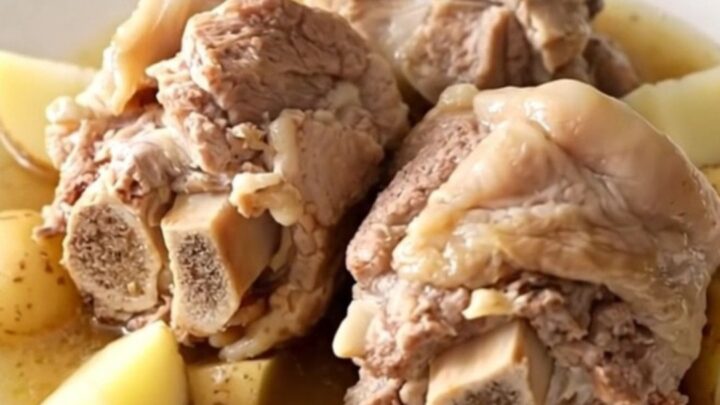
The final result should show the meat falling off the bones, indicating it is fully cooked and tender. The broth will have darkened slightly, enriched by the juices from the pork. The potatoes should be tender and fully cooked through.
Check the internal temperature one last time to confirm it has reached 145°F (63°C). Everything should look moist, appetizing, and ready to be served hot, with the meat and vegetables perfectly integrated in the savory sauce.
Common mistakes
A common mistake is lifting the lid of the slow cooker too frequently, which releases heat and extends the cooking time significantly. Resist the urge to check on the progress until the recommended time has passed.
Another error is overloading the slow cooker; ensure there is enough space for the liquid to circulate properly around the meat and vegetables. Finally, avoid using high heat for the entire duration if the meat seems to be simmering too aggressively, as low and slow is the key to tenderness.
How to tell it’s done
The dish is considered done when the pork neck bones are fork-tender and the meat pulls away from the bone with very little resistance. Using a meat thermometer, ensure the thickest part of the meat has reached an internal temperature of at least 145°F (63°C).
The potatoes should be soft enough to pierce easily with a fork, and the broth should have a rich, savory aroma that indicates the flavors have fully developed during the long braising process.
- Steaks, chops and roasts: 145°F (63°C) in the thickest part, then a 3-minute rest
Up next · Part 3 of 3
2 variations · storage & make-ahead · 3 answers · printable card
Tips, FAQ & printable recipe (Part 3)← Back to the ingredients (Part 1)