Dinner · Part 2 of 3: Instructions
Slow Cooker Pork Carbonnade: A Rich and Tender Belgian-Style Stew Step-by-step instructions
- Prep
- Cook
- Total
- Serves
- 4
Before you start
Before beginning, ensure the slow cooker insert is clean and dry. Prepare the pork by trimming any excess large chunks of fat and cutting the meat into uniform, one-inch cubes to ensure even cooking.
Peel and slice the onions into thin, uniform strips to help them break down more effectively into the sauce. Have all ingredients measured and ready to assemble, which allows the slow cooking process to start immediately and maintains a clean kitchen workspace throughout the preparation.
Ingredients at a glance (4)
- 2 lbs pork shoulder, cut into cubes
- 2 cups yellow onions, sliced
- 1 tbsp brown sugar
- 12 oz brown ale or dark beer
Instructions
Preparation and Assembly
- Assemble the stewPlace the cubed pork shoulder into the bottom of the slow cooker insert. Distribute the sliced onions evenly over the meat, sprinkle the brown sugar over the top, and pour the brown beer over everything to ensure the ingredients are moistened.Look for The beer should partially submerge the pork and onion mixture.Tip Ensure the onions are spread evenly to allow their natural sweetness to permeate the sauce during the long cooking process.
The pork cubes are layered on the bottom of the slow cooker, topped with a generous layer of onions, a dusting of brown sugar, and the dark beer. Everything is neatly arranged, and the slow cooker is plugged in and ready to begin the gentle cooking process. The kitchen smells fresh and clean, and the ingredients are waiting to be transformed into a savory, aromatic stew.
Slow Cooking
- Slow cookCover the slow cooker with its lid and set to low heat for 7 to 8 hours, or high heat for 3 to 4 hours. The goal is to allow the connective tissue in the pork to break down completely, resulting in a tender texture.Look for The stew is ready when the pork is fork-tender and pulls apart easily with minimal pressure.Tip Avoid lifting the lid frequently during the cooking process, as this releases heat and moisture, which can significantly increase total cooking time.
As the cooking progresses, the slow cooker will begin to emit a rich, malty aroma as the beer and onions combine. The pork will gradually lose its raw pink color and begin to soften.
By the end of this phase, the liquid should be bubbling gently, and the onions should be nearly translucent, indicating that the base of the sauce is developing its signature deep, complex flavor profile.
Resting and Finalizing
- Rest and serveOnce the pork is tender, check the internal temperature to ensure it reaches at least 145°F (63°C). Let the pork rest for 5 minutes before serving on individual plates. This resting period allows the juices to redistribute throughout the meat, ensuring maximum tenderness and flavor in every bite.Look for The liquid should be slightly thickened and glossy, coating the back of a spoon.Safe temperature 145°F (63°C) internal temperature (steaks, chops and roasts)Tip If the sauce is too thin, remove the lid for the last 30 minutes of cooking to allow some liquid to evaporate and concentrate the flavors.
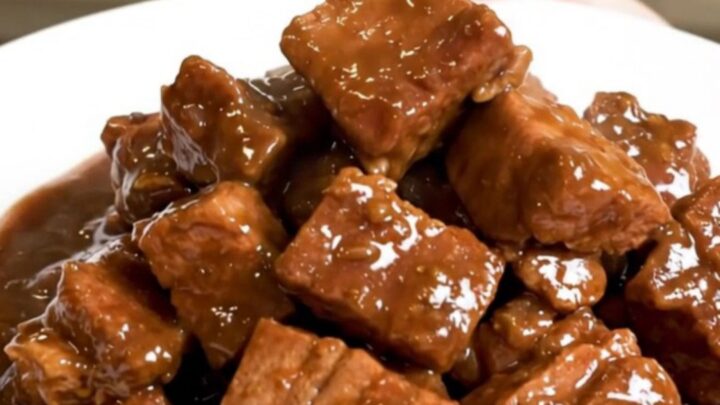
At the end of the cooking time, the meat is incredibly tender and easily yields to a fork. The sauce has thickened, taking on a glossy, dark appearance. After a short resting period, the stew is ready to be served, with the flavors fully melded and the meat perfectly moist. The final dish should be steaming, fragrant, and have a rich, uniform color throughout.
Common mistakes
A common mistake is using a cut of meat that is too lean, which will result in dry, tough stew. Another error is failing to ensure the pork is fully covered or at least moistened by the beer, which can lead to uneven cooking.
Avoid adding too much salt at the beginning, as the liquid will reduce during cooking and concentrate the seasoning. Finally, resist the urge to open the lid frequently, as this loses heat and significantly extends the required cooking time for the meat.
How to tell it’s done
The pork is done when it is fork-tender, meaning it should offer no resistance when pierced and should easily pull apart. Using a food thermometer, verify that the thickest part of the meat has reached an internal temperature of at least 145°F (63°C).
The sauce should be reduced and glossy, clinging to the meat rather than being watery. If the meat still feels firm or tough, continue cooking for another 30 to 60 minutes, as the breakdown of connective tissue takes time.
- Steaks, chops and roasts: 145°F (63°C) in the thickest part, then a 3-minute rest
Up next · Part 3 of 3
2 variations · storage & make-ahead · 3 answers · printable card
Tips, FAQ & printable recipe (Part 3)← Back to the ingredients (Part 1)