Dinner · Part 2 of 3: Instructions
Slow Cooker Pork Burnt Ends for an Easy Weeknight Dinner Step-by-step instructions
- Prep
- Cook
- Total
- Serves
- 6
Before you start
Before beginning, ensure that your slow cooker is clean and positioned on a stable, heat-resistant surface. Take the time to trim excess fat from the pork ribs if desired, then cut the meat into uniform 1-inch cubes to ensure even cooking.
Gather all your seasonings, including the brown sugar and barbecue rub, and have your barbecue sauce measured and ready to pour. Since this is a slow-cooked dish, having your mise en place organized allows for a quick assembly, meaning you can have the slow cooker running in less than ten minutes of active preparation time.
Ingredients at a glance (5)
- 3 lb boneless country-style pork ribs, cut into 1-inch cubes
- 1/2 cup unsalted butter, sliced
- 1 cup brown sugar
- 2 tbsp barbecue rub
- 1 1/2 cups barbecue sauce
Instructions
Preparation and Arrangement
- Prepare the PorkPlace the cubed boneless country-style pork ribs into the slow cooker insert, ensuring they are spread out in an even layer to promote consistent cooking throughout the process.Look for The pork should fill the bottom of the slow cooker insert evenly without being overly crowded.Tip Trim any excess fat from the pork cubes before starting to ensure a cleaner flavor in the final sauce.
The pork cubes should be arranged in a single layer or a shallow pile, filling the bottom of the slow cooker insert. Ensure the cubes are uniform in size to promote even heat distribution.
Check that the slow cooker is plugged in and ready to be set to the low heat setting, ensuring no meat is touching the very top edge of the insert where it might dry out during the long cook.
Seasoning and Glazing
- Add Seasonings and ButterDistribute the sliced butter evenly over the pork cubes. Sprinkle the brown sugar and barbecue rub over the top, making sure to coat the meat as evenly as possible for maximum flavor development.Look for The butter slices should be spaced out across the surface of the meat.Tip Use your hands to lightly toss the meat if necessary to ensure the rub reaches all sides of the pork.
The butter, sugar, and rub should be distributed thoroughly over the pork cubes. The barbecue sauce is then poured over the top, creating a base for the braising liquid. Ensure the sauce covers the majority of the meat. Look for a cohesive layer where the seasonings are visible on the surface of the pork before securing the lid to begin the slow cooking process.
Slow Cooking and Finishing
- Simmer and ServePour the barbecue sauce over the mixture. Cover and cook on low for 6 hours. Once the pork reaches an internal temperature of 145°F (63°C), remove from the heat and let the meat rest for 5 minutes before serving.Look for The sauce will thicken and the pork will be extremely tender and easily pierced with a fork.Safe temperature 145°F (63°C) internal temperature (steaks, chops and roasts)Tip Keep the lid on during the cooking process to maintain a consistent temperature and prevent moisture loss.
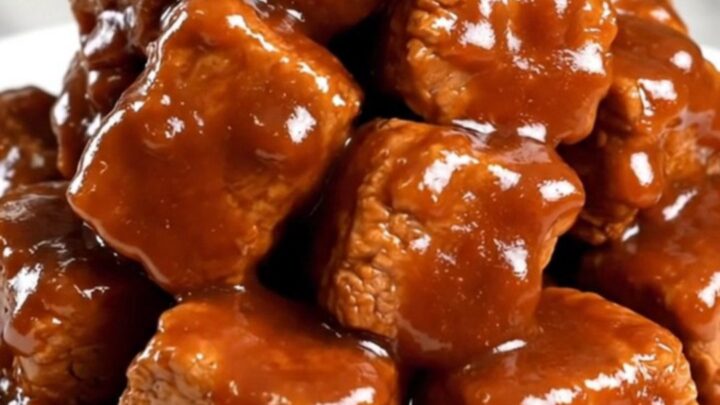
After the cooking time, the pork should be dark, glossy, and coated in a thick, rich sauce. The meat should be extremely tender. Before serving, verify the internal temperature of 145°F (63°C). The kitchen should smell like sweet and savory barbecue. If the sauce seems too thin, you can remove the lid for the final 30 minutes to allow it to reduce and thicken further.
Common mistakes
A common mistake is cutting the pork into inconsistent sizes; larger chunks will remain tough while smaller ones may disintegrate. Another error is removing the lid too frequently during the cooking process, which releases heat and steam, significantly increasing the total cooking time.
Additionally, overcrowding the slow cooker can prevent the sauce from properly caramelizing and coating the meat. Finally, do not add too much liquid beyond the sauce, as the pork will naturally release moisture that could dilute the final glaze.
How to tell it’s done
The pork is done when it is fork-tender and pulls apart with very little resistance. The internal temperature must reach at least 145°F (63°C) as measured by an instant-read thermometer inserted into the thickest part of a cube.
When done, the sauce should appear thick, glossy, and slightly reduced, clinging tightly to the pork. Let the meat rest for at least 5 minutes before serving, which allows the juices to redistribute and ensures the sauce sets slightly for the best texture and flavor.
- Steaks, chops and roasts: 145°F (63°C) in the thickest part, then a 3-minute rest
Up next · Part 3 of 3
2 variations · storage & make-ahead · 3 answers · printable card
Tips, FAQ & printable recipe (Part 3)← Back to the ingredients (Part 1)