Dinner · Part 2 of 3: Instructions
Slow-Cooker Pineapple Maple Bourbon Spare Ribs Step-by-step instructions
- Prep
- Cook
- Total
- Serves
- 6
Before you start
Before you start, make sure you have a 6-quart slow cooker. If your ribs are larger than the slow cooker, trim them to fit. Drain the pineapple rings well, reserving the juice for another use if desired. Grate the fresh ginger using a fine grater or microplane.
Have the barbecue sauce measured and ready. There is no need to sear the ribs or pre-cook anything; this recipe is truly dump-and-go. Set out your serving plate and carving fork so you can transfer the ribs as soon as they're done.
Ingredients at a glance (4)
- 4 lb St. Louis style pork spare ribs
- 1 can (20 oz) pineapple rings in juice, drained
- 2 tbsp fresh ginger, grated
- 1 1/2 cups maple bourbon barbecue sauce
Instructions
Layer the Ingredients
- Layer the Ribs and AromaticsPlace the St. Louis style pork spare ribs in the bottom of a 6-quart slow cooker. Arrange the pineapple rings on top of the ribs. Sprinkle the grated ginger evenly over the pineapple and ribs.Look for The ribs should fit in a single layer, with pineapple rings covering them.Tip If the ribs are too large, cut the rack to fit the slow cooker.
- Pour the SaucePour the maple bourbon barbecue sauce evenly over the ribs, pineapple, and ginger, making sure all surfaces are coated.Look for The sauce should pool around the ribs, not completely submerge them.Tip Use a spatula to spread the sauce if needed.
At the end of this phase, the ribs are covered with pineapple rings, grated ginger, and a generous coating of barbecue sauce. The slow cooker is filled with raw ingredients, but the colors are vibrant: the golden pineapple, the pale ginger, and the rich amber sauce. Everything should look well distributed and ready to cook.
Slow-Cook to Perfection
- Slow-Cook the RibsCover the slow cooker and cook on low for 8 hours, or until the meat is tender and easily pulls apart with a fork. Let it rest for 3 minutes before slicing.Look for The meat should be fork-tender and nearly falling off the bone.Safe temperature 145°F (63°C) internal temperature (steaks, chops and roasts)Tip Do not lift the lid during cooking to keep the heat steady.
- Check the TemperatureAfter 8 hours, check that the internal temperature of the thickest part of the meat reaches at least 145°F (63°C). If not, continue cooking for 30-minute intervals until it does. Let it rest for 3 minutes before slicing.Look for A thermometer inserted into the thickest part reads 145°F (63°C) or higher.Safe temperature 145°F (63°C) internal temperature (steaks, chops and roasts)Tip The meat will be more tender than the minimum temperature suggests.
After 8 hours, the slow cooker is bubbling gently, and steam rises when you lift the lid. The ribs are deeply browned, and the pineapple rings have caramelized at the edges.
The sauce has thickened and clings to the meat. A fork inserted into the meat meets no resistance, and the meat nearly falls off the bone. The aroma is sweet, smoky, and intensely savory.
Rest and Serve
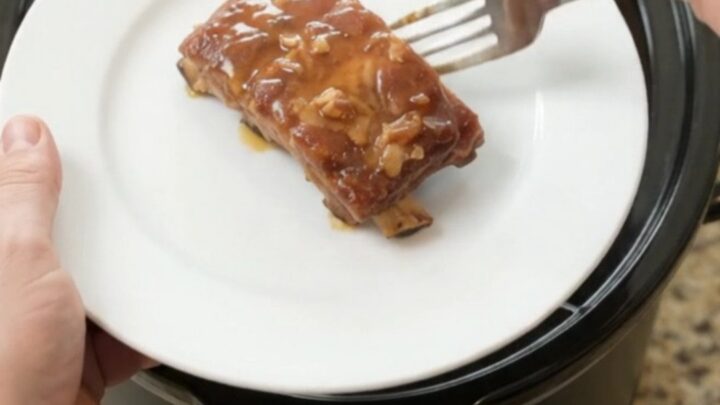
- Rest and ServeTurn off the slow cooker and let the ribs rest in the sauce for at least 3 minutes. Using a carving fork, lift the ribs out of the slow cooker and transfer to a serving plate. Spoon some of the sauce over the top before serving.Look for The ribs should be glistening with sauce and hold together when lifted.Safe temperature 145°F (63°C) internal temperature (steaks, chops and roasts)Tip Letting them rest helps the meat set so it doesn't fall apart immediately.
After resting, the ribs are glistening with sauce and hold together when lifted. When you transfer them to a serving plate, the meat stays intact but yields easily to the fork. The pineapple rings are soft and caramelized, and the sauce pools around the ribs. The dish looks glossy and inviting, ready to be served.
Common mistakes
One common mistake is lifting the lid during cooking, which lets out heat and extends the cooking time. Trust the process and keep the lid on. Another mistake is using too little sauce; the ribs should be well coated.
If the sauce reduces too much and looks dry, you can add a splash of water or pineapple juice. Also, be careful not to overcook the ribs to the point where they completely fall apart when you try to lift them. They should be tender but still hold together on the fork.
How to tell it’s done
The ribs are done when the meat is fork-tender and easily pulls apart with little resistance. To check, insert a fork into the thickest part of the meat and twist; it should separate easily.
The internal temperature of the meat should reach at least 145°F (63°C) for food safety, but because of the long cooking time, it will likely be much higher and more tender. The sauce should be thick and glossy, coating the ribs. If the sauce seems too thin, you can remove the ribs and simmer the sauce on the stovetop to reduce it.
- Steaks, chops and roasts: 145°F (63°C) in the thickest part, then a 3-minute rest
Up next · Part 3 of 3
4 variations · storage & make-ahead · 5 answers · printable card
Tips, FAQ & printable recipe (Part 3)← Back to the ingredients (Part 1)