Dinner · Part 2 of 3: Instructions
Slow Cooker Pineapple Habanero Pulled Pork Sliders Step-by-step instructions
- Prep
- Cook
- Total
- Serves
- 8
Before you start
Before you start, cut the pork shoulder into large chunks, about 2 to 3 inches each, so they fit snugly in the slow cooker. Measure out the pineapple chunks, garlic powder, and pineapple habanero sauce.
No need to sear the meat—the slow cooker does all the work. Have a cutting board and two forks ready for shredding at the end. This recipe is truly hands-off, so take a few minutes to prep and then let the slow cooker work its magic.
Ingredients at a glance (4)
- 3 lb boneless pork shoulder, cut into large chunks
- 2 cups pineapple chunks
- 1 tbsp garlic powder
- 1 cup pineapple habanero sauce
Instructions
Assemble and slow cook
- Add the porkPlace the boneless pork shoulder chunks into the slow cooker insert, fitting them snugly in a single layer. Use your hands to tuck in any larger pieces so the surface is even and the pork will cook evenly.Look for The pork chunks should fill the bottom of the slow cooker without stacking too high.Tip Cut the pork into uniform 2- to 3-inch chunks so they cook at the same rate.
- Top with pineappleScatter the pineapple chunks evenly over the pork. The pineapple will release juice as it cooks, helping to keep the meat moist and adding a sweet counterpoint to the habanero heat.Look for The pineapple pieces should cover most of the pork surface.Tip If using canned pineapple, drain it well before adding to avoid excess liquid.
- Season with garlic powderDust the garlic powder evenly over the pineapple and pork. A light, even sprinkle ensures every bite gets a hint of savory garlic without clumping.Look for The garlic powder should form a thin, even layer over the fruit and meat.Tip Tap the spoon to distribute the powder evenly; avoid dumping it in one spot.
- Pour over the sauceSpoon the pineapple habanero sauce over the entire mixture, making sure to cover the pork and pineapple evenly. The sauce will mingle with the juices during cooking, creating a rich, spicy-sweet braising liquid.Look for The sauce should coat the top of the pork and pineapple; it will thin out as it cooks.Tip Use a spoon to spread the sauce; no need to stir, as the slow cooker will do the work.
At the end of the first phase, the slow cooker is filled with seasoned pork, pineapple, and sauce. The kitchen already smells sweet and spicy. The pork should be partially submerged in a pinkish sauce that will deepen in color as it cooks.
You can see the pineapple chunks scattered on top, and the garlic powder has formed a light crust on the surface. Everything is ready to cook undisturbed for the next several hours.
Cook and rest
- Cook low and slowCover the slow cooker and cook on low for 8 to 10 hours, or on high for 5 to 6 hours, until the pork is fork-tender and easily pulls apart. The meat should be cooked through to an internal temperature of at least 145°F (63°C), but for shredding, cook until it reaches 200°F (93°C) for maximum tenderness. Let it rest for 3 minutes before slicing.Look for The pork should be so tender that a fork slides in with no resistance.Safe temperature 145°F (63°C) internal temperature (steaks, chops and roasts)Tip Low and slow yields the most tender shreds; high heat can toughen the meat.
- Rest the meatOnce the pork is fully cooked and tender, turn off the slow cooker and let the meat rest in the juices for at least 3 minutes before shredding. This allows the fibers to relax and the juices to redistribute, ensuring moist, flavorful shreds.Look for The meat should be moist and hold together when lifted, but break apart easily.Tip Resist the urge to shred immediately; resting improves texture.
After the long cook, the pork is fork-tender and the sauce has thickened into a glossy, rich liquid. The pineapple chunks have softened and some have broken down, adding body to the sauce. The meat is still holding its shape but yields easily to a fork. The aroma is intensely savory with a sweet-spicy edge. Let it rest in the juices for a few minutes before shredding to lock in moisture.
Shred and serve
- Shred the porkTransfer the pork to a cutting board and use two forks to pull the meat into soft, bite-sized shreds. Discard any large pieces of fat, then return the shredded pork to the slow cooker and toss with the cooking liquid to keep it moist.Look for The shreds should be tender and easily pull apart, with some caramelized edges.Tip For finer shreds, pull with the grain; for chunkier, pull across.
- Serve on slidersPile the shredded pork onto slider buns and spoon a little of the cooking liquid over the top. Serve immediately while warm, with extra sauce on the side if desired.Look for The pork should be glossy with sauce and the pineapple chunks soft and sweet.Tip Toast the buns lightly for extra texture if you like.
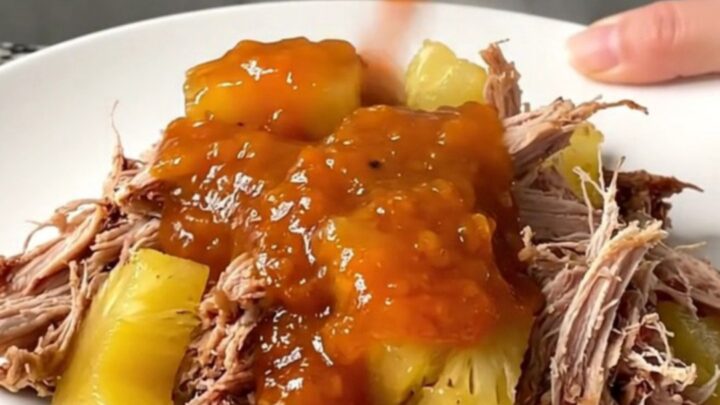
The shredded pork is moist, tender, and coated in a glossy, clingy sauce. The pineapple pieces are soft and sweet, and the heat from the habanero is present but not overwhelming. Piled onto slider buns, the pork is juicy and flavorful, with a beautiful balance of sweet, spicy, and savory. The kitchen is filled with the lingering smell of slow-cooked pork and chili.
Common mistakes
One common mistake is not cutting the pork into uniform chunks, which leads to uneven cooking. Another is lifting the lid too often during cooking, which lets heat escape and extends cooking time.
Also, avoid adding too much liquid—the pork and pineapple release plenty of juice, so you don’t need extra broth. Finally, don’t shred the pork too early; if it doesn’t pull apart easily, it needs more time. Patience is key.
How to tell it’s done
The pork is done when it reaches an internal temperature of at least 145°F (63°C) for food safety, but for shredding, you want it much higher—around 200°F (93°C). At this temperature, the collagen has fully broken down, and the meat will pull apart with just a fork.
Test by inserting a fork into a chunk: it should slide in easily and the meat should twist apart without resistance. The shreds should be tender, not stringy or dry.
- Steaks, chops and roasts: 145°F (63°C) in the thickest part, then a 3-minute rest
Up next · Part 3 of 3
4 variations · storage & make-ahead · 5 answers · printable card
Tips, FAQ & printable recipe (Part 3)← Back to the ingredients (Part 1)