Dinner · Part 2 of 3: Instructions
Slow-Cooker Pepper Jack Poblano Skirt Steak with Hominy Step-by-step instructions
- Prep
- Cook
- Total
- Serves
- 6
Before you start
Before you start, slice the skirt steak against the grain into strips about 2 inches long. If using fresh poblanos, roast them over an open flame or under the broiler until charred, then peel, seed, and dice.
Drain and rinse the canned hominy to remove excess sodium. Warm the queso blanco dip slightly so it pours easily. Have all your ingredients measured and ready to go—this recipe comes together in minutes once everything is prepped.
Ingredients at a glance (5)
- 2 lb beef skirt steak, sliced into strips
- 2 cups roasted poblano peppers, diced
- 1 can (15 oz) white hominy, drained and rinsed
- 1 1/2 cups white queso blanco dip, warmed
- 1 cup shredded pepper jack cheese
Instructions
Layer and Set
- Layer the raw ingredientsPlace the sliced skirt steak strips in the bottom of a 6-quart slow cooker. Scatter the diced roasted poblano peppers and drained hominy evenly over the meat. Pour the warmed queso blanco dip over the top, then sprinkle with the shredded pepper jack cheese. Do not stir. Let it rest for 3 minutes before slicing.Look for The meat is covered with peppers, hominy, and both cheeses.Safe temperature 145°F (63°C) internal temperature (steaks, chops and roasts)Tip Warming the queso helps it melt more evenly during cooking.
- Cover and cook lowCover the slow cooker and set it to low heat. Cook for 8 to 10 hours, until the skirt steak is fork-tender and easily pulls apart. The sauce will be bubbling and the cheese fully melted. Let it rest for 3 minutes before slicing.Look for The meat is tender and the sauce is bubbling around the edges.Safe temperature 145°F (63°C) internal temperature (steaks, chops and roasts)Tip Avoid lifting the lid during cooking to keep the heat steady.
At the end of the layering phase, the slow cooker contains raw skirt steak strips, diced roasted poblanos, drained hominy, a pool of white queso dip, and a shower of shredded pepper jack.
The colors are vibrant—green peppers, yellow hominy, and white cheese against the deep red of the raw beef. The queso should be warmed so it spreads easily, but the mixture is not stirred. This is the calm before the long, slow transformation.
Slow-Cook and Tenderize
- Shred the steakOnce the steak is cooked through and tender, use two forks to shred the meat directly in the slow cooker. Stir gently to coat the shredded beef with the queso sauce, peppers, and hominy. The mixture should be thick and creamy. Let it rest for 3 minutes before slicing.Look for The beef shreds easily and is coated in a creamy sauce.Safe temperature 145°F (63°C) internal temperature (steaks, chops and roasts)Tip Shred while the meat is still warm for the best texture.
- Check the temperatureInsert an instant-read thermometer into the thickest part of the shredded beef. The internal temperature must reach at least 145°F (63°C). If it hasn't, return the lid and cook for another 30 minutes before checking again.Look for Thermometer reads at least 145°F (63°C).Safe temperature 145°F (63°C) internal temperature (steaks, chops and roasts)Tip Let the meat rest for 3 minutes before serving to keep it juicy.
After 8 to 10 hours on low, the slow cooker is bubbling and fragrant with roasted peppers and melted cheese. The skirt steak has turned from red to a rich brown and is fork-tender, easily shredding into strands. The hominy is plump and tender, and the sauce is creamy and thick, clinging to the meat. The kitchen smells like a warm, cheesy, smoky hug. The meat should register at least 145°F (63°C) on a thermometer.
Shred and Serve
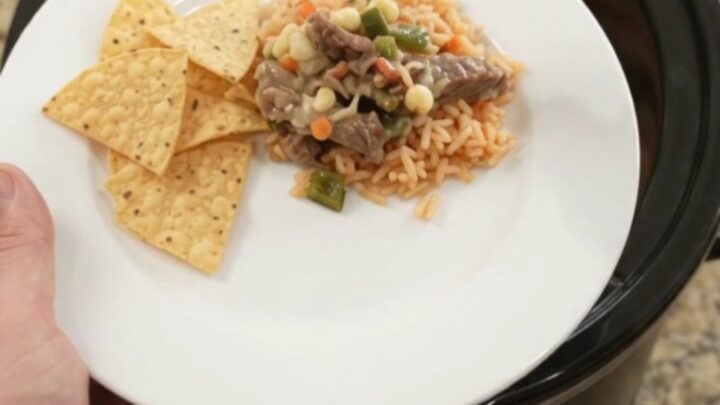
- Serve with tortilla chips and riceSpoon the hot steak mixture over a bed of Mexican rice or alongside crispy tortilla chips. Use a slotted spoon to serve if you prefer less sauce, or ladle generously for a saucier dish.Look for Steaming scoops of beef and hominy in a creamy, cheesy sauce.Tip Warm the tortilla chips in the oven for extra crunch.
Once the steak is shredded and stirred into the sauce, the dish is ready to serve. The beef is coated in a glossy, stretchy queso sauce with bits of roasted poblano and hominy throughout.
Scoop it onto plates with rice or tortilla chips, and watch the steam rise. The texture is hearty and satisfying, with a mild heat from the pepper jack and a smoky depth from the roasted poblanos. It's a complete meal in one bowl.
Common mistakes
A common mistake is lifting the lid too often to check on the food. Every time you open the slow cooker, heat escapes and adds 20 to 30 minutes to the cooking time. Another pitfall is using a low-quality cheese dip that separates or becomes grainy.
Choose a queso blanco that is specifically meant for melting, and avoid stirring until the end, as too much agitation can cause the sauce to break. Finally, don't skip shredding the meat—it makes all the difference in texture.
How to tell it’s done
The dish is done when the skirt steak is fork-tender and easily shreds apart. The internal temperature of the meat should read at least 145°F (63°C) on an instant-read thermometer. The sauce should be bubbling gently around the edges, and the cheese should be fully melted and slightly thickened. If the mixture looks too thin, let it cook uncovered for an additional 20 to 30 minutes to reduce.
- Steaks, chops and roasts: 145°F (63°C) in the thickest part, then a 3-minute rest
Up next · Part 3 of 3
4 variations · storage & make-ahead · 5 answers · printable card
Tips, FAQ & printable recipe (Part 3)← Back to the ingredients (Part 1)