Dinner · Part 2 of 3: Instructions
Slow Cooker Pear and Onion Pork Chops Step-by-step instructions
- Prep
- Cook
- Total
- Serves
- 4
Before you start
Before you begin, ensure your pork loin chops are properly trimmed of any excessive external fat, though leaving a small amount is fine for flavor. Wash and slice your pears into even wedges, removing the cores. Peel the yellow onion and slice it into thin, uniform rounds to ensure they cook evenly.
Have your dried thyme, black pepper, and pear juice ready next to your slow cooker to make the assembly process seamless and quick. Ensure your slow cooker insert is clean and dry before you start placing the ingredients inside.
Ingredients at a glance (6)
- 4 slices thick-cut boneless pork loin
- 2 medium pears, sliced into wedges
- 1 large yellow onion, sliced
- 1 tsp dried thyme
- 1/2 tsp black pepper
- 1/2 cup pear juice
Instructions
Assembly Phase
- Layering the ingredientsPlace the thick-cut boneless pork loin slices in the bottom of the slow cooker insert. Layer the sliced pear wedges and onion slices over the top of the pork, ensuring an even distribution throughout the pot.Look for The pork should be arranged in a single layer at the bottom of the insert.Tip Avoid overlapping the pork too much to ensure even cooking throughout the slow cooker cycle.
At the end of this phase, your slow cooker should be filled with a uniform layer of pork, topped with neatly arranged pear wedges and sliced onions. The ingredients should be distributed evenly to ensure that every part of the dish receives the heat and moisture during the cooking cycle. Check that the pork is touching the bottom of the stoneware insert to facilitate proper heat transfer once the slow cooker is turned on and the lid is secured.
Seasoning Phase
- Seasoning and liquidsSprinkle the dried thyme and black pepper evenly over the layers of fruit and vegetables. Pour the pear juice carefully over the entire mixture to provide moisture and flavor for the cooking process.Look for The juice should pool slightly at the bottom of the slow cooker.Tip Distributing the seasoning evenly ensures that every bite of the meat and fruit is well flavored.
After adding the thyme, pepper, and pear juice, the mixture should look aromatic and slightly moist. The liquid will settle at the bottom, creating a base for the cooking process. Ensure that the thyme and pepper are distributed broadly across the fruit and meat rather than clumped in one spot. Once you have poured the juice, the assembly is complete, and you are ready to seal the slow cooker and begin the low-heat cooking process.
Cooking Phase
- Slow cooking to completionCover the slow cooker and cook on low for 4 hours. Once finished, ensure the pork reaches an internal temperature of 145°F (63°C). Remove the pork to a plate and let it rest for at least 3 minutes before serving with the cooked pears, onions, and pan sauce.Look for The pork should be opaque and tender, and the pear slices should be soft.Safe temperature 145°F (63°C) internal temperature (steaks, chops and roasts)Tip Letting the meat rest is essential to keep the juices inside the pork loin for maximum tenderness.
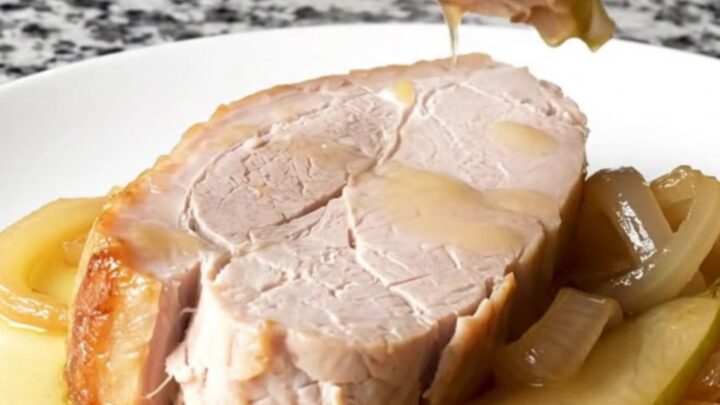
When the cooking phase is complete, the house should smell fragrant with the scent of cooked onions and thyme. The pork should be tender and fully opaque, with no signs of pink. The pear slices will be soft and have a golden hue from the juices.
Before serving, verify the internal temperature of the pork with a thermometer. Let the meat rest for at least 3 minutes to allow the juices to redistribute, ensuring a tender and flavorful final result on the plate.
Common mistakes
A common mistake is overcrowding the slow cooker or layering the ingredients too high, which can lead to uneven cooking. Always keep the pork in a single layer at the bottom. Another error is overcooking the pork, which can make even the most succulent loin dry and tough.
Always use a meat thermometer to verify the internal temperature rather than relying solely on the clock. Finally, avoid lifting the lid frequently during the cooking process, as this releases heat and moisture, significantly increasing the total cooking time required.
How to tell it’s done
The pork is perfectly cooked when it is completely opaque throughout and registers an internal temperature of 145°F (63°C) on a digital meat thermometer. You should also look for a tender texture where the meat pulls apart easily with a fork.
The pear wedges should be fork-tender but not completely disintegrated, and the onions should be translucent and soft, having absorbed the flavors of the pork and the pear juice. Once these conditions are met, remove the meat from the heat.
- Steaks, chops and roasts: 145°F (63°C) in the thickest part, then a 3-minute rest
Up next · Part 3 of 3
2 variations · storage & make-ahead · 3 answers · printable card
Tips, FAQ & printable recipe (Part 3)← Back to the ingredients (Part 1)