Dinner · Part 2 of 3: Instructions
Slow Cooker Parsnip and Yellow Carrot Soup Step-by-step instructions
- Prep
- Cook
- Total
- Serves
- 4
Before you start
Before starting, ensure all vegetables are thoroughly scrubbed and peeled to remove any dirt or tough skins. Have your slow cooker placed on a stable surface away from the edge of the counter. Prepare the vegetables by dicing them into uniform sizes, which is crucial for even cooking.
Ensure your immersion blender is clean and ready, as you will need it as soon as the vegetables reach the desired tenderness. If you are using a bouillon cube, have it ready to crumble by hand for better distribution.
Ingredients at a glance (5)
- 1 lb parsnips, peeled and diced
- 1 lb yellow carrots, peeled and sliced
- 1 large onion, chopped
- 1 cube bouillon cube
- 4 cups water
Instructions
Vegetable Preparation
- Prepare and combinePeel the parsnips, yellow carrots, and onion. Dice the parsnips into uniform pieces, slice the carrots into rounds, and chop the onion. Place the diced parsnips into the base of the slow cooker. Scatter the sliced yellow carrots and chopped onions over the parsnips.Look for Vegetables should be evenly distributed in the slow cooker base.Tip Keeping the vegetable pieces uniform in size ensures they soften at the same rate during the slow cooking process.
At the end of this phase, the vegetables should be neatly diced and layered in the slow cooker. The parsnips should be at the bottom to ensure they receive the most heat, with the carrots and onions layered on top. Everything should look organized and ready for the bouillon and liquid to be added. Check that your slow cooker is set to the correct temperature setting before closing the lid.
The Slow Simmer
- Season and cookCrumble the bouillon cube evenly over the top of the vegetables. Pour the water over the mixture. Cover the slow cooker and cook on high for 4 hours or on low for 8 hours until all the vegetables are fork-tender.Look for The vegetables must be soft enough to be easily pierced with a fork or knife.Tip Do not stir the ingredients after adding the water; the steam will effectively cook the vegetables throughout the duration.
During this phase, the aroma of the cooking vegetables will begin to fill the kitchen, indicating that the bouillon is infusing the mixture. The vegetables will gradually soften as they absorb the liquid.
By the end of this period, the vegetables should look translucent and fork-tender. Ensure the lid remains closed throughout this time to maintain the necessary steam and heat for consistent cooking results.
Blending and Finishing
- Blend and finishOnce the vegetables are completely tender, use an immersion blender directly in the slow cooker to process the mixture until it reaches a silky, smooth consistency. Adjust the texture with a small amount of extra hot water if a thinner soup is desired.Look for The soup should be uniformly smooth and velvety with no visible chunks of vegetables remaining.Tip If using a standard countertop blender, allow the soup to cool slightly before transferring to avoid pressure buildup.
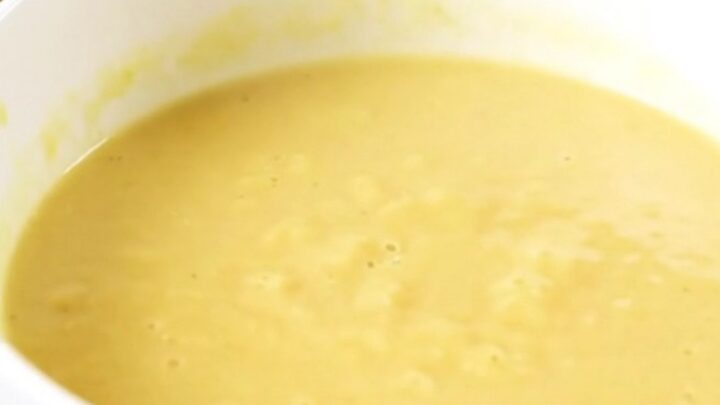
The final phase involves transforming the tender vegetables into a smooth soup. As you blend, watch for the color to become a uniform, vibrant yellow and the texture to become creamy. The soup should be thick enough to be substantial but thin enough to be considered a proper velouté. Check the consistency and ensure there are no remaining lumps before serving in warm bowls.
Common mistakes
A common mistake is cutting the vegetables into uneven pieces, which leads to some parts being mushy while others remain undercooked and firm. Another error is overfilling the slow cooker, which can prevent proper heat circulation; ensure the liquid just covers the vegetables.
Failing to blend the soup thoroughly can also leave behind fibrous strands from the parsnips, so take your time during the blending phase to ensure a truly silky result that defines a proper velouté.
How to tell it’s done
The soup is finished when the vegetables have completely softened and can be easily mashed with a fork. There should be no resistance when piercing the carrots or parsnips.
Once blended, the soup should be perfectly smooth and hold a consistent, velvety texture that coats the back of a spoon. If the mixture appears too thick, add a small amount of hot water or vegetable stock to reach your preferred consistency, ensuring it remains warm throughout the process.
Up next · Part 3 of 3
2 variations · storage & make-ahead · 3 answers · printable card
Tips, FAQ & printable recipe (Part 3)← Back to the ingredients (Part 1)