Dinner · Part 2 of 3: Instructions
Slow Cooker Parsnip and Chestnut Velouté for a Cozy Meal Step-by-step instructions
- Prep
- Cook
- Total
- Serves
- 4
Before you start
Before beginning, ensure that your slow cooker is clean and positioned on a stable, heat-resistant surface. Peel the parsnips and cut them into uniform cubes to guarantee they cook at the same rate.
Have your chestnuts ready to go; if they are whole, ensure they are peeled. Keep your measuring cup handy for the water, and ensure your immersion blender is clean and ready for the final blending stage to ensure a smooth, professional finish.
Ingredients at a glance (4)
- 1 1/2 lb parsnips, peeled and cut into cubes
- 1 cup whole chestnuts, cooked and peeled
- 1 cube bouillon cube, crumbled
- 4 cups water
Instructions
Preparation and Layering
- Assemble the IngredientsPlace the peeled and cubed parsnips into the bottom of the slow cooker. Scatter the whole chestnuts evenly over the parsnips. Crumble the bouillon cube over the mixture to ensure even distribution of seasoning.Look for Ingredients should be layered evenly for consistent cooking.Tip Ensure the parsnips are cut into uniform cubes to promote even softening during the long cook time.
At the end of this phase, the ingredients should be neatly arranged in the slow cooker. The parsnips form the base, topped with the chestnuts and the crumbled bouillon, ready to receive the water.
Check that the bouillon is evenly distributed to ensure consistent seasoning throughout the liquid as it heats, which is crucial for the final flavor balance of the velouté.
Slow Cooking
- Add Liquid and CookPour the water into the slow cooker over the vegetable and chestnut mixture. Cover the slow cooker with its lid and set to cook on low for 4 hours, or until the parsnips are fork-tender and yield easily to pressure.Look for The parsnips should be completely soft and the liquid fragrant.Tip Avoid lifting the lid during the first few hours to maintain the consistent internal temperature required for proper vegetable softening.
During the cooking phase, the kitchen should begin to smell warm and earthy. After the four hours, the parsnips should be completely soft and the liquid clear, having absorbed the essence of the chestnuts. Check that the vegetables are fork-tender by pressing a piece against the side of the slow cooker; it should yield instantly with no firm core remaining.
Blending and Finishing
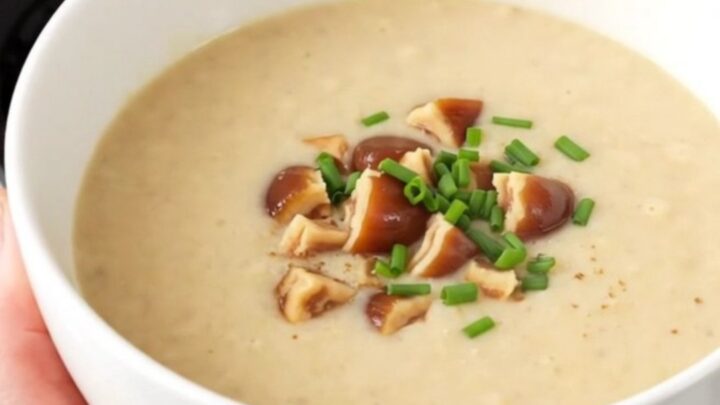
- Blend and ServeOnce the cooking time is complete, use an immersion blender directly in the slow cooker to process the mixture until it reaches a smooth, velvety consistency. Serve the soup hot in individual bowls, garnishing with a few extra bits of chestnut if desired.Look for The soup should be thick, smooth, and free of any large vegetable chunks.Tip If the soup appears too thick after blending, add a small amount of warm water or broth until the desired consistency is achieved.
The final result should be a smooth, glossy velouté that coats the back of a spoon. It should be consistent in color and texture, with no visible chunks of parsnip or chestnut. Check the seasoning one last time after blending to ensure it meets your preference, as the dilution from the water may require a final adjustment of salt or pepper before serving.
Common mistakes
A common mistake is cutting the parsnips into uneven sizes, which leads to some pieces remaining firm while others turn to mush. Additionally, failing to blend the soup thoroughly can result in a grainy texture, so be patient during the blending process.
Lastly, avoid adding too much water at the start; it is always easier to thin a thick soup later than to thicken one that has become too watery.
How to tell it’s done
The soup is done when the parsnips are completely tender and offer no resistance when pierced with a fork. The mixture should smell fragrant and earthy, with the chestnuts softened and integrated into the broth.
Since there are no proteins involved, there is no specific internal temperature to monitor, but the soup should be steaming hot throughout before you begin the blending process to ensure the best possible texture.
Up next · Part 3 of 3
2 variations · storage & make-ahead · 3 answers · printable card
Tips, FAQ & printable recipe (Part 3)← Back to the ingredients (Part 1)