Dinner · Part 1 of 3: Ingredients
Slow-Cooker Parmesan Meatball Pesto Farfalle
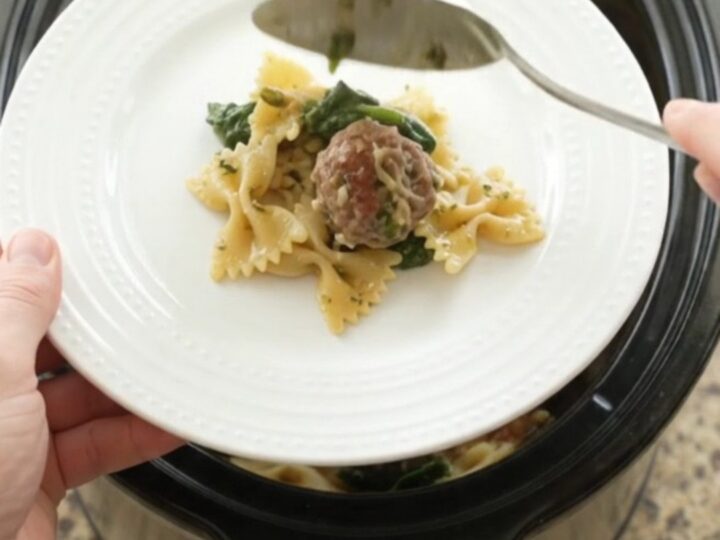
- Prep
- Cook
- Total
- Serves
- 6
Imagine coming home to the smell of garlicky meatballs, basil pesto, and melted cheese wafting from the kitchen. This slow-cooker recipe makes that a reality with just minutes of prep. You simply layer the ingredients, set the timer, and let the Crockpot work its magic.
The result is a comforting, hearty pasta dish that tastes like it simmered all day—because it did. Perfect for busy weeknights or lazy weekends, this meal is a true set-it-and-forget-it hero.
This slow-cooker pasta bake brings together juicy beef meatballs, tender bow-tie pasta, and vibrant spinach in a rich, herby pesto sauce. A generous layer of Italian cheeses melts into a golden crust that bubbles as it cooks. The best part?
No boiling water, no extra pans, and no stirring required. Just layer the ingredients in the slow cooker, cover, and let time do the work. When you lift the lid, you'll find a steaming, cheesy, satisfying dinner that the whole family will love.
Ingredients
- 2 lb homestyle Italian beef meatballs
- 12 oz bow-tie pasta (farfalle)
- 4 cups fresh baby spinach leaves
- 1 cup basil pesto
- 2 cups shredded Italian four-cheese blend
- 1/2 cup freshly grated Parmigiano-Reggiano
Why this recipe works
The slow cooker creates a gentle, moist heat that keeps the meatballs tender while allowing the flavors to meld and deepen. The pasta cooks directly in the sauce, absorbing the pesto and cheese as it softens, resulting in a cohesive, richly flavored dish.
Because the ingredients are layered rather than stirred, each element retains its own texture and character, from the hearty meatballs to the al dente pasta.
This method also means minimal hands-on time. There's no need to brown the meatballs or boil the pasta separately—the slow cooker handles everything. The low, steady temperature prevents the pasta from becoming mushy, and the cheese forms a delicious crust on top. It's a foolproof way to get a complex, satisfying dinner on the table with almost no effort.
Notes and substitutions
Ingredient choices matter here: use high-quality beef meatballs, ideally homestyle Italian ones with herbs and seasonings. If using frozen meatballs, no need to thaw—just add them straight to the slow cooker.
For the pasta, choose a sturdy shape like farfalle that can hold up to long cooking without falling apart. Fresh baby spinach wilts down beautifully, but you can also use frozen chopped spinach (thawed and squeezed) if that's what you have.
The pesto should be a good-quality basil pesto, either store-bought or homemade. Check the label for allergens if needed. The cheese blend adds a nice mix of mozzarella, provolone, parmesan, and asiago flavors. For a dairy-free version, use a dairy-free pesto and vegan cheese shreds. This recipe is flexible—feel free to adjust the amounts of spinach or cheese to your liking.
- beef meatballs: Use turkey meatballs or plant-based meatballs for a lighter option. Adjust cooking time if using pre-cooked meatballs.
- bow-tie pasta: Replace with any short pasta like penne, rotini, or shells. Adjust liquid if needed.
- basil pesto: Use sun-dried tomato pesto or a vegan pesto to change the flavor. Check for allergens.
- Italian four-cheese blend: Substitute with shredded mozzarella and provolone, or a dairy-free shreds for a lactose-free version.
Equipment
- 6-quart slow cooker
- Large spoon
- Measuring cups
- Cutting board (optional)
Up next · Part 2 of 3
5 steps · 4 h of cooking · what to look for at each stage
Step-by-step instructions (Part 2)