Appetizers · Part 2 of 3: Instructions
Decadent Slow-Cooker Oysters Rockefeller Spinach and Bacon Dip Step-by-step instructions
- Prep
- Cook
- Total
- Serves
- 8
Before you start
Before beginning, ensure all ingredients are properly prepped. Thoroughly clean and drain the oysters, removing any residual shell fragments, and keep them refrigerated until needed.
Chop the bacon into small, uniform pieces and cook until crispy, draining any excess grease. Prepare the buttered herb breadcrumbs in advance, and have your serving vessel and toasted garlic bread ready for the final assembly stage.
Ingredients at a glance (7)
- 2 pints shucked Gulf oysters, chopped
- 10 oz baby spinach, wilted
- 1 cup crispy diced bacon
- 16 oz cream cheese
- 2 cups Parmigiano-Reggiano and Gruyere blend
- 2 tbsp Pernod
- 1/2 cup buttered herb breadcrumbs
Instructions
Combining the base
- Combine IngredientsKeep the raw oysters cold in the refrigerator until ready to assemble, leaving them out for no more than 30 minutes before cooking. Add the chopped shucked Gulf oysters, wilted baby spinach, crispy diced bacon, cream cheese, shredded Parmigiano-Reggiano and Gruyere blend, and Pernod to the ceramic slow cooker insert. Stir gently to combine.Look for Ingredients are well combined and the cream cheese is broken up slightly.Tip Cut the cream cheese into smaller cubes before adding it to promote even distribution and melting.
The mixture should look like a thick, unified paste with the spinach and bacon evenly distributed throughout the cream cheese. Ensure the cheese is broken into manageable chunks before the lid goes on to promote a consistent melting process.
Slow-cooking the dip
- Slow CookCover the slow cooker and cook on the HIGH setting for 90 minutes. Monitor the progress; the mixture is ready when it is bubbling throughout and the edges appear golden and slightly caramelized. Ensure the shellfish reaches an internal temperature of at least 145°F (63°C). Halfway through, give the dip a quick stir.Look for The mixture is bubbling vigorously and the sides are golden brown.Safe temperature 145°F (63°C) internal temperature (shellfish)Tip Do not overcook the oysters, as they can become rubbery if left on high heat for too long past the recommended time.
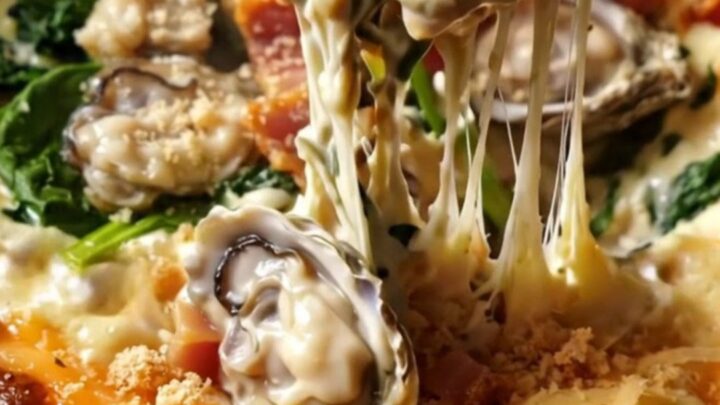
The dip should be bubbling consistently, with the cheese fully melted and the oysters tender. You should smell the savory, aromatic combination of bacon and the anise scent from the Pernod filling the kitchen as the dip reaches its final stage.
Topping and final service
- Final Topping and ServingOnce the dip has reached the desired consistency, sprinkle the buttered herb breadcrumbs over the surface. Allow the dip to rest for five minutes before serving directly from the ceramic insert with toasted garlic French bread slices.Look for Breadcrumbs are lightly toasted and the dip is slightly set.Tip If the breadcrumbs need extra color, place the ceramic insert under a broiler for one to two minutes, watching constantly to prevent burning.
The breadcrumbs should be golden and slightly crisp on top of the bubbling dip. The final product should be served hot, maintaining a thick, luxurious consistency that is easy to scoop with toasted garlic bread.
Common mistakes
A common mistake is failing to drain the oysters properly, which can lead to a watery dip that lacks the desired thickness.
Another error is neglecting to stir the dip halfway through the cooking time, which can cause the cheese at the edges to burn before the center is fully melted.
Finally, avoid rushing the process by using an excessively high temperature, as this will result in uneven cooking and a split, oily sauce.
How to tell it’s done
The dip is considered done when the center is bubbling and the edges show a distinct golden-brown color, indicating the cheese has caramelized.
The internal temperature of the oyster mixture must reach at least 145°F (63°C) to ensure the shellfish is cooked through. The texture should be thick, creamy, and able to hold its shape when scooped with a piece of crusty garlic bread.
- Shellfish: 145°F (63°C) in the thickest part
Up next · Part 3 of 3
2 variations · storage & make-ahead · 3 answers · printable card
Tips, FAQ & printable recipe (Part 3)← Back to the ingredients (Part 1)