Dinner · Part 1 of 3: Ingredients
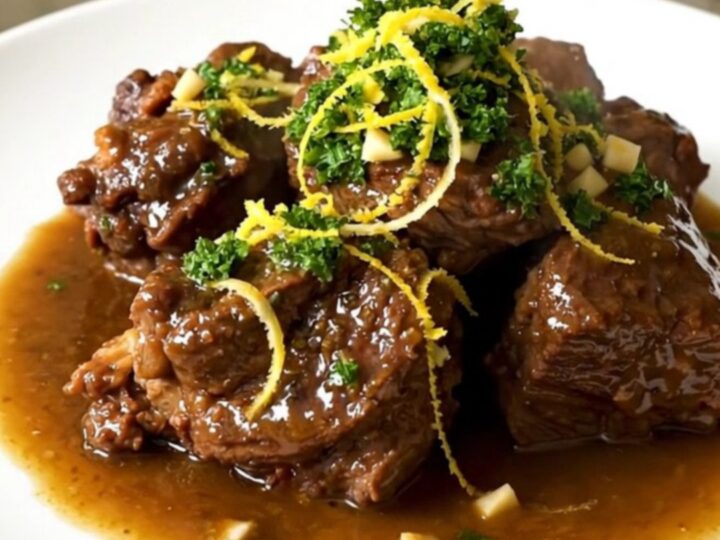
Slow Cooker Osso Buco with Fresh Gremolata
- Prep
- Cook
- Total
- Serves
- 4
Discover the art of slow-cooked perfection with this classic osso buco recipe. Designed for convenience without sacrificing flavor, this dish brings elegant dining to your home kitchen.
By using the slow cooker, you achieve tender, succulent veal that pairs beautifully with aromatics and a bright, zesty finish. Whether you are hosting a dinner or looking for a comforting meal, this recipe delivers consistent, restaurant-quality results every single time you prepare it.
Osso buco is a traditional Milanese dish consisting of cross-cut veal shanks braised with vegetables, wine, and broth. This version simplifies the classic method by utilizing a slow cooker, which allows the tough connective tissue in the shanks to break down slowly over several hours.
The result is exceptionally tender meat that falls away from the bone with minimal effort. Finished with a classic gremolata—a simple mixture of parsley, garlic, and lemon zest—this dish offers a perfect balance of deep, savory braised flavors and a vibrant, citrusy pop that cuts through the richness of the veal.
Ingredients
Main
- 4 pieces veal shanks
- 1 medium onion, chopped
- 2 medium carrots, chopped
- 1 tsp kosher salt
- 1/2 tsp black pepper
- 1 cup dry white wine
- 1 cup beef broth
Garnish
- 1/4 cup gremolata
Why this recipe works
The slow cooker environment provides a gentle, consistent heat that is ideal for braising tougher cuts of meat like veal shanks. As the temperature rises slowly, the collagen in the meat gradually transforms into gelatin, which creates a silky texture and keeps the meat moist throughout the long cooking process. This method ensures that the meat remains tender without the need for constant monitoring or high-heat searing.
Braising in a combination of white wine and beef broth infuses the veal with deep, complex flavors. The acidity from the wine helps to tenderize the meat, while the broth provides a savory base that thickens slightly with the juices from the onions and carrots. This liquid environment acts as a natural basting system, keeping the shanks succulent and flavorful from the inside out, resulting in a dish that is deeply satisfying.
Notes and substitutions
When selecting veal shanks, look for pieces that are uniform in thickness, ideally around 1.5 to 2 inches. This uniformity ensures that all pieces finish cooking at the same time.
If the shanks are bone-in, ensure the marrow is intact, as it contributes significantly to the richness of the final sauce. Fresh vegetables are essential; use firm, crisp carrots and pungent yellow onions to build a strong flavor foundation for the braising liquid.
The choice of wine is important for the flavor profile; a dry white wine such as a Pinot Grigio or Sauvignon Blanc works best. Avoid overly sweet wines, as they can unbalance the savory nature of the dish.
For the gremolata, use fresh Italian flat-leaf parsley, high-quality garlic, and organic lemons to ensure the zest is aromatic and free from wax. This final step is crucial, as it provides a necessary freshness to contrast the slow-cooked meat.
- dry white wine: Use additional beef broth with a splash of white wine vinegar for a non-alcoholic alternative.
- veal shanks: Beef shanks can be substituted if veal is unavailable, requiring similar cooking times.
Equipment
- slow cooker
- glass measuring cup
- knife
- cutting board
Up next · Part 2 of 3
3 steps · 8 h of cooking · what to look for at each stage
Step-by-step instructions (Part 2)