Dinner · Part 2 of 3: Instructions
Slow Cooker Orange Soda Pulled Pork Step-by-step instructions
- Prep
- Cook
- Total
- Serves
- 6
Before you start
Before beginning, ensure your slow cooker insert is clean and dry. Prepare the pork shoulder by trimming any excessively thick layers of fat, although leaving some fat is beneficial for moisture. Slice the onion into clean half-moon shapes, ensuring they are uniform to ensure even softening.
Measure out your spices into a small ramekin so they are ready to be sprinkled over the pork in one go. Have your orange soda ready in a pitcher to make the pouring process seamless and controlled.
Ingredients at a glance (6)
- 3 lb boneless pork shoulder roast, cut into large chunks
- 1 large yellow onion, sliced into half-moons
- 1 tbsp chili powder
- 1 tsp ground cumin
- 1 tsp garlic powder
- 12 oz orange soda
Instructions
Layering the ingredients
- Prepare the slow cookerPlace the pork shoulder chunks into the base of the slow cooker. Arrange the sliced onions evenly over the top of the pork chunks to ensure even flavoring during the long cooking process.Look for The pork should be nestled at the bottom of the slow cooker insert.Tip Ensure the pork chunks are relatively uniform in size to promote even cooking throughout the entire duration.
At this stage, the pork chunks should be snugly arranged at the bottom of the slow cooker. The onion slices should be distributed evenly over the meat, creating a foundation that will soften and release aromatic juices as the temperature rises.
Ensure the slow cooker is placed on a stable, heat-resistant surface before you begin adding the ingredients, as you will want to avoid moving the unit once the heavy liquid and meat are inside.
Seasoning and infusing
- Season and pourSprinkle the chili powder, cumin, and garlic powder over the pork and onions. Pour the orange soda over the entire mixture, ensuring the spices are well-distributed and the liquid coats the meat thoroughly.Look for The liquid should partially submerge the pork pieces.Tip Using a small pitcher helps pour the soda gently without splashing the spices off the meat.
The pork, onions, and spices should now be coated by the orange soda. The liquid should be visible around the sides of the pork chunks. There should be a pleasant aroma of earthy cumin and garlic, which will intensify as the slow cooker begins its work. Verify that all ingredients are within the insert and that the lid is securely placed on top to trap the heat and moisture necessary for the slow-cooking process.
Cooking and shredding
- Cook and shredCover and cook on low for 8 hours or high for 4 hours until the pork reaches an internal temperature of 145°F (63°C). Once cooked, remove the pork, let it rest for 3 minutes, then shred using two forks. Serve warm.Look for The pork should be tender enough to pull apart easily with a fork.Safe temperature 145°F (63°C) internal temperature (steaks, chops and roasts)Tip Removing excess fat before shredding can provide a cleaner texture for the final dish.
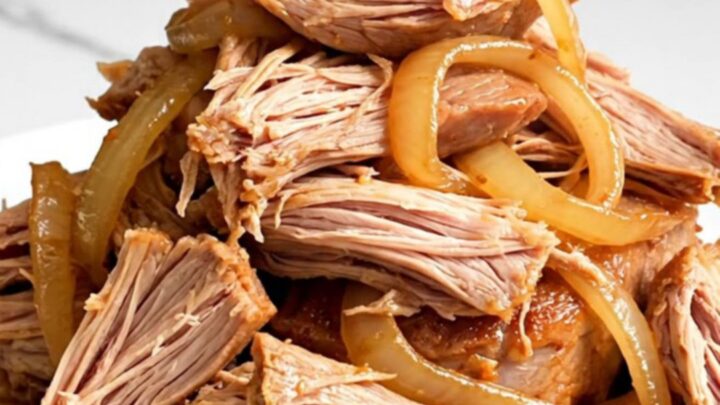
After the cooking time, the pork should be extremely tender and sitting in a fragrant, light orange-tinted liquid. The onions should be translucent and soft. When you begin to shred the meat, it should fall apart with very little effort. If you notice the liquid is too thin, you can remove the meat and simmer the remaining juices on the stovetop for a few minutes to concentrate the flavor before returning the shredded pork to the pot.
Common mistakes
Avoid lifting the lid frequently during the cooking process, as this releases heat and steam, which significantly increases the total cooking time and can affect the tenderness.
Do not skip the resting period after the pork is removed from the slow cooker; letting the meat rest for 3 minutes allows the juices to redistribute, ensuring every bite remains succulent. Finally, avoid using a soda with artificial sweeteners, as they may behave differently under heat and will not provide the necessary sugar for the glaze.
How to tell it’s done
The pork is perfectly done when it reaches an internal temperature of 145°F (63°C) and the meat fibers pull apart easily with minimal pressure from a fork.
If the meat offers resistance, continue cooking for an additional 30 minutes, as the time required can vary based on the specific shape and density of the roast. Once the meat is shredded, it should appear moist and well-coated in the light juices, with no signs of dryness or tough, unrendered connective tissue.
- Steaks, chops and roasts: 145°F (63°C) in the thickest part, then a 3-minute rest
Up next · Part 3 of 3
2 variations · storage & make-ahead · 3 answers · printable card
Tips, FAQ & printable recipe (Part 3)← Back to the ingredients (Part 1)