Dinner · Part 2 of 3: Instructions
Slow-Cooker Old Bay Butter Seafood Boil Step-by-step instructions
- Prep
- Cook
- Total
- Serves
- 6
Before you start
Before starting, make sure the seafood is properly thawed if using frozen. Pat the scallops and shrimp dry with paper towels. Melt the butter and mince the garlic. Slice the andouille sausage into coins and halve the baby potatoes.
Have all your ingredients measured and within reach. A 6-quart slow cooker is ideal for this recipe; if using a smaller one, reduce the quantities accordingly. Prepare the jasmine rice and lemon wedges just before serving, or while the seafood cooks.
Ingredients at a glance (9)
- 1 lb dry-pack sea scallops
- 1 lb raw peeled jumbo shrimp
- 12 oz smoked andouille sausage, sliced into coins
- 1 1/2 lb baby potatoes, halved
- 1/2 cup unsalted butter, melted
- 4 cloves garlic, minced
- 2 tbsp Old Bay seasoning
- Lemon wedges, for serving
- Steamed white jasmine rice, for serving
Instructions
Layer and Sauce
- Layer the Seafood and VegetablesPlace the dry-pack sea scallops and raw peeled jumbo shrimp in the bottom of a 6-quart slow cooker in an even layer. Scatter the sliced andouille sausage coins and halved baby potatoes over the seafood.Look for The ingredients should be evenly distributed in the slow cooker.Tip Dry-pack scallops are best; if using wet scallops, pat them dry to avoid excess liquid.
- Make the Garlic Butter SauceIn a small bowl, whisk together the melted butter, minced garlic, and Old Bay seasoning until well combined. Pour the mixture evenly over the ingredients in the slow cooker.Look for The sauce should coat the seafood and potatoes evenly.Tip For extra flavor, let the butter cool slightly before adding the garlic to avoid cooking it.
At this point, the slow cooker is filled with layers of seafood, sausage, and potatoes, all coated in a golden butter sauce. The garlic and Old Bay should be evenly distributed. The raw seafood should look fresh and moist, and the butter should be pooling at the bottom. Before moving on, make sure everything is evenly spread and the sauce covers the ingredients as much as possible.
Slow Cook
- Cook on LowCover the slow cooker and cook on low for 3 to 4 hours, until the scallops are opaque and the shrimp are pink and cooked through. The potatoes should be tender when pierced with a fork.Look for The butter should be bubbling gently around the edges and the seafood should look opaque.Safe temperature 145°F (63°C) internal temperature (shellfish)Tip Check for doneness at the 3-hour mark to avoid overcooking the seafood.
- Finish CookingOnce the seafood reaches an internal temperature of 145°F (63°C) and the potatoes are fork-tender, turn off the slow cooker. Let the dish rest for 5 minutes before serving.Look for The sauce should be thick and glossy, coating the seafood.Safe temperature 145°F (63°C) internal temperature (shellfish)Tip Do not leave the slow cooker on warm for too long, as the seafood can become rubbery.
After 3 to 4 hours on low, the slow cooker will be filled with a bubbling, fragrant sauce. The scallops should be opaque and slightly firm, the shrimp pink and curled, and the potatoes tender. The butter sauce will have thickened and taken on a rich golden hue. The aroma of Old Bay and garlic will fill the kitchen. Check the internal temperature of the seafood to ensure it reaches 145°F (63°C).
Serve
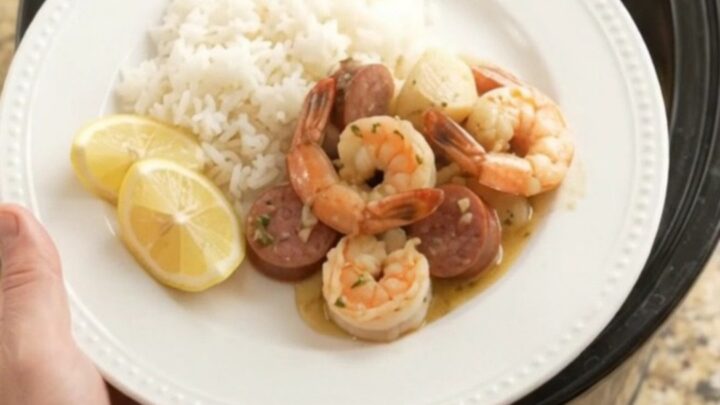
- Serve with Rice and LemonUsing a slotted spoon, transfer the seafood, sausage, and potatoes to a serving platter or individual plates. Serve with steamed jasmine rice and lemon wedges on the side. Spoon some of the butter sauce over the top before serving.Look for The dish should be steaming and fragrant with Old Bay and garlic.Tip Squeeze fresh lemon over the seafood just before eating to brighten the flavors.
When serving, the seafood boil should be steaming and glistening with butter. The scallops and shrimp should be tender and juicy, the sausage slightly crisp at the edges, and the potatoes soft and buttery.
Spoon extra sauce over each serving. The lemon wedges add a bright, citrusy note that balances the richness. The dish should look vibrant and inviting, with a golden hue from the butter and Old Bay.
Common mistakes
One common mistake is overcooking the seafood, which turns it rubbery. Start checking for doneness at the 3-hour mark. Another error is using wet scallops, which can make the sauce watery. Always pat them dry.
Adding too much Old Bay can overpower the dish—start with 2 tablespoons and adjust to taste. Finally, don't lift the lid too often during cooking, as this releases heat and slows down the process. Trust the slow cooker and let it do its job.
How to tell it’s done
The dish is done when the scallops are opaque and firm to the touch, and the shrimp are pink and curled. The internal temperature of the seafood should reach at least 145°F (63°C) as measured with an instant-read thermometer.
The potatoes should be easily pierced with a fork. The butter sauce should be bubbling gently and slightly thickened. If the seafood is cooked but the potatoes are not, remove the seafood to a plate and continue cooking the potatoes until tender.
- Shellfish: 145°F (63°C) in the thickest part
Up next · Part 3 of 3
4 variations · storage & make-ahead · 5 answers · printable card
Tips, FAQ & printable recipe (Part 3)← Back to the ingredients (Part 1)