Dinner · Part 2 of 3: Instructions
Slow-Cooker Old Bay Butter Seafood Boil Step-by-step instructions
- Prep
- Cook
- Total
- Serves
- 4
Before you start
Before you start, make sure the lobster tails are split and the shrimp are peeled and deveined. Halve the corn cobs and scrub the potatoes. Melt the butter with the garlic and Old Bay in a small saucepan, then set aside.
Have your slow cooker ready and a slotted spoon nearby for serving. If you plan to serve with rice, start it before you begin assembling the boil.
Ingredients at a glance (10)
- 4 split cold-water lobster tails
- 1 lb raw jumbo shrimp, peeled and deveined
- 3 ears sweet yellow corn, halved
- 1 lb baby red bliss potatoes
- 1/2 cup unsalted butter, melted
- 4 cloves garlic, minced
- 2 tbsp Old Bay seasoning
- Chopped fresh parsley, for serving
- Lemon wedges, for serving
- 2 cups steamed white jasmine rice, for serving
Instructions
Layer and Sauce
- Layer the Seafood and VegetablesPlace the split lobster tails and raw jumbo shrimp in the bottom of a 6-quart slow cooker. Arrange the halved corn cobs and baby red potatoes around and on top of the seafood, tucking them into the gaps so everything fits snugly.Look for The slow cooker is filled about three-quarters full with the seafood and vegetables nestled together.Tip For even cooking, keep the potatoes and corn in a single layer if possible, but don't worry if they overlap slightly.
- Make the Garlic Butter SauceIn a small saucepan over low heat, melt the butter with the minced garlic. Stir frequently until the garlic is fragrant but not browned, about 2 minutes. Remove from heat and stir in the Old Bay seasoning until fully combined.Look for The butter is melted and the garlic is aromatic; the mixture is golden and speckled with Old Bay.Tip Keep the heat low to avoid burning the garlic, which would turn bitter.
- Pour the Sauce Over the TopPour the garlic butter mixture evenly over the seafood and vegetables in the slow cooker. Use a spatula to scrape every last bit of the buttery sauce from the pan.Look for The sauce coats the top of the seafood and vegetables, pooling in the bottom of the cooker.Tip No need to stir — the slow cooker will distribute the flavors as it simmers.
The slow cooker is filled with the seafood and vegetables, and the garlic butter sauce is poured over the top.
The butter pools in the bottom, and the Old Bay creates a speckled red coating. The garlic is fragrant but not browned. Everything is ready for the slow cooker to work its magic.
Simmer and Cook
- Slow-Cook the Seafood BoilCover the slow cooker and cook on low for 3 to 4 hours, until the potatoes are fork-tender and the lobster and shrimp are opaque and cooked through. Do not lift the lid during the first 2 hours to keep the heat steady.Look for The butter is bubbling gently around the edges, and the kitchen smells of garlic and Old Bay.Safe temperature 145°F (63°C) internal temperature (shellfish)Tip Cooking on low keeps the seafood tender; high heat can make shrimp rubbery.
- Check for DonenessAfter 3 hours, check the potatoes by piercing one with a fork. The lobster tail meat should be firm and opaque, and the shrimp should be curled and pink. Use an instant-read thermometer to confirm the thickest part of the lobster or shrimp reaches 145°F (63°C).Look for The lobster meat is snow-white and the shrimp are pink and firm to the touch.Safe temperature 145°F (63°C) internal temperature (shellfish)Tip If the potatoes are still hard, continue cooking and check again after 30 minutes.
After a few hours, the butter is bubbling gently and the aroma of garlic and Old Bay fills the kitchen. The potatoes are tender when pierced, and the seafood is opaque and firm. The sauce has thickened slightly from the juices of the seafood and vegetables.
Serve and Enjoy
- Scoop and ServeUsing a slotted spoon, lift the seafood, corn, and potatoes out of the butter bath and onto a large platter or individual plates. Spoon some of the remaining butter sauce over the top. Serve hot with steamed jasmine rice, lemon wedges, and a sprinkle of parsley.Look for The seafood is glossy with butter, and the vegetables are tender and well coated.Tip The butter sauce is rich — serve extra on the side for dipping.
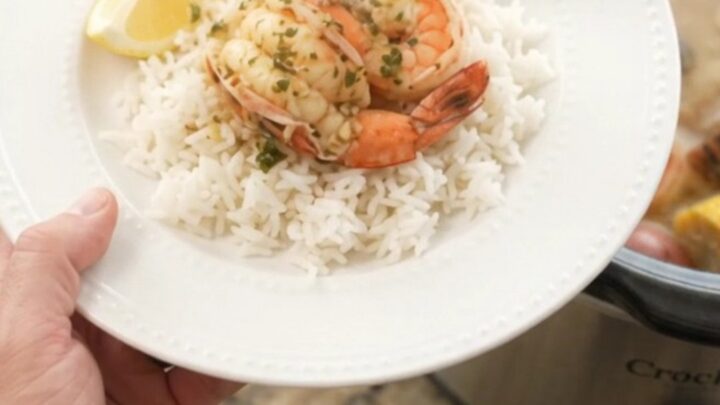
The seafood and vegetables are lifted out with a slotted spoon, glistening with butter. The corn is sweet and tender, the potatoes are creamy, and the lobster and shrimp are perfectly cooked. The sauce is rich and flavorful, ready to be spooned over rice or used for dipping.
Common mistakes
One common mistake is lifting the lid too often, which lets out heat and extends cooking time. Another is overcooking the seafood, especially shrimp, which become tough if left too long.
Adding too much liquid is unnecessary; the seafood and vegetables release their own juices, so resist the urge to add broth or water. Finally, using frozen seafood without thawing can lead to uneven cooking, so thaw completely first.
How to tell it’s done
The dish is done when the potatoes are fork-tender and the lobster and shrimp are opaque and cooked through. The internal temperature of the thickest part of the lobster or shrimp should read 145°F (63°C) on an instant-read thermometer.
The butter sauce should be bubbling gently and the seafood should be firm but moist. Overcooking will make the shrimp rubbery, so check at the minimum time.
- Shellfish: 145°F (63°C) in the thickest part
Up next · Part 3 of 3
4 variations · storage & make-ahead · 5 answers · printable card
Tips, FAQ & printable recipe (Part 3)← Back to the ingredients (Part 1)