Dinner · Part 2 of 3: Instructions
One-Pot New England Ham Boiled Dinner in a Slow Cooker Step-by-step instructions
- Prep
- Cook
- Total
- Serves
- 6
Before you start
Before you start, cut the cooked ham into large, uniform chunks and set aside. Remove any thick outer leaves from the cabbage and cut it into wedges, leaving the core intact to hold the leaves together.
Scrub the red potatoes and halve them, or quarter them if they are large. Measure the dried thyme, black pepper, and chicken broth. Have your slow cooker ready and plugged in, with the stoneware insert in place.
Ingredients at a glance (6)
- 2 lb cooked ham, cut into large chunks
- 1 small head green cabbage, cut into wedges
- 1 1/2 lb red potatoes, halved
- 1 tsp dried thyme
- 1/2 tsp black pepper
- 2 cups chicken broth
Instructions
Layer and Season
- Layer the HamPlace the chunks of cooked ham in an even layer on the bottom of the slow cooker. The ham should cover the base of the insert, with pieces touching but not piled too high. Use a large spoon or your hands to settle them into place if needed.Look for The ham covers the bottom of the slow cooker in a single layer.Tip Cut the ham into uniform chunks so they heat evenly and fit well.
- Add Cabbage and PotatoesNestle the cabbage wedges and halved red potatoes around and between the ham chunks. Arrange them so they are partially submerged in the spaces between the meat. The vegetables should be snug but not overcrowded, allowing steam to circulate.Look for Cabbage and potatoes are nestled among the ham pieces.Tip If the cabbage wedges are very large, cut them in half again so they fit comfortably.
- Season and Pour BrothSprinkle the dried thyme and black pepper evenly over the ham, cabbage, and potatoes. Then pour the chicken broth over everything, aiming to moisten the vegetables and ham without completely submerging them. The broth will create steam and keep the dish moist during cooking.Look for The seasonings are scattered evenly; the broth pools at the bottom.Tip Use low-sodium broth if you prefer to control the saltiness of the final dish.
At the end of this phase, the slow cooker contains a layer of ham chunks, with cabbage wedges and potato halves nestled around them.
The thyme and pepper are sprinkled evenly over the top, and the broth is poured in, pooling at the bottom. The insert looks colorful and fresh, with the pink ham, pale green cabbage, and red potatoes visible. Everything is ready to cook.
Slow Cook
- Cover and Cook LowCover the slow cooker with its lid. Set the temperature to low and cook for 5 to 6 hours, until the potatoes are fork-tender and the cabbage is soft and translucent. Avoid lifting the lid during the first few hours to keep the heat and steam inside.Look for The slow cooker is covered and set to low; the cooking time begins.Tip If you need a shorter cook time, you can cook on high for 2 1/2 to 3 hours, but low gives the best texture.
After several hours on low, the slow cooker fills with a fragrant steam that smells of ham, cabbage, and thyme. The broth has become a light golden color, and the vegetables have softened and taken on a translucent sheen. The ham has deepened in color and looks moist. The potatoes are beginning to yield when pressed, but are not yet fully tender.
Finish and Serve
- Check for DonenessAfter 5 to 6 hours, check the potatoes and cabbage for doneness. A fork should slide easily into a potato and a cabbage wedge should be tender but not mushy. The ham should be heated through and very tender. If the vegetables are not yet soft, cover and cook for another 30 minutes.Look for A fork pierces the potato easily; cabbage is tender.Tip If the broth is thin, you can thicken it later with a cornstarch slurry, but this dish is traditionally brothy.
- Serve HotUsing a slotted spoon, transfer the ham, cabbage, and potatoes to a serving platter or individual bowls. Spoon some of the cooking broth over each serving. Serve hot, with extra black pepper at the table if desired.Look for The dish is piled onto a platter with a little broth spooned on top.Tip Pair with crusty bread or a simple mustard for a traditional touch.
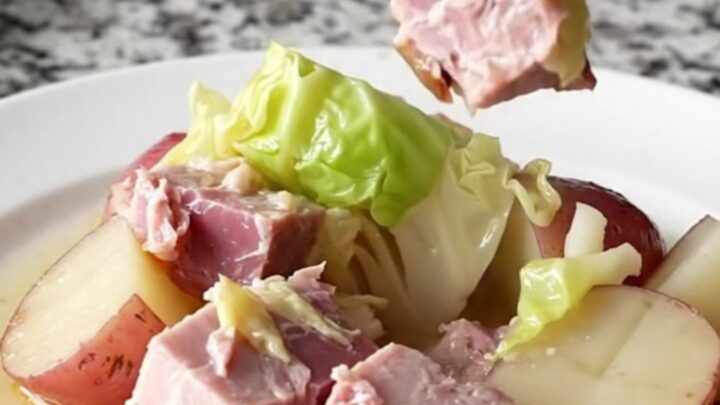
At the end of the cooking time, the potatoes are fork-tender, the cabbage is soft and silky, and the ham is heated through and very tender. The broth is rich and savory, with a hint of thyme. The dish is ready to be served, with the ham and vegetables lifted out with a slotted spoon and a little broth spooned over the top.
Common mistakes
One common mistake is lifting the lid during cooking, which lets out steam and extends the cooking time. Another is overcrowding the slow cooker, which can cause uneven cooking. Be sure to cut the potatoes and cabbage to a similar size so they cook at the same rate.
Also, avoid using too much broth, as the vegetables will release their own liquid and you want the final dish to be brothy, not soupy. Finally, don't skip the resting time after cooking, as it allows the flavors to settle.
How to tell it’s done
The dish is done when the potatoes are fork-tender, meaning a fork inserted into a potato meets no resistance. The cabbage should be soft and translucent, with a sweet, mellow flavor. The ham should be heated through and very tender, but not dry.
If you are using a meat thermometer, the ham should reach at least 145°F (63°C), though since it is already cooked, this is just to ensure it is hot. The broth should be savory and lightly seasoned.
Up next · Part 3 of 3
4 variations · storage & make-ahead · 5 answers · printable card
Tips, FAQ & printable recipe (Part 3)← Back to the ingredients (Part 1)