Dinner · Part 2 of 3: Instructions
Slow Cooker Nashville Hot Honey Chicken Tenders Step-by-step instructions
- Prep
- Cook
- Total
- Serves
- 4
Before you start
Before starting, measure out all ingredients. If using homemade honey butter, soften the butter and mix with honey. Place the chicken tenderloins in the slow cooker, and have the pickles, cayenne, and brown sugar ready to sprinkle.
Ensure the slow cooker is clean and dry. No need to preheat the slow cooker. This recipe is incredibly simple, so just gather everything and layer it in.
Ingredients at a glance (5)
- 1 1/2 lb boneless skinless chicken tenderloins
- 1/2 cup dill pickle chips
- 1 tsp cayenne pepper
- 1/4 cup brown sugar
- 1/2 cup honey butter
Instructions
Layer and Season
- Layer the chicken and toppingsPlace the chicken tenderloins in the slow cooker in a single layer. Scatter the dill pickle chips over the chicken. Sprinkle with cayenne pepper and brown sugar, covering evenly.Look for The chicken is mostly covered with a light dusting of red and brown.Tip For even heat, arrange the tenders in a single layer if possible.
- Drizzle with honey butterDrizzle the honey butter over the seasoned chicken. Use a spoon or small pitcher to distribute it evenly.Look for The honey butter pools around the chicken.Tip If honey butter is too thick, warm it slightly to make it pourable.
At the end of this phase, the slow cooker insert holds a single layer of raw chicken tenders, topped with scattered pickle chips, a dusting of cayenne and brown sugar, and a drizzle of honey butter.
The colors are vibrant: the golden honey butter contrasts with the red-brown spices. The raw chicken looks fresh, and the pickles add a pop of green. Before moving on, make sure the chicken is evenly coated and the sugar is not clumped.
Slow Cook
- Cook on low until tenderCover the slow cooker and cook on low for 4 hours, or until the chicken reaches an internal temperature of 165°F (74°C) and is tender enough to shred with a fork.Look for The sauce is bubbling gently and the chicken is opaque.Safe temperature 165°F (74°C) internal temperature (poultry)Tip Avoid opening the lid during cooking to keep the heat steady.
After 4 hours on low, the chicken is fully cooked and tender. The sauce has darkened and thickened slightly, with a glossy sheen. The aroma is a rich blend of sweet honey, spicy cayenne, and tangy pickle.
The chicken should be easily pierced with a fork, and the internal temperature should read 165°F (74°C). If not, continue cooking and check again.
Finish and Serve
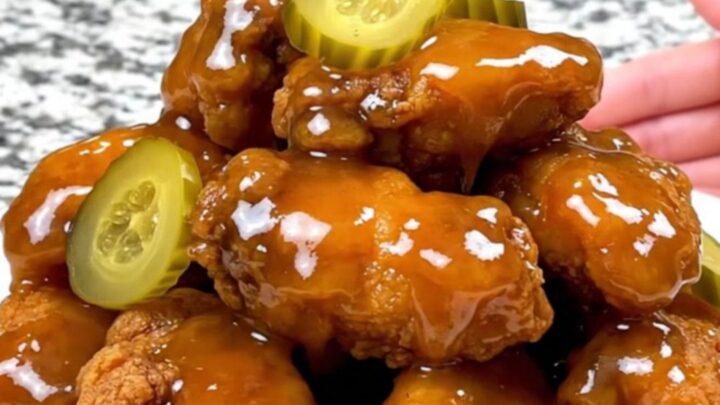
- Serve with sauceUsing tongs, transfer the chicken to a serving platter. Spoon the hot honey sauce from the slow cooker over the chicken. Serve immediately with extra pickles on the side if desired.Look for The chicken is glistening with sauce and the pickles are soft.Tip For a thicker sauce, simmer the liquid in a small saucepan for a few minutes.
The chicken is transferred to a serving platter, and the hot honey sauce is spooned over the top. The sauce is thick enough to coat the chicken, and the pickles have softened into the sauce. The dish steams gently, inviting you to dig in. Serve immediately with extra sauce on the side.
Common mistakes
One common mistake is opening the slow cooker lid frequently, which releases heat and extends cooking time. Another is using chicken that is not fully thawed, which can lead to uneven cooking. Also, be careful not to overcook—chicken tenders can become dry if left too long, even in a slow cooker. Keep the heat on low and resist the urge to peek.
How to tell it’s done
The chicken is done when it reaches an internal temperature of 165°F (74°C) on an instant-read thermometer inserted into the thickest part of a tender. It should be fork-tender and easily pull apart.
The sauce will be bubbling and slightly thickened. If the chicken is not yet tender after 4 hours, continue cooking in 30-minute increments until done.
- Poultry: 165°F (74°C) in the thickest part
Up next · Part 3 of 3
4 variations · storage & make-ahead · 5 answers · printable card
Tips, FAQ & printable recipe (Part 3)← Back to the ingredients (Part 1)