Dinner · Part 1 of 3: Ingredients
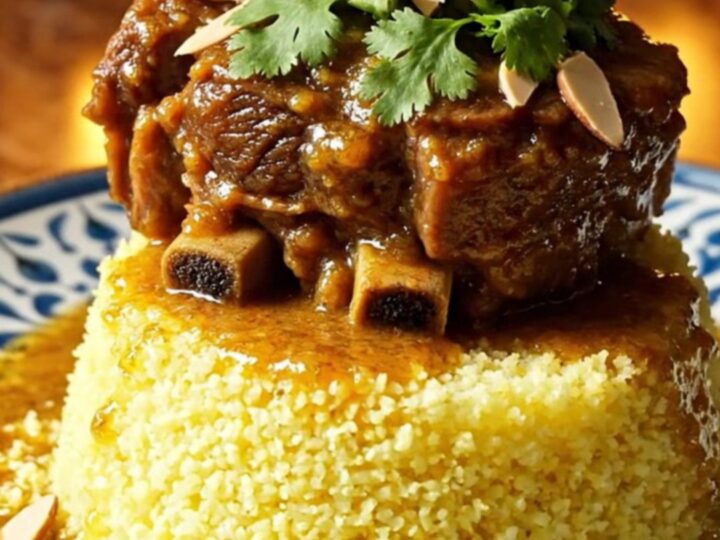
Moroccan Spiced Date Crockpot Short Ribs
- Prep
- Cook
- Total
- Serves
- 6
This slow-cooker recipe transforms beef short ribs into a meltingly tender Moroccan feast. A generous rub of Ras el Hanout, sweet Medjool dates, and fragrant saffron broth simmer together for eight hours, creating a glossy, honeyed gravy that clings to every shred of beef.
Served over bright lemon couscous with crunchy almonds and fresh cilantro, it's a dish that feels both exotic and deeply comforting—and it couldn't be easier.
Moroccan cuisine is built on warm spices, dried fruit, and slow cooking, and this recipe captures all three in one pot. Bone-in short ribs are rubbed with Ras el Hanout—a complex blend of cumin, coriander, cinnamon, and more—then nestled with sweet Medjool dates, a cinnamon stick, fresh ginger, and saffron-infused broth.
Over eight hours on low, the dates dissolve into the liquid, creating a rich, lightly sweet sauce that coats the beef beautifully. The result is fall-apart tender meat with a deep, layered flavor. Serve it over lemon-scented couscous for a complete, satisfying meal that's perfect for a cozy dinner or a special gathering.
Ingredients
- 4 lb bone-in beef short ribs
- 2 tbsp Ras el Hanout spice blend
- 150 g pitted Medjool dates
- 1 cinnamon stick
- 1 tbsp fresh ginger, grated
- 300 ml saffron broth
- 2 cups couscous
- 1 lemon, zested and juiced
- 1/2 cup slivered almonds, toasted
- 1/4 cup fresh cilantro, chopped
- kosher salt to taste
Why this recipe works
Slow cooking is the secret to turning tough, collagen-rich short ribs into buttery, fork-tender meat. The low, steady heat melts the connective tissue over hours, leaving the beef so soft it falls off the bone. The long simmer also allows the Ras el Hanout to bloom and infuse every bite with its warm, aromatic spices.
The Medjool dates are the unexpected hero here. As they cook, they break down and meld into the broth, adding natural sweetness and a silky body to the sauce.
The saffron lends a subtle floral note, while the ginger and cinnamon round out the flavor. This combination of sweet and savory is the hallmark of Moroccan cooking, and it works beautifully with the rich beef.
Notes and substitutions
Ras el Hanout is a Moroccan spice blend that typically includes cumin, coriander, turmeric, cinnamon, ginger, and a hint of cayenne. Look for it in well-stocked supermarkets or spice shops. If you don't have it, a homemade mix of equal parts cumin, coriander, and turmeric with a pinch of cinnamon and cayenne works well.
Medjool dates are prized for their large size and caramel-like sweetness. They're available in most grocery stores; if you can't find them, deglet noor dates are a fine substitute, though they are smaller and less sweet.
For the broth, use a good-quality beef broth and steep a pinch of saffron threads in it for a few minutes before adding.
- Ras el Hanout: Use 1 tsp each ground cumin, coriander, turmeric, and ginger plus 1/4 tsp cinnamon and cayenne.
- Saffron broth: Use 1 1/4 cups beef broth with a pinch of saffron threads steeped in it.
- Medjool dates: Substitute with 150 g pitted deglet noor dates, though they are less sweet.
Equipment
- 6-quart slow cooker
- Measuring cups and spoons
- Chef's knife
- Cutting board
- Tongs
- Small saucepan for couscous
- Fork for shredding
Up next · Part 2 of 3
6 steps · 8 h of cooking · what to look for at each stage
Step-by-step instructions (Part 2)