Dinner · Part 2 of 3: Instructions
Slow Cooker Moo Shu Pork with Cabbage Slaw Step-by-step instructions
- Prep
- Cook
- Total
- Serves
- 4
Before you start
Before starting, ensure all ingredients are ready for assembly. Slice the boneless pork loin into thin, consistent strips to ensure they cook evenly. If not using a pre-shredded coleslaw mix, finely shred the green cabbage and carrots.
Measure out the hoisin and soy sauce, and mince the garlic and ginger finely. Having all components measured and prepared allows for a quick assembly process, which is essential for maintaining the efficiency of the slow cooker method and ensuring the best results for the final texture of the dish.
Ingredients at a glance (6)
- 1 lb boneless pork loin, cut into thin strips
- 4 cups shredded green cabbage and carrot mix
- 2 tsp minced garlic
- 1 tsp minced ginger
- 1/2 cup hoisin sauce
- 2 tbsp soy sauce
Instructions
Assembly of ingredients
- Prepare the slow cooker basePlace the thin strips of pork loin into the bottom of the slow cooker insert, ensuring they are spread out in an even layer.Look for The pork should cover the bottom of the slow cooker evenly.Tip Ensure the pork is sliced into uniform, thin strips to help them cook evenly and quickly.
- Add vegetables and aromaticsPile the shredded cabbage and carrot mixture over the pork. Sprinkle the minced garlic and ginger evenly over the top of the vegetables.Look for The cabbage should be piled high on top of the pork base.Tip Using a pre-shredded coleslaw mix is a great way to save time on prep work.
The pork is arranged in a single layer at the base of the slow cooker, topped with a generous pile of shredded cabbage and carrots, and finished with the garlic, ginger, and sauces. The ingredients appear layered and ready for the slow cooker to begin the braising process, with no need for pre-mixing the sauce at this stage.
Braising process
- Add the saucePour the hoisin sauce and soy sauce over the cabbage and aromatics. Do not stir the ingredients; the sauce will distribute as the vegetables release moisture.Look for The sauce should coat the top layer of vegetables.Tip Pouring the sauce over the top allows it to slowly permeate the cabbage as it wilts.
During the cooking phase, the slow cooker creates a controlled environment where the pork braises in the sauce. The cabbage wilts down, releasing its moisture and mixing with the savory hoisin and soy sauce.
The kitchen will begin to smell like ginger and garlic as the aromatics infuse the meat, and the sauce transforms into a rich, pourable consistency that coats the pork and vegetables.
Final resting and service
- Braise and finishCover and cook on low for 4 hours. Once finished, ensure the pork reaches an internal temperature of 145°F (63°C). Let the pork rest for at least 5 minutes before serving.Look for The pork should be tender and the cabbage should be soft and wilted.Safe temperature 145°F (63°C) internal temperature (steaks, chops and roasts)Tip Stir everything well just before serving to combine the sauce and juices at the bottom.
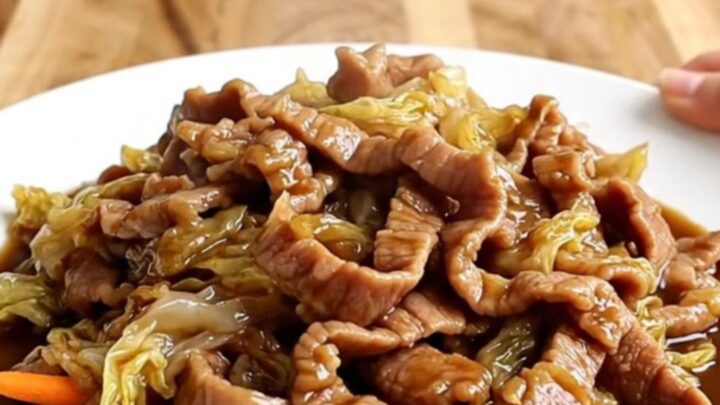
At the end of the cooking time, the pork is tender and the cabbage is perfectly soft. After a brief rest of five minutes, the dish is ready to be stirred one final time to ensure the sauce is evenly distributed. The appearance should be a glistening, savory mixture with a deep color from the hoisin, ready to be served immediately while steaming hot.
Common mistakes
Avoid overcooking the pork, which can lead to a dry texture despite the braising liquid. Do not stir the ingredients before the cooking process begins, as this can disrupt the layering process that ensures the pork cooks in the juices while the cabbage steams.
Additionally, ensure the pork is sliced into thin strips; using large chunks of meat will significantly increase the required cooking time and result in uneven cooking. Finally, do not skip the resting time, as this allows the meat fibers to relax.
How to tell it’s done
The dish is considered done when the pork strips are opaque throughout and have achieved a tender, soft texture. To ensure the meat is fully cooked, use a meat thermometer inserted into the thickest part of the pork strips to confirm an internal temperature of at least 145°F (63°C).
The cabbage should be soft and wilted but still retain a slight structure, and the sauce should have thickened slightly from the combined juices and hoisin.
- Steaks, chops and roasts: 145°F (63°C) in the thickest part, then a 3-minute rest
Up next · Part 3 of 3
2 variations · storage & make-ahead · 4 answers · printable card
Tips, FAQ & printable recipe (Part 3)← Back to the ingredients (Part 1)