Dinner · Part 2 of 3: Instructions
Slow Cooker Monkfish Stew with Leeks and Carrots Step-by-step instructions
- Prep
- Cook
- Total
- Serves
- 4
Before you start
Before beginning the assembly, ensure the monkfish is thoroughly cleaned and patted dry. Remove any remaining membrane or dark skin from the fish, as this can affect the texture.
Slice the leeks by discarding the dark green tops and using only the white and light green parts, washing them carefully under running water to remove any hidden grit.
Peel and slice the carrots into uniform rounds, roughly one-quarter inch thick, to ensure they cook evenly alongside the fish. Have the wine and bouillon ready to assemble the pot quickly.
Ingredients at a glance (6)
- 1.5 lb monkfish, cut into pieces
- 2 large leeks, cleaned and sliced
- 3 medium carrots, peeled and sliced
- 1 cube fish bouillon, crumbled
- 1/2 cup dry white wine
- croutons, for serving
Instructions
Layering the ingredients
- Prepare the slow cooker basePlace the pieces of monkfish at the bottom of the slow cooker insert. Add the sliced leeks and carrots on top of the fish to allow the vegetables to steam gently and infuse the fish with flavor as they cook.Look for ensure the fish is evenly distributed across the bottom of the cookerTip Cut the vegetables into uniform slices so they soften at the same rate.
At the end of this phase, the monkfish should be arranged in a single layer at the bottom of the slow cooker, with the sliced leeks and carrots distributed evenly on top. The ingredients should look vibrant and clean, ready to be seasoned. Ensure the fish is not crowded to allow for even heat distribution throughout the cooking process.
Seasoning and simmering
- Season and add liquidCrumble the fish bouillon cube evenly over the vegetables and fish. Pour the dry white wine over the contents. Cover the slow cooker and set to low heat for three hours to allow the flavors to meld.Look for the bouillon is distributed evenly and the wine coats the bottomTip Using dry wine provides the best acidity to balance the sweetness of the monkfish.
Once the bouillon is crumbled and the wine is added, the contents should look moist but not completely submerged. As the slow cooker begins to heat, a mild, savory aroma should start to develop. Check that the lid is securely closed to trap the steam, which is essential for the gentle poaching of the monkfish.
Final cooking and assembly
- Final cook and serveContinue cooking until the fish reaches an internal temperature of 145°F (63°C) and is opaque throughout. Once cooked, let the stew rest for five minutes before serving in bowls topped with crunchy croutons.Look for fish is firm, white, and flakes easily with a forkSafe temperature 145°F (63°C) internal temperature (fish)Tip Check the temperature in the thickest part of the fish fillet.
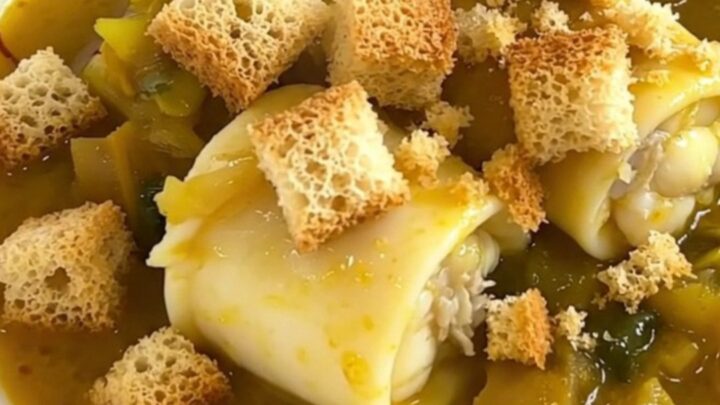
By the end of the final phase, the stew will have a glossy appearance and a rich, fragrant aroma. The fish should be tender and opaque, and the vegetables should be soft and translucent. Before serving, verify the internal temperature of the fish and ensure the stew is hot throughout, ready to be portioned into bowls.
Common mistakes
A common mistake is failing to clean the leeks properly, which can leave gritty sand in the final stew. Always slice the leeks lengthwise and rinse them thoroughly under cold water.
Another error is using too much liquid; the wine and the moisture from the vegetables should create a light broth, not a soup. Finally, avoid adding the croutons too early, as they will lose their crunch and become soggy if they sit in the hot stew for any extended period of time.
How to tell it’s done
The monkfish is done when it reaches an internal temperature of 145°F (63°C). At this point, the flesh should be completely opaque, firm to the touch, and flake easily when gently pressed with a fork.
It is important to avoid overcooking, as even firm fish like monkfish can become rubbery if left for too long. Checking the internal temperature in the thickest part of the fillet is the most reliable way to ensure safe and perfect results every time.
- Fish: 145°F (63°C) in the thickest part
Up next · Part 3 of 3
2 variations · storage & make-ahead · 3 answers · printable card
Tips, FAQ & printable recipe (Part 3)← Back to the ingredients (Part 1)