Dinner · Part 2 of 3: Instructions
Slow Cooker Mongolian Pork Chops Step-by-step instructions
- Prep
- Cook
- Total
- Serves
- 4
Before you start
Before starting, ensure your slow cooker is positioned on a stable, heat-resistant surface. Have all your ingredients measured and ready to go to keep the preparation process efficient.
If your pork chops have been refrigerated, take them out about 15 minutes before you plan to start, but do not leave them at room temperature for longer than 30 minutes. Ensure your green onions are washed, dried, and chopped finely so they distribute evenly over the meat during the assembly phase.
Ingredients at a glance (4)
- 4 pieces boneless pork chops
- 1/2 cup green onions, chopped
- 1 tsp ground ginger
- 1 cup soy-hoisin sauce mixture
Instructions
Assembly of ingredients
- Prepare the slow cookerArrange the raw boneless pork chops in a single layer at the bottom of the slow cooker to ensure even cooking throughout the process.Look for The chops should be lying flat across the base.Tip Ensure the pork chops are of similar thickness for uniform cooking.
The pork chops should be neatly arranged in the base of the slow cooker without overlapping. The green onions and ginger should be evenly distributed, and the sauce should be poured in a way that covers the surface of the meat. Everything should look organized and ready for the slow, steady heat that will soon transform these raw components into a cohesive, flavorful main dish.
Slow cooking process
- Add seasonings and sauceScatter the chopped green onions evenly over the pork chops. Sprinkle the ground ginger over the top, then pour the soy-hoisin sauce mixture over everything.Look for The sauce should coat the meat and aromatics.Tip Pour the sauce slowly to ensure even coverage across all the chops.
During the cooking phase, the slow cooker will begin to emit a savory, aromatic scent as the ginger and soy-hoisin sauce meld with the pork. You should notice the level of liquid increasing as the meat releases its natural juices. The pork will gradually change from a raw, pale pink to a cooked, opaque color, and the sauce will begin to thicken and darken into a rich, glossy glaze.
Final resting and serving
- Slow cook and serveCover and cook on low for 4 hours until the pork reaches an internal temperature of 145°F (63°C). Once cooked, let the meat rest for at least 3 minutes before serving.Look for The pork should be tender and the sauce glossy.Safe temperature 145°F (63°C) internal temperature (steaks, chops and roasts)Tip Use a meat thermometer to verify the internal temperature for safety.
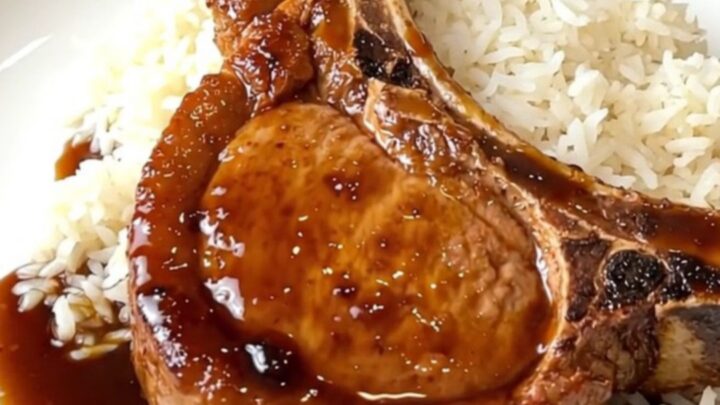
At the end of the cooking time, the pork should be dark, glossy, and incredibly tender. The sauce should have reduced slightly to a syrupy consistency that clings to the meat.
Before serving, check that the meat is firm but yielding to a fork and verify the internal temperature. The final dish should look vibrant, with the green onions providing a fresh pop of color against the deep, dark glaze.
Common mistakes
A common mistake is using pork chops that are too thin, which can lead to them drying out during the long cooking time. Aim for chops that are at least one inch thick to maintain their structure.
Another error is failing to ensure the meat is in a single layer; stacking the meat prevents the sauce from coating each piece properly and can lead to uneven cooking. Finally, resist the urge to open the slow cooker lid too often, as this releases heat and moisture.
How to tell it’s done
The pork chops are done when they are fork-tender and have reached a minimum internal temperature of 145°F (63°C). Checking the temperature with a meat thermometer is the most reliable way to ensure the meat is cooked through while still remaining juicy.
Once the temperature is reached, allow the chops to rest for at least 3 minutes; this resting period is essential for the juices to redistribute through the meat fibers, ensuring each bite is moist and flavorful.
- Steaks, chops and roasts: 145°F (63°C) in the thickest part, then a 3-minute rest
Up next · Part 3 of 3
2 variations · storage & make-ahead · 3 answers · printable card
Tips, FAQ & printable recipe (Part 3)← Back to the ingredients (Part 1)