Desserts · Part 2 of 3: Instructions
Slow Cooker Molten Dark Chocolate Fondant Step-by-step instructions
- Prep
- Cook
- Total
- Serves
- 4
Before you start
Before starting, ensure all ingredients are measured and ready. Chop the dark chocolate into uniform, small pieces to ensure it melts evenly alongside the butter. Have your parchment paper cut and ready to line the slow cooker.
If the eggs are cold from the refrigerator, let them sit at room temperature for about 15 minutes to help them incorporate better into the melted fats.
Prepare your serving plates and spoons so you are ready to serve the fondant immediately once the cooking time is complete, as this dessert is best enjoyed warm.
Ingredients at a glance (4)
- 8 oz dark chocolate, chopped
- 1/2 cup unsalted butter, sliced
- 3/4 cup granulated sugar
- 3 large eggs, beaten
Instructions
Preparation
- Prepare the slow cookerLine the bottom and sides of your slow cooker with parchment paper to ensure easy removal of the finished cake. This step is crucial for preventing the chocolate mixture from sticking directly to the ceramic walls during the long cooking process.Look for ensure the paper covers the base and sidesTip Use clips to hold the parchment paper in place if needed.
At this stage, the slow cooker is correctly lined with parchment paper, and all ingredients are measured and ready for assembly. Check that the parchment fits snugly against the walls of the slow cooker to ensure the batter will be contained and easy to lift out later.
Mixing
- Combine ingredientsPlace the chopped dark chocolate and sliced butter into the prepared slow cooker. Scatter the granulated sugar evenly over the top, then pour the beaten eggs over the entire mixture. Use a spatula to gently combine these ingredients until they are incorporated into a uniform batter.Look for the batter should appear smooth and glossyTip Ensure the butter is at room temperature for easier mixing.
The chocolate, butter, sugar, and eggs are combined into a smooth, dark, and glossy batter. Ensure that there are no large lumps of chocolate remaining and that the eggs are fully whisked into the mixture so the texture remains uniform throughout the cooking process.
Cooking
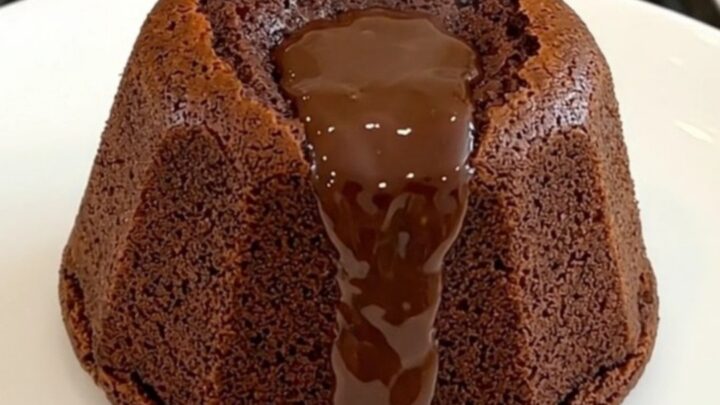
- Cook and serveCover the slow cooker and cook on low for approximately two hours. Check that the eggs reach an internal temperature of 160°F (71°C) to ensure the structure is set while maintaining a molten, gooey center. Allow the cake to rest for five minutes before serving warm.Look for the edges should be firm while the center remains softSafe temperature 160°F (71°C) internal temperature (egg dishes)Tip Monitor the cooking closely to prevent overcooking the center.
The cake is cooked through, with the edges set and the center remaining soft and molten. The internal temperature of the mixture has reached 160°F (71°C), and the cake has been allowed to rest for five minutes, allowing the structure to stabilize slightly before serving.
Common mistakes
Avoid using low-quality chocolate, as this will result in a grainy or waxy texture rather than a smooth, silky melt. Do not skip the parchment paper, as the cake will adhere to the slow cooker ceramic and be impossible to remove in one piece.
Another common mistake is overcooking the cake; because slow cookers vary in temperature, start checking the consistency early. Finally, avoid opening the lid too frequently during the cooking process, as this releases the trapped moisture and heat necessary for a perfectly cooked, soft-centered cake.
How to tell it’s done
The fondant is done when the edges are set and firm to the touch, while the center should still look slightly soft and jiggly. Using a kitchen thermometer, ensure the internal temperature of the egg-based mixture reaches 160°F (71°C).
This temperature indicates that the eggs are cooked enough to provide structure while preserving the molten, flowing center that defines a classic fondant. Avoid overcooking, as the center will continue to firm up slightly while resting.
- Egg dishes: 160°F (71°C) in the thickest part
Up next · Part 3 of 3
2 variations · storage & make-ahead · 3 answers · printable card
Tips, FAQ & printable recipe (Part 3)← Back to the ingredients (Part 1)