Dinner · Part 2 of 3: Instructions
Slow Cooker Molasses Barbecue Pulled Pork Step-by-step instructions
- Prep
- Cook
- Total
- Serves
- 8
Before you start
Before beginning, ensure the slow cooker is clean and placed on a stable surface away from the edge of the counter. Slice the onion into uniform half-moons so they distribute evenly across the pork. Have the barbecue sauce and spices ready to go.
Remember to wash hands thoroughly after handling the raw pork and sanitize all surfaces that came into contact with the meat to maintain proper food safety standards throughout the preparation process.
Ingredients at a glance (5)
- 4 lb pork shoulder, trimmed of excess fat
- 1 large sweet onion, sliced
- 1 tbsp smoked paprika
- 2 cups molasses barbecue sauce
- 8 potato rolls, for serving
Instructions
Assembling the ingredients
- Prepare the slow cookerPlace the pork shoulder into the base of the slow cooker. Scatter the sliced sweet onion evenly over the top of the pork. Sprinkle the smoked paprika over the onions and pork. Pour the molasses barbecue sauce over the entire mixture, ensuring the pork is well coated.Look for The pork is fully covered by the sauce and onions.Tip Ensure the pork fits comfortably in the cooker without crowding the rim.
The pork shoulder is settled at the bottom of the slow cooker, topped with a layer of sliced onions. The smoked paprika is visible, and the molasses barbecue sauce has been poured over the top, creating a rich, dark base that will develop into a flavorful sauce as the slow cooking process begins.
Slow cooking the pork
- Slow cook the porkCover the slow cooker with its lid. Cook on the low setting for 8 hours or until the pork reaches an internal temperature of 145°F (63°C). Once reached, let the meat rest for at least 3 minutes before shredding.Look for The meat is extremely tender and pulls apart easily with a fork.Safe temperature 145°F (63°C) internal temperature (steaks, chops and roasts)Tip Avoid lifting the lid during cooking to maintain a consistent temperature.
The pork has been slow-cooked until it is exceptionally tender. The onions have softened and combined with the rendered juices and barbecue sauce, creating a thick, aromatic liquid that coats the meat. The pork should be easily pierced with a fork, indicating that the internal temperature is safe and the texture is correct.
Shredding and final assembly
- Shred and serveRemove the pork from the slow cooker and transfer to a large cutting board. Use two forks to shred the pork into bite-sized pieces, discarding any large pieces of fat. Return the shredded meat to the slow cooker and toss with the remaining sauce. Serve warm on potato rolls.Look for The sauce is well incorporated into the shredded meat.Tip Keep the cooker on the warm setting while shredding to ensure the meat stays hot.
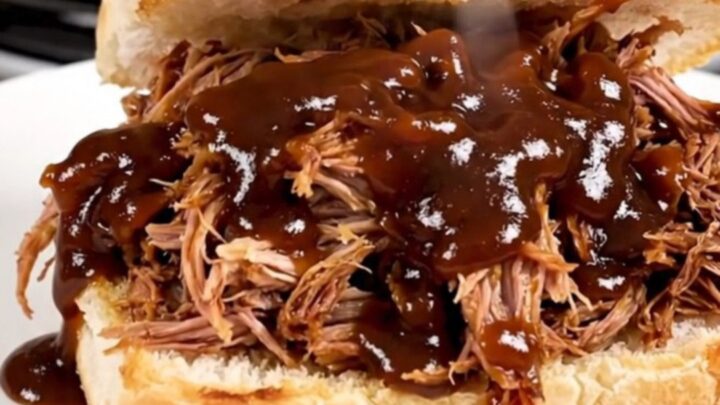
The pork has been shredded into thin, succulent strands and tossed thoroughly with the reduced sauce. The mixture is glossy, steaming, and holds together well.
When piled onto a warm potato roll, the meat should remain moist and flavorful, ready for immediate serving while the bun absorbs a portion of the delicious barbecue glaze.
Common mistakes
Avoid lifting the lid of the slow cooker frequently, as this releases heat and moisture, which can significantly extend the cooking time and dry out the meat.
Do not skip the resting step, as cutting the meat too soon will cause it to lose essential juices, resulting in a drier final product. Additionally, ensure the pork is shredded while still warm, as cold meat is much harder to pull and will not absorb the sauce as effectively.
How to tell it’s done
The pork is done when it is fork-tender and pulls apart with almost no resistance. Using a meat thermometer, ensure the thickest part of the roast reaches an internal temperature of 145°F (63°C).
Once this temperature is reached, allow the meat to rest for at least 10 minutes before shredding to help it retain its juices and achieve the desired texture for the sandwiches.
- Steaks, chops and roasts: 145°F (63°C) in the thickest part, then a 3-minute rest
Up next · Part 3 of 3
2 variations · storage & make-ahead · 3 answers · printable card
Tips, FAQ & printable recipe (Part 3)← Back to the ingredients (Part 1)