Dinner · Part 2 of 3: Instructions
Slow Cooker Mild Lamb Curry with Coconut Milk Step-by-step instructions
- Prep
- Cook
- Total
- Serves
- 4
Before you start
Before beginning, ensure all vegetables are washed and properly sliced. Cutting the carrots and onions into uniform sizes helps them cook at the same rate as the lamb. It is essential to have the lamb chunks prepared and ready to go.
If the lamb was refrigerated, it is helpful to bring it out of the fridge about 20 minutes before adding it to the slow cooker to ensure it is not ice-cold, which helps maintain a steady cooking temperature.
Have the slow cooker insert clean and placed on a stable, heat-resistant surface near an electrical outlet. Keep your measuring tools ready to ensure the coconut milk ratio is accurate, as this is crucial for the final consistency of the curry sauce.
Ingredients at a glance (5)
- 2 lb lamb chunks, trimmed
- 2 medium carrots, sliced
- 1 large yellow onion, sliced
- 1 cube bouillon cube, crumbled
- 1 cup full-fat coconut milk
Instructions
Layering the ingredients
- Prepare the slow cooker basePlace the raw lamb chunks into the bottom of the slow cooker. Add the sliced carrots and sliced onions on top of the meat to ensure even cooking during the long process.Look for The lamb should be distributed evenly across the base of the slow cooker insert to allow for uniform heat distribution.Tip Ensure the lamb is cut into uniform pieces to promote even cooking throughout the entire dish.
At the end of this phase, the lamb, carrots, and onions are neatly arranged in the slow cooker. The ingredients should look vibrant and fresh, filling the base of the insert. Check that the vegetables are evenly distributed so that they will cook uniformly once the heat is applied. Ensure the power cord is connected and the slow cooker is ready to be set to the low setting for the required time.
Seasoning and adding liquid
- Season and add liquidCrumble the bouillon cube over the meat and vegetables. Pour the coconut milk evenly over the ingredients to create the cooking base that will tenderize the meat and flavor the sauce.Look for The coconut milk should coat the ingredients, though it does not need to cover them completely as the vegetables will release moisture.Tip Crumbing the bouillon cube thoroughly ensures the salt and savory base are evenly distributed throughout the slow cooker.
The dish now has the bouillon and creamy coconut milk added. The sauce should look like a light, aromatic base coating the meat and vegetables. Verify that the bouillon has been crumbled finely so it can disperse throughout the liquid as it heats. The slow cooker is now ready to be covered and started. The kitchen should smell faintly of the savory bouillon and the fresh aromatics.
Slow cooking to completion
- Slow cook and finishCover and cook on low for 6 to 8 hours. Before serving, verify that the lamb has reached an internal temperature of 145°F (63°C). Let the meat rest for at least 3 minutes before serving.Look for The sauce should appear rich, glossy, and slightly thickened, with the lamb being tender enough to pull apart with a fork.Safe temperature 145°F (63°C) internal temperature (steaks, chops and roasts)Tip Avoid lifting the lid frequently during the cooking process to maintain the consistent internal temperature required for tender lamb.
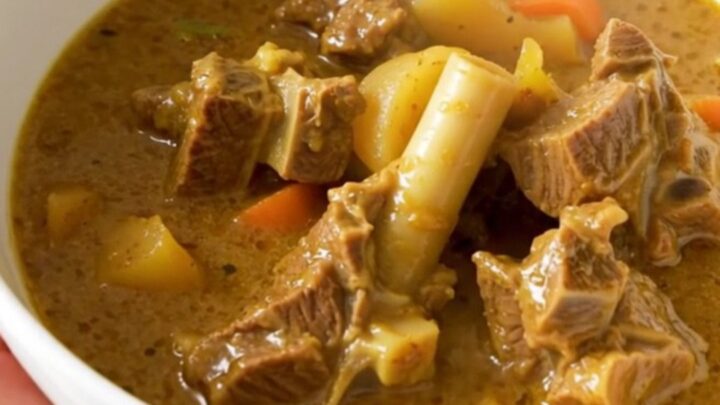
The curry has finished its slow cooking process. The meat should be extremely tender, and the sauce should have transformed into a rich, glossy, and opaque golden color. The onions and carrots should be soft but still hold their shape. Check the internal temperature of the lamb to confirm it has safely reached 145°F (63°C) and let it rest before serving to ensure the juices redistribute properly.
Common mistakes
A common mistake is overcrowding the slow cooker, which can lead to uneven cooking. Ensure there is enough space for the heat to circulate around the ingredients. Another error is checking the dish too often; every time the lid is lifted, heat escapes, adding significantly to the total cooking time.
Avoid using overly lean cuts of meat, as they will dry out during the long cooking period. Finally, ensure the bouillon is fully crumbled before adding; large chunks may not dissolve completely, leading to uneven seasoning throughout the final curry sauce.
How to tell it’s done
The lamb is done when it is fork-tender, meaning it yields easily when pierced and can be pulled apart with minimal effort. Using a meat thermometer, the lamb must reach an internal temperature of at least 145°F (63°C).
After reaching this temperature, allow the meat to rest for at least 3 minutes. The sauce should be thick, glossy, and fragrant. If the sauce seems too thin, you can remove the lid for the final 30 minutes of cooking to allow some of the liquid to evaporate and concentrate the flavors.
- Steaks, chops and roasts: 145°F (63°C) in the thickest part, then a 3-minute rest
Up next · Part 3 of 3
2 variations · storage & make-ahead · 3 answers · printable card
Tips, FAQ & printable recipe (Part 3)← Back to the ingredients (Part 1)