Dinner · Part 2 of 3: Instructions
Slow Cooker Mild Curry Butternut Chicken Step-by-step instructions
- Prep
- Cook
- Total
- Serves
- 4
Before you start
Before beginning, prepare the butternut squash by peeling, seeding, and dicing it into one-inch cubes. Ensure the chicken thighs are patted dry with paper towels. Have your measuring tools ready for the curry powder and heavy cream.
Clear a space on your countertop near the slow cooker to keep the process organized. Ensure the slow cooker is plugged in and ready on a stable, heat-resistant surface. Having everything prepped makes the assembly phase quick and efficient.
Ingredients at a glance (4)
- 1 1/2 lb boneless skinless chicken thighs
- 2 cups diced butternut squash
- 2 tbsp mild curry powder
- 1/2 cup heavy cream
Instructions
Layering the ingredients
- Layer the ingredientsPlace the raw chicken thighs into the slow cooker basin. Scatter the diced butternut squash evenly over the chicken pieces to ensure even heat distribution during the cooking process.Look for Chicken is at the bottom of the slow cooker.Tip Ensure the squash pieces are cut to a uniform size to cook at the same rate as the chicken.
The chicken and squash are neatly arranged in the slow cooker basin. The ingredients should be distributed evenly to ensure that the heat circulates properly. There should be no overcrowding, and the chicken should be at the bottom to benefit from the direct heat source. Check that the squash pieces are uniform in size to ensure they cook at the same time as the meat.
Seasoning and adding cream
- Season and pourSprinkle the mild curry powder generously over the chicken and squash. Pour the heavy cream over the ingredients, ensuring it coats the mixture to create the base of the sauce.Look for Cream is poured over the spices and vegetables.Tip Use a spatula to gently distribute the cream if it pools in one area.
The curry powder is evenly distributed over the ingredients, and the cream is poured over the top. The mixture should look organized, with the spices coating the vegetables.
The cream will begin to settle around the ingredients. Check that the curry powder is not clumped in one spot, which ensures consistent flavor throughout the entire dish once the cooking process is complete.
Slow cooking and final rest
- Slow cook and serveCover the slow cooker and cook on low for 4 hours until the chicken reaches an internal temperature of 165°F (74°C). Allow the dish to rest for 5 minutes before serving to let the sauce thicken slightly.Look for Chicken is tender and the sauce is glossy.Safe temperature 165°F (74°C) internal temperature (poultry)Tip Check the temperature of the thickest part of the thigh using a meat thermometer.
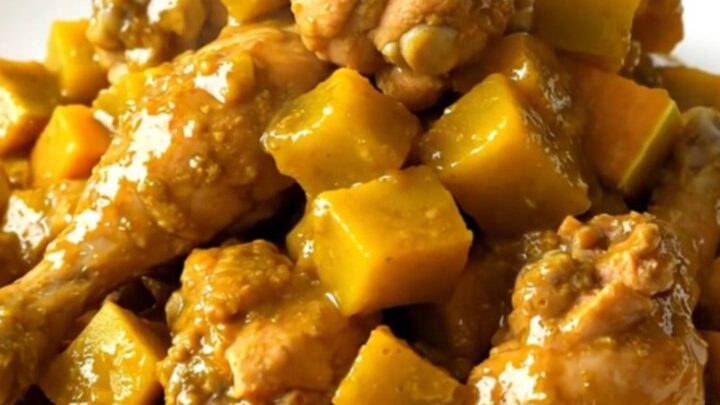
The chicken is tender, the squash is soft, and the sauce is creamy and aromatic. The internal temperature of the chicken has reached 165°F (74°C). The dish should look glossy and smell fragrant with the curry spices. Allow the dish to rest for 5 minutes, which helps the sauce stabilize and the flavors to meld together before serving it on a plate.
Common mistakes
Avoid over-crowding the slow cooker, which can prevent the ingredients from cooking evenly. Do not lift the lid repeatedly during the cooking process, as each time you open it, heat escapes and the cooking time is extended significantly.
Using excessive amounts of curry powder can overwhelm the delicate sweetness of the squash, so stick to the recommended measurements for a balanced flavor profile. Finally, ensure the chicken is fully defrosted before adding it to the pot.
How to tell it’s done
The dish is done when the chicken thighs are opaque throughout and reach an internal temperature of 165°F (74°C). The butternut squash should be fork-tender, meaning it yields easily when pierced with a knife, without falling apart into a mush.
The sauce should appear glossy and have reduced slightly to coat the back of a spoon. If the chicken is not quite ready, continue cooking for another 20 minutes and check again.
- Poultry: 165°F (74°C) in the thickest part
Up next · Part 3 of 3
2 variations · storage & make-ahead · 3 answers · printable card
Tips, FAQ & printable recipe (Part 3)← Back to the ingredients (Part 1)