Dinner · Part 2 of 3: Instructions
Slow-Cooker Milanese Osso Buco with Saffron Risotto Step-by-step instructions
- Prep
- Cook
- Total
- Serves
- 4
Before you start
Before you start, pat the beef shanks dry with paper towels and season them lightly with salt and pepper. If you like, sear the shanks in a hot skillet with a little oil until browned on all sides—this adds extra color and flavor, though it is optional.
Prepare the mirepoix by dicing the carrot, celery, and onion into small, even pieces. Measure out the wine, stock, and crushed tomatoes so everything is ready to layer into the slow cooker.
Ingredients at a glance (8)
- 4 bone-in beef shanks (osso buco), about 12 oz each
- 400 g crushed tomatoes
- 1 cup diced mirepoix (carrot, celery, onion)
- 200 ml dry white wine
- 200 ml beef stock
- 4 sprigs fresh thyme
- cooked saffron risotto, for serving
- lemon-parsley-garlic gremolata, for serving
Instructions
Layer and Set
- Layer the Slow CookerPlace the beef shanks in the slow cooker in a single layer. Scatter the diced mirepoix over and around the shanks. Pour the crushed tomatoes, white wine, and beef stock over the meat. Add the fresh thyme sprigs, tucking them between the shanks.Look for The liquid should come about halfway up the shanks; the meat will release its own juices as it cooks.Tip Do not trim the fat from the shanks—it keeps the meat moist and enriches the sauce.
- Cover and Cook on LowCover the slow cooker and set to LOW. Cook for 8 hours, undisturbed, until the meat is fork-tender and easily pulls away from the bone. The marrow should be soft and translucent. Let it rest for 3 minutes before slicing.Look for After 8 hours, a fork inserted into the meat should twist easily with little resistance.Safe temperature 145°F (63°C) internal temperature (steaks, chops and roasts)Tip Resist the urge to lift the lid during cooking; each peek adds 20 minutes to the cook time.
At the end of this phase, the slow cooker contains the beef shanks nestled among the mirepoix, with the tomatoes, wine, and stock creating a deep red liquid. The thyme sprigs are visible, and the aroma is already promising—sweet vegetables, herbal thyme, and a hint of wine. The shanks are still raw, but the stage is set for a long, slow transformation.
Slow-Cook and Tenderize
- Check for TendernessAfter 8 hours, test the thickest shank with a fork. The meat should be pull-apart tender and register at least 145°F (63°C) on an instant-read thermometer. If not, continue cooking in 30-minute increments. Let it rest for 3 minutes before slicing.Look for The meat will have shrunk from the bone and the marrow will be soft and glossy.Safe temperature 145°F (63°C) internal temperature (steaks, chops and roasts)Tip For fall-apart texture, aim for 160°F (71°C) internal temperature; the collagen will have fully broken down.
- Rest the ShanksTurn off the slow cooker. Using tongs, carefully transfer the shanks to a platter. Let them rest for at least 3 minutes before serving. Skim any excess fat from the surface of the sauce if desired.Look for The meat will stay hot and the juices will redistribute during the rest.Tip Resting the meat ensures it stays moist and doesn't dry out when cut.
After eight hours, the kitchen is filled with the rich, savory scent of braised beef. The meat has darkened and shrunk slightly from the bone, and the sauce has deepened in color and thickened.
A fork inserted into the meat twists easily, and the marrow looks glossy and soft. The liquid is bubbling gently, and the vegetables have softened into the sauce.
Serve and Finish
- Serve Over Saffron RisottoSpoon a generous portion of saffron risotto onto each plate. Place a beef shank on top, marrow side up. Spoon some of the tomato-wine sauce from the slow cooker over the meat and risotto.Look for The sauce should be rich and slightly thickened, coating the back of a spoon.Tip Use a shallow bowl to hold the risotto and sauce together nicely.
- Top with GremolataSprinkle a generous amount of gremolata over each serving. The bright lemon, parsley, and garlic will cut through the richness of the meat and marrow.Look for The gremolata should be scattered evenly, adding a fresh green and yellow contrast.Tip Make the gremolata just before serving to keep it vibrant and fragrant.
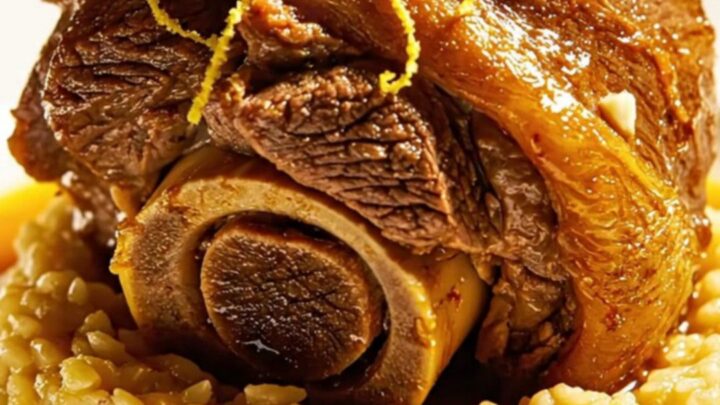
The plated osso buco is a study in contrast: the deep brown meat against the golden saffron risotto, the vibrant green gremolata, and the rich red sauce pooling around the edges. The marrow glistens on top of the shank, and the gremolata adds a fresh, citrusy aroma. Every element is ready to be enjoyed together.
Common mistakes
One common mistake is lifting the lid to check on the meat too often, which lets out heat and extends the cooking time. Another is using too little liquid—the shanks should be partially submerged, and if they are not, add a little more stock or water.
Avoid overcooking the shanks to the point where they completely fall apart and become stringy; they should hold their shape but be tender. Finally, do not skip the gremolata—it is essential for cutting through the richness.
How to tell it’s done
The osso buco is done when the meat is fork-tender and pulls easily away from the bone. An instant-read thermometer inserted into the thickest part of the meat should register at least 145°F (63°C) for food safety, but for the most tender result, aim for around 160°F (71°C).
The marrow should be soft and translucent, and the sauce should have thickened slightly. Let the meat rest for at least 3 minutes before serving to allow the juices to redistribute.
- Steaks, chops and roasts: 145°F (63°C) in the thickest part, then a 3-minute rest
Up next · Part 3 of 3
4 variations · storage & make-ahead · 5 answers · printable card
Tips, FAQ & printable recipe (Part 3)← Back to the ingredients (Part 1)