Dinner · Part 2 of 3: Instructions
Slow Cooker Maple Dijon Beef Ribs Step-by-step instructions
- Prep
- Cook
- Total
- Serves
- 4
Before you start
Before you begin, ensure your slow cooker insert is clean and placed on a stable, heat-resistant surface. Take your beef ribs out of the refrigerator about 20 minutes before you start to take the chill off, which helps them cook more evenly.
Prepare your onion by slicing it into even half-moons, ensuring they are not too thin so they maintain some texture after the long cooking time. Have your seasoning and sauce measured and ready to go, making the assembly phase fast and efficient.
Ingredients at a glance (4)
- 2 lb boneless country-style beef ribs
- 1 large sweet onion, sliced into half-moons
- 1 tbsp garlic thyme seasoning
- 1/2 cup maple Dijon sauce
Instructions
Assembly and Layering
- Prepare the Slow CookerPlace the boneless country-style beef ribs into the base of the slow cooker, ensuring they are arranged in an even layer. Scatter the sliced sweet onions over the top of the beef, distributing them evenly to provide a fragrant base for the braising process.Look for The beef should be tightly packed in the slow cooker insert without overlapping excessively.Tip Ensure the slow cooker insert is clean and dry before adding the beef to prevent sticking.
At the end of this phase, the slow cooker should be neatly packed with the beef ribs and onion slices. The onions should be distributed evenly to act as a bed for the meat, and the seasoning should be dusted uniformly over the surface.
Everything should look organized and ready for the liquid components, ensuring that the ingredients are properly positioned to allow for consistent heat distribution throughout the long cooking process.
Seasoning and Glazing
- Season and GlazeSprinkle the garlic thyme seasoning over the onions and beef, ensuring even coverage for maximum flavor. Drizzle the maple Dijon sauce over the entire mixture, coating the ribs and onions thoroughly to create the braising liquid that will develop during cooking.Look for The sauce should settle into the gaps between the beef strips.Tip Use a silicone spatula to scrape every bit of sauce from the pitcher to ensure nothing is wasted.
Once the seasoning and sauce have been added, the ribs should be well-coated in the maple Dijon mixture. The sauce should be visible in the crevices between the meat and onions. Check that the seasoning is not clumped in one spot. The mixture should smell fragrant with the scent of thyme and savory garlic, providing a promising preview of the flavors that will develop as the dish slowly cooks.
Cooking and Finishing
- Slow Cook and ServeCover the slow cooker with the lid and cook on low for 8 hours until the beef is fork-tender. Once cooked, verify the internal temperature of the thickest piece reaches 145°F (63°C). Let the beef rest for at least 5 minutes before serving alongside the softened onions and sauce.Look for The meat should be very tender and easily pulled apart with a fork.Safe temperature 145°F (63°C) internal temperature (steaks, chops and roasts)Tip Check the temperature at the center of the largest piece to ensure safety and proper doneness.
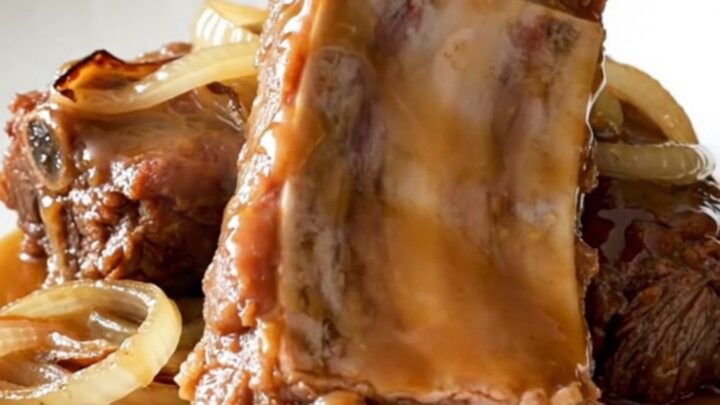
When the cooking phase is complete, the ribs should have shrunk slightly and be very tender. The onions should be soft and translucent, having merged with the sauce to create a thick, flavorful glaze. The kitchen should smell deeply savory and sweet. Before serving, check the internal temperature to ensure safety and confirm the meat is tender enough to be pulled apart with a simple fork.
Common mistakes
A common mistake is overcrowding the slow cooker, which prevents the beef from cooking evenly and can result in the meat steaming rather than braising. Avoid lifting the lid too frequently during the cooking process, as this releases heat and moisture, significantly increasing the total cooking time and potentially drying out the ribs.
Additionally, ensure you do not use a high-heat setting, as the sugars in the maple syrup can caramelize too quickly and burn, leading to a bitter taste in the final sauce.
How to tell it’s done
The beef is perfectly done when it reaches an internal temperature of 145°F (63°C) and is fork-tender. You should be able to press a fork into the meat and have it yield without any resistance.
The sauce will have thickened slightly, coating the back of a spoon with a glossy, rich consistency. If the meat still feels firm or tough, continue cooking for another 30 minutes, as the connective tissue needs more time to break down properly for that signature melt-in-your-mouth texture.
- Steaks, chops and roasts: 145°F (63°C) in the thickest part, then a 3-minute rest
Up next · Part 3 of 3
2 variations · storage & make-ahead · 3 answers · printable card
Tips, FAQ & printable recipe (Part 3)← Back to the ingredients (Part 1)