Dinner · Part 1 of 3: Ingredients
Slow Cooker Maple Bacon Sweet Potatoes
- Prep
- Cook
- Total
- Serves
- 6
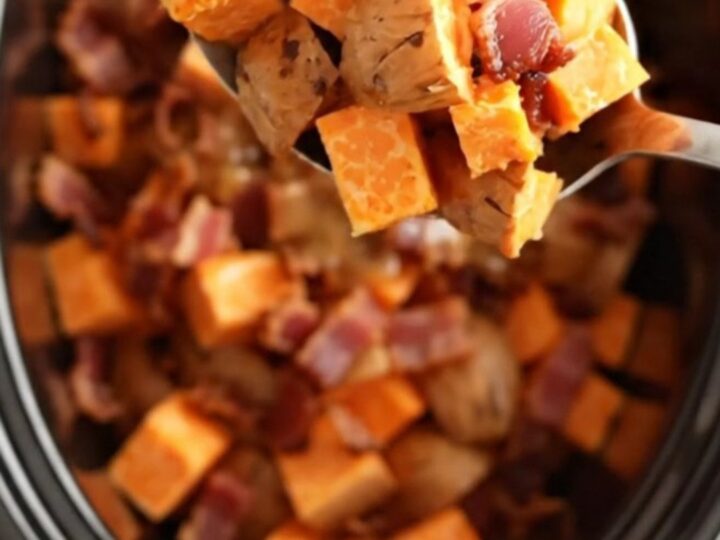
Discover the effortless way to create a side dish that anchors any meal with comfort and flavor. This slow cooker recipe utilizes the gentle, consistent heat of the appliance to meld sweet, earthy potatoes with the salty crunch of bacon and the rich, caramel notes of maple butter. It is a straightforward approach that yields impressive results, perfect for busy weeknights or relaxed weekend gatherings when you want maximum satisfaction with minimal time spent in the kitchen.
The beauty of this dish lies in its simplicity and the way the ingredients interact over several hours. By layering the potatoes, bacon, and sugar, you create a self-basting environment where the sweet and savory elements infuse every bite.
The slow cooking process allows the natural sugars in the potatoes to caramelize while the maple butter creates a decadent, glossy glaze that clings to every cube. It is a reliable side that pairs beautifully with roasted poultry, pork chops, or even as part of a festive holiday spread.
Ingredients
- 3 lbs sweet potatoes, peeled and cubed
- 6 slices bacon, cooked and chopped
- 1/2 cup brown sugar
- 1/2 cup maple butter
Why this recipe works
The slow cooker environment is ideal for root vegetables because it maintains a steady temperature that cooks the potatoes through without causing them to become mushy or fall apart. As the maple butter melts and mixes with the brown sugar, it creates a concentrated syrup that gently coats the potatoes. The bacon releases its rendered fat and smoky essence throughout the pot, providing a savory depth that balances the sweetness of the maple and sugar perfectly.
This method also eliminates the need for constant monitoring or stirring during the cooking process. Because the lid traps steam, the potatoes effectively steam-roast in their own juices and the added butter.
This technique ensures that the heat penetrates the dense flesh of the sweet potatoes evenly, resulting in a consistent texture throughout the batch. The final stir at the end of the process emulsifies the butter and sugar into a luxurious sauce that coats the final dish.
Notes and substitutions
When choosing sweet potatoes, look for firm, smooth-skinned specimens without soft spots or bruises. You can use either the orange-fleshed varieties, which are naturally sweeter and softer, or the paler-fleshed yams, which hold their shape slightly better during the long cooking time.
Ensure that you peel them thoroughly, as the skin can be tough and detract from the silky texture of the finished dish. If you cannot find maple butter, a mixture of high-quality unsalted butter and pure maple syrup works as a reliable substitute.
The choice of slow cooker size matters; a 4-to-6-quart cooker is ideal for this quantity to ensure the potatoes are not packed too tightly, which could lead to uneven cooking.
If your slow cooker runs particularly hot, check the potatoes about 30 minutes before the end of the recommended cooking time to prevent overcooking. Always use real maple syrup if you are making your own maple butter, as pancake syrups often contain corn syrup and artificial flavorings that do not caramelize properly.
- maple butter: a mixture of 1/2 cup softened unsalted butter and 2 tablespoons of pure maple syrup
- brown sugar: coconut sugar for a slightly deeper, caramel-like flavor profile
Equipment
- Slow cooker
- Vegetable peeler
- Chef's knife
- Cutting board
- Measuring cups
- Serving spoon
Up next · Part 2 of 3
3 steps · 4 h of cooking · what to look for at each stage
Step-by-step instructions (Part 2)