Dinner · Part 2 of 3: Instructions
Slow Cooker Maple Bacon Pork Tenderloin for Easy Dinners Step-by-step instructions
- Prep
- Cook
- Total
- Serves
- 4
Before you start
Before starting, ensure your slow cooker is clean and positioned on a flat, heat-resistant surface. Remove the pork tenderloin from the refrigerator about 20 minutes before cooking to take the chill off, which helps with more consistent cooking.
Have your bacon diced and ready, and measure your maple syrup and mustard into separate containers so you can assemble the dish quickly. Check that your meat thermometer is calibrated and ready to use, as you will need it to confirm the final internal temperature of the pork before serving.
Ingredients at a glance (4)
- 1 lb pork tenderloin, trimmed
- 4 slices bacon, diced
- 1 tbsp Dijon mustard
- 1/4 cup pure maple syrup
Instructions
Assembling the ingredients
- Prepare the slow cookerPlace the raw pork tenderloin into the bottom of the slow cooker. Ensure it is laid flat for even cooking throughout the process.Look for The pork should be centered in the slow cooker base.Tip Remove excess silverskin from the tenderloin before placing it in the cooker to ensure the meat remains tender.
The pork should be positioned flat in the center of the slow cooker. Ensure the bacon is scattered over the top layer so that the fat has a direct path to melt down onto the tenderloin. The mustard and maple syrup should be applied evenly to create a uniform base for the glaze to form as the temperature rises.
Cooking the pork
- Add aromatics and glazeScatter the diced bacon evenly over the top of the pork. Add the Dijon mustard, then pour the maple syrup over the entire assembly to coat the meat.Look for The syrup should pool slightly around the bottom of the pork.Tip Spread the mustard using the back of a spoon to ensure even coverage across the surface of the tenderloin.
During the cooking phase, the slow cooker should remain covered at all times. Opening the lid releases essential heat and moisture, which can significantly increase the cooking time.
You will know the process is proceeding correctly if you can smell the savory bacon and sweet maple aroma beginning to permeate the kitchen after the first two hours.
Finishing and resting
- Cook and serveCover and cook on low for 4 hours. Once cooked, check that the internal temperature reaches 145°F (63°C). Remove the pork and let it rest for 5 minutes before slicing into medallions.Look for The bacon should be rendered and the glaze thickened.Safe temperature 145°F (63°C) internal temperature (steaks, chops and roasts)Tip Using a meat thermometer is the most reliable way to ensure the pork is cooked safely without overcooking.
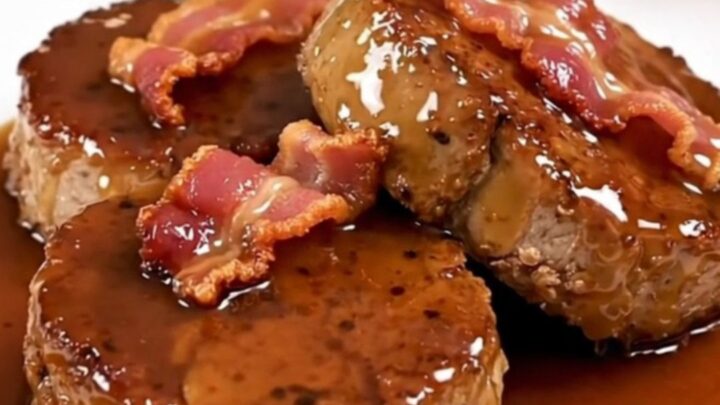
At the end of the cooking time, the glaze should be reduced and glistening. The pork must be removed to a cutting board and allowed to rest for 5 minutes. This pause is non-negotiable, as it ensures the meat retains its juices. Verify the internal temperature with a thermometer before slicing into even, attractive medallions for serving.
Common mistakes
A common mistake is overcooking the tenderloin, which turns the lean meat dry and fibrous. Always start checking the internal temperature at the three-hour mark if you are unfamiliar with your slow cooker's heat intensity.
Another error is failing to trim the silverskin, a tough connective tissue on the surface of the pork that does not break down during cooking and will remain chewy. Finally, do not add extra liquid like water or broth, as the pork and bacon will release enough moisture to create a perfect glaze.
How to tell it’s done
The pork is done when it reaches an internal temperature of 145°F (63°C) at the thickest part of the tenderloin. At this stage, the meat should be opaque throughout and firm to the touch but still springy.
The glaze should appear glossy and slightly thickened, clinging to the sides of the pork medallions. It is crucial to let the meat rest for at least 5 minutes after removing it from the slow cooker, as this allows the juices to redistribute, ensuring the final slices remain moist and flavorful.
- Steaks, chops and roasts: 145°F (63°C) in the thickest part, then a 3-minute rest
Up next · Part 3 of 3
2 variations · storage & make-ahead · 3 answers · printable card
Tips, FAQ & printable recipe (Part 3)← Back to the ingredients (Part 1)