Breakfast · Part 2 of 3: Instructions
Slow-Cooker Maple Apple & Sage Breakfast Pork Sausage Casserole Step-by-step instructions
- Prep
- Cook
- Total
- Serves
- 8
Before you start
Before anything touches the heat, set up the work area. Grease the ceramic insert of a 6-quart slow cooker lightly with butter or oil and have the glass lid ready.
Pull the casings off the sausage if it came linked, core the apples, and cut the brioche into even 1-inch cubes; slightly stale bread is an advantage, since it absorbs custard without collapsing. Set out a large skillet for the sausage, a big mixing bowl and a whisk for the custard, and an instant-read thermometer for the final check.
Ingredients at a glance (7)
- 1 1/2 lb maple-sage ground pork sausage, casings removed
- 8 oz brioche bread, cut into 1-inch cubes
- 2 Honeycrisp apples, diced
- 2 cups sharp cheddar cheese, shredded
- 8 large eggs
- 2 cups whole milk
- 1/4 cup pure maple syrup, plus more warmed for serving
Instructions
Build the flavor base
- Brown the maple-sage sausageSet a large skillet over medium heat, add the maple-sage ground pork sausage with the casings removed, and break it into coarse crumbles with a spatula. Cook for 6 to 8 minutes, stirring occasionally, until no pink remains and the bits are deeply browned at the edges. Drain the excess fat and let the sausage cool while the bread is cubed.Look for The crumbles should be mahogany brown with crisp, caramelized edges and no trace of pink in the center.Safe temperature 160°F (71°C) internal temperature (ground meat)Tip A serious brown on the sausage is the entire flavor base of this casserole, so let the pan do its work before moving on.
- Cube the bread and dice the applesCut the brioche into even 1-inch cubes and spread them on the cutting board to air out briefly. Core the Honeycrisp apples and dice them into 1/2-inch pieces, skin on, so the red flecks show through the finished slices. Keep the two piles separate; they go into the crock at different moments during the layering.Look for Uniform cubes, no slice thicker than an inch, apples in tidy half-inch dice with the skins intact.Tip Even cuts matter here: identical pieces cook at the same rate, so every square lifts out of the crock with the same tender texture.
- Whisk the maple custardCrack the eggs into a large mixing bowl, add the whole milk and the quarter cup of maple syrup, and whisk for a full minute until the mixture is completely smooth and pale. Whisking this long incorporates air that helps the strata puff as it cooks and keeps the custard creamy rather than dense.Look for A smooth, uniform golden liquid with no visible streaks of egg white left in the bowl.Tip Whisk thoroughly and evenly; an unevenly mixed custard is the most common complaint with slow-cooker egg dishes.
By the end of this phase the skillet holds deeply browned, crisp-edged sausage crumbles with no pink anywhere, the cutting board holds a tidy pile of 1-inch brioche cubes and half-inch apple dice with skins on, and the mixing bowl holds a smooth, pale-gold custard with no visible streaks of egg white. The smell of browned sausage and sage should be pronounced; if the sausage looks gray rather than mahogany, give it two more minutes in the pan.
Layer and slow-cook
- Layer the crockpotLightly grease the ceramic insert, then spread half the brioche cubes over the bottom. Top with half the browned sausage, half the diced apples and one cup of cheddar. Repeat the four layers in the same order with the remaining ingredients, pressing each layer down gently with the spatula so the crock fills evenly.Look for Four distinct layers visible through the stoneware, with the second cheddar layer spread clear to the edges.Tip Two full layers instead of one big pile mean every serving pulls up sausage, apple and cheese in the same bite.
- Pour the custard overGive the custard one last whisk and pour it slowly and evenly over the layered ingredients, tilting the crock if needed so the liquid reaches every corner. Press the bread down gently with the spatula so the top cubes begin to soak. Fit the glass lid in place and leave the crock undisturbed.Look for The liquid should come up close to the top of the bread, with a few cubes peeking through that will crisp as it cooks.Tip Pour near the edge, not the center, so the layers underneath stay in place instead of shifting.
- Cook on low until puffed and setCover and cook on LOW for 4 hours, resisting the urge to lift the lid, which releases heat and adds cooking time. The casserole is ready when it is puffed, golden along the edges and set in the center; an instant-read thermometer in the middle should register at least 160°F (71°C) so the eggs are cooked all the way through.Look for A domed, golden top, bubbling at the rim, and the center springs back lightly when pressed with a fingertip.Safe temperature 160°F (71°C) internal temperature (egg dishes)Tip Four hours on low is the sweet spot; on high the edges overcook long before the center sets, so keep the dial on low.
At the end of this phase the casserole should be puffed, golden along the edges and set in the center, with sweet maple-sage aromas filling the kitchen. The top should dome slightly above the rim of the crock, cheddar should bubble at the sides, and the center should spring back when pressed lightly.
Confirm the temperature with an instant-read thermometer: at least 160°F (71°C) in the middle. If the edges are golden but the center reads low, recover and continue on low, checking every twenty minutes rather than committing to another full hour.
Rest and serve
- Rest before cuttingTurn the slow cooker off, lift the lid away from you to steer the steam aside, and let the casserole rest for 10 minutes. Resting lets the custard finish setting so the squares cut with clean edges instead of sagging. During this time the top loses its surface steam and the cheese firms back up.Look for The puff settles slightly, the edges pull just free of the stoneware, and the surface looks matte rather than steamed.Tip Ten minutes is enough; longer and the casserole cools below its best serving temperature.
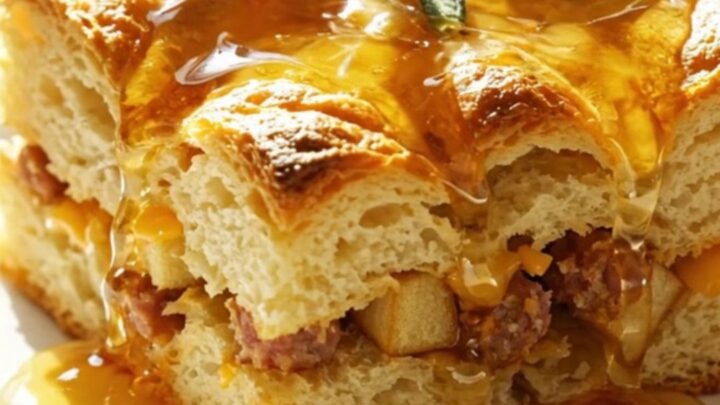
- Serve warm with maple syrupCut the casserole into squares straight in the crock or lift it out onto a board for cleaner slices. Warm additional maple syrup in a small pan or the microwave for about 20 seconds and drizzle it over each portion at the table. Serve the squares while the cheddar is still glossy and the edges are crisp.Look for Steam rising from each square, molten cheddar at the cut edges, and a thin ribbon of warm syrup pooling on the plate.Tip Warm the syrup rather than serving it cold; a cold drizzle on a hot square dulls the whole bite.
After the ten-minute rest the puff has settled slightly, the surface looks matte rather than steamed, and the edges pull just free of the stoneware. A square cut now should hold its shape with clean sides, showing distinct layers of bread, sausage, apple and glossy melted cheese. Steam should still rise from the cut, which means the casserole is at its best serving temperature.
Common mistakes
The most frequent missteps are easy to avoid. Cooking on HIGH to save time overcooks the edges long before the center sets; keep the dial on LOW for the full four hours. Lifting the lid to peek releases heat and can add thirty minutes or more, so trust the window.
Skipping the full whisk on the custard leaves streaks of unseasoned egg white, and rushing the sausage browning leaves gray, steamed crumbles with no flavor base. Uneven bread cubes cook unevenly, so cut them all at an inch.
How to tell it’s done
Three signs tell the story. First, look: the top should be domed and golden at the edges, with melted cheddar bubbling at the rim of the crock. Second, touch: press the center lightly with a fingertip; if it springs back rather than holding the dent, the custard has set.
Third, measure: an instant-read thermometer inserted into the middle should read at least 160°F (71°C), confirming the eggs are cooked through and safe. The sausage was browned to 160°F (71°C) at the start, so it needs no further check.
- Ground meat: 160°F (71°C) in the thickest part
- Egg dishes: 160°F (71°C) in the thickest part
Up next · Part 3 of 3
4 variations · storage & make-ahead · 5 answers · printable card
Tips, FAQ & printable recipe (Part 3)← Back to the ingredients (Part 1)